Predictors of shunt responsiveness and outcomes in idiopathic normal pressure hydrocephalus: a retrospective cohort study
Dror Shir, Noa Bregman, Jonathan Roth, Elissa Ash, Tamara Shiner

TL;DR
This study identifies predictors of successful shunt treatment in idiopathic normal pressure hydrocephalus patients, finding that lower CSF tau and a specific brain imaging pattern are linked to better outcomes.
Contribution
The study introduces new clinical and biomarker predictors for shunt responsiveness in iNPH patients.
Findings
Lower CSF total tau levels were associated with better outcomes after shunt placement.
A disproportionately enlarged subarachnoid-space hydrocephalus (DESH) pattern was more common in patients who responded well to shunting.
Abstract
Idiopathic Normal Pressure Hydrocephalus (iNPH) remains a challenging clinical diagnosis with variable treatment response. This study aimed to identify clinical, imaging, and CSF biomarkers associated with favorable outcomes following shunt placement. All patients evaluated for iNPH at the Tel-Aviv Medical Center (TLVMC) between 2020 and 2022 were included. Participants underwent clinical, cognitive, and imaging assessments, high-volume lumbar puncture (LP). LP responders were referred for shunt placement, and outcomes assessed at one year. 183 patients were evaluated; 167 met criteria for suspected iNPH and underwent LP. Sixty-two (37%) patients showed improvement after CSF drainage and were referred for shunting. Of these, 38 (61%) underwent shunt placement. Gait disturbance was the most common presenting symptom (68%), and more frequent in LP responders (p = 0.007), whereas…
Genes, proteins, chemicals, diseases, species, mutations and cell lines named across the full text — each resolved to its canonical identifier and authoritative record.
Click any figure to enlarge with its caption.
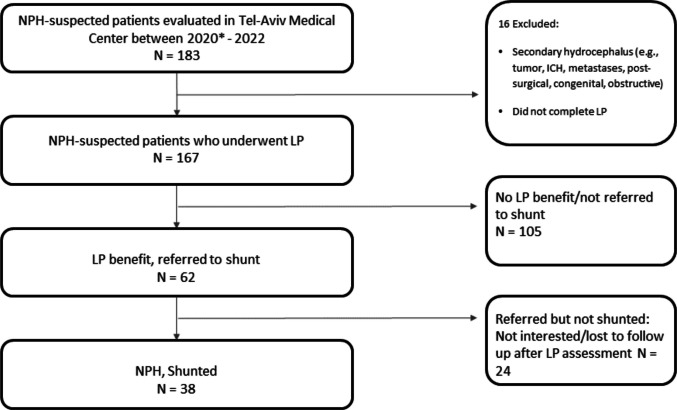 Figure 1
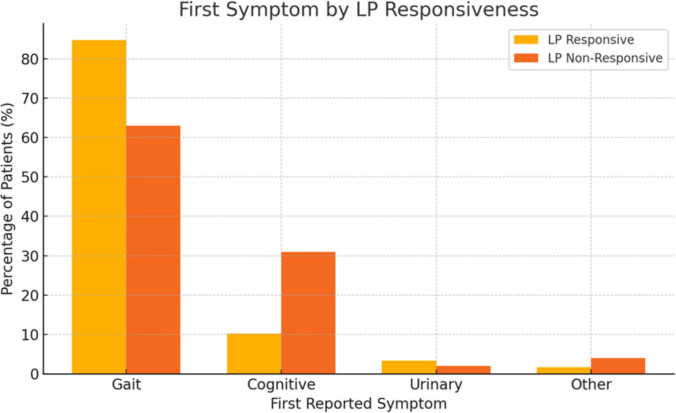 Figure 2
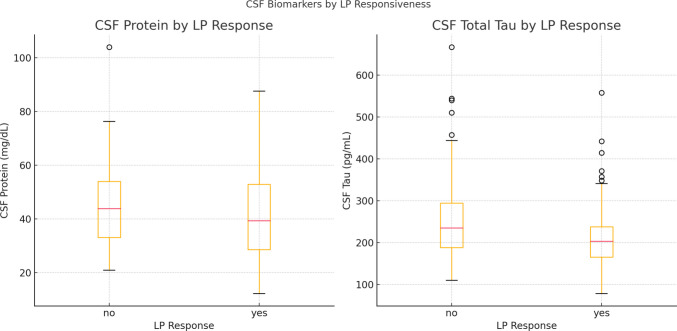 Figure 3
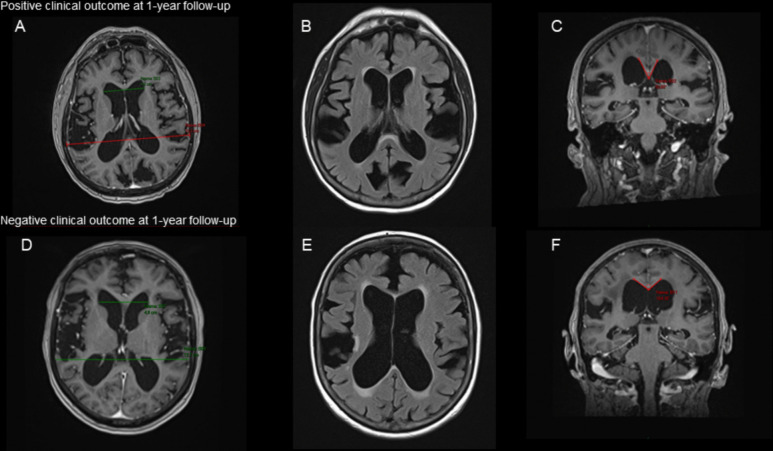 Figure 4
Peer Reviews
No public reviews on file for this paper yet. If you reviewed it on a platform where reviews are public (OpenReview, ICLR, NeurIPS, ICML), you can paste yours below so the community can read it here.
Videos
No videos yet. Explain this paper in a talk, walkthrough, or lecture? Add one.
Taxonomy
TopicsCerebrospinal fluid and hydrocephalus · Traumatic Brain Injury and Neurovascular Disturbances · Head and Neck Surgical Oncology