OPM-based fetal magnetocardiography: fetal cardiac time intervals in healthy pregnancies compared to postnatal ECGs
Annette Wacker-Gussmann, Karin Narushima, Gabriela Tardelli, Ronald T. Wakai, Janette F. Strasburger, Lena Wunderl, Tobias Jensch, Reinhard Heckel, Silvia M. Lobmaier, Nicole Nagdyman, Peter Ewert, Peter Fierlinger

TL;DR
This study compares fetal heart measurements using a new OPM-based system with postnatal ECGs, showing consistency and potential for detecting heart issues in fetuses.
Contribution
First comparison of fetal cardiac intervals measured by OPM-based fMCG with postnatal ECGs, establishing prediction intervals for normal fetuses.
Findings
OPM-based fMCG results were consistent with previous SQUID-based measurements and postnatal ECG data.
P, PR, and QRS intervals increased with gestational age, but QT and QTc intervals did not.
Postnatal ECGs showed increased P-wave, QRS, and QTc durations compared to fetal measurements.
Abstract
Fetal magnetocardiography (fMCG) is the most accurate method to assess fetal heart rhythm and conduction. New quantum sensor technology makes it possible to use less expensive devices. The aim of the study is to measure cardiac time intervals of healthy fetuses with a new technology, optically pumped magnetometry (OPM), and compare these results with conventional SQUID-based fMCG and postnatal ECGs. The recordings were made using an OPM-based fMCG system and a person-sized magnetic shield, established at German Heart Center,TUM University, Munich, Germany. The subjects were 57 healthy women with uncomplicated singleton pregnancies, studied at a mean gestational age of 32 ± 3.7 weeks with an overall range of 25–40 weeks. The P, PR, QRS, QT, QTc, and RR intervals were measured and compared with published data from previous fMCG devices and postnatal ECG. The P, PR, and QRS intervals…
Genes, proteins, chemicals, diseases, species, mutations and cell lines named across the full text — each resolved to its canonical identifier and authoritative record.
Click any figure to enlarge with its caption.
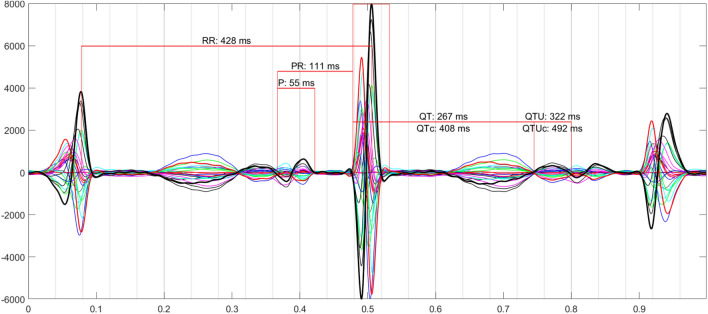 Figure 1
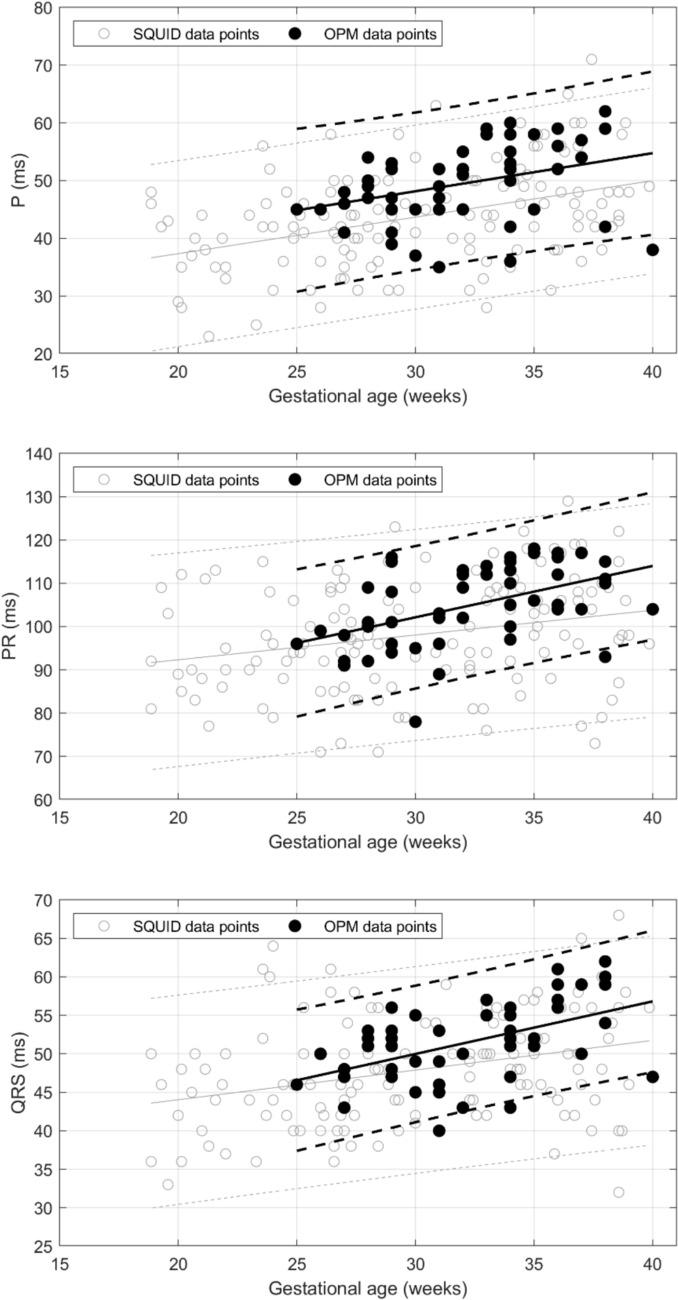 Figure 2
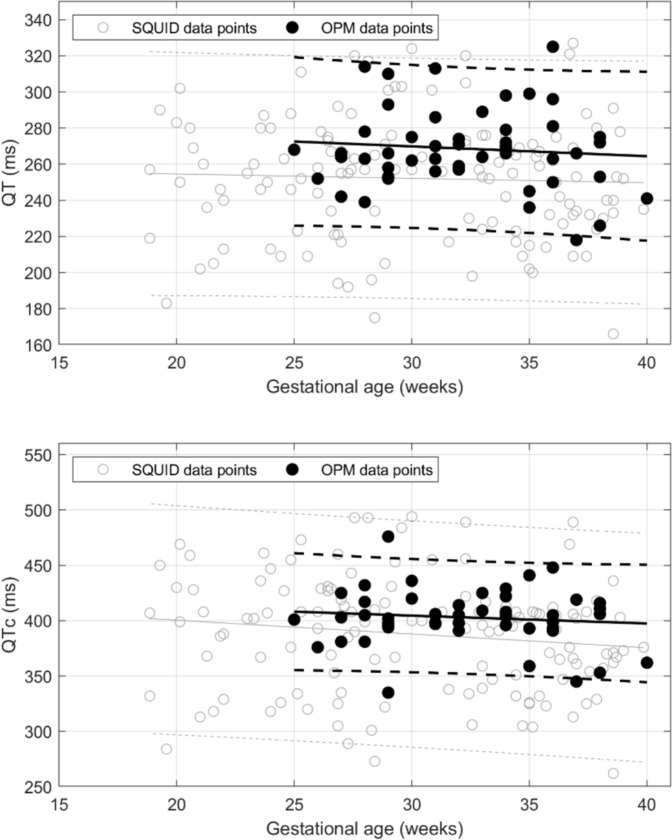 Figure 2
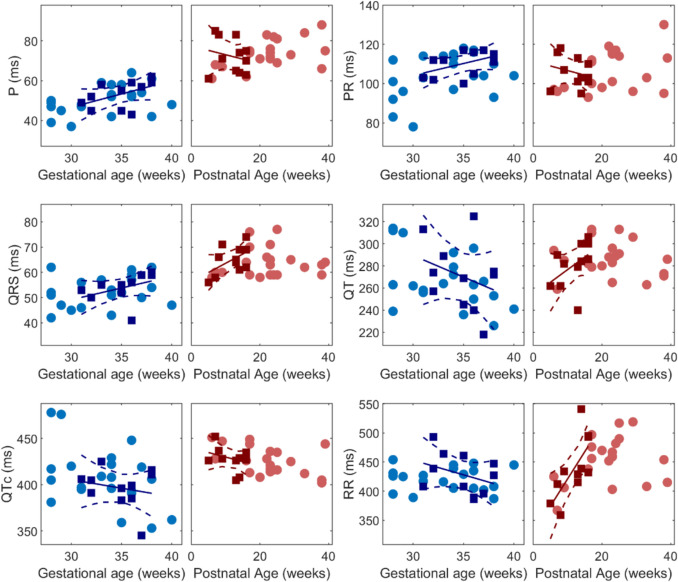 Figure 3
Peer Reviews
No public reviews on file for this paper yet. If you reviewed it on a platform where reviews are public (OpenReview, ICLR, NeurIPS, ICML), you can paste yours below so the community can read it here.
Videos
No videos yet. Explain this paper in a talk, walkthrough, or lecture? Add one.
Taxonomy
TopicsNeonatal and fetal brain pathology · ECG Monitoring and Analysis · Atomic and Subatomic Physics Research