Characterisation of a Leaky Splice-Site Mutation Associated with Phenotypic Diversity in Two Unrelated Patients with ARPC1B Deficiency
Alex Quach, Jovanka King, Trishni Putty, Michael Gold, Patrick Quinn, Antonio Ferrante

TL;DR
Two unrelated patients with the same ARPC1B gene mutation show different symptoms due to partial protein expression from leaky splicing.
Contribution
The study identifies a leaky splice-site mutation in ARPC1B that explains phenotypic variability in patients with the same genetic defect.
Findings
Two unrelated patients with the same ARPC1B splice-site mutation exhibited distinct clinical and immunological profiles.
Leaky splicing from the mutation allows partial expression of functional ARPC1B, leading to milder symptoms in one patient.
Differential transcriptional activity of wildtype ARPC1B correlates with the severity of clinical manifestations.
Abstract
Autosomal-recessive pathogenic variants in Actin-related protein 2/3 complex subunit 1B (ARPC1B) result in an inborn error of immunity associated with eczema, thrombocytopenia, leukocytoclastic vasculitis and colitis. ARPC1B deficiency leads to impaired actin filament branching, affecting cytoskeletal processes in leukocytes, including migration, adhesion, endocytosis, and phagocytosis. This report presents two index cases from different families, who despite sharing an identical germline homozygous ARPC1B splice-site variant, ARPC1Bc.64+2T> A, had distinct clinical phenotypes including age of onset of symptoms and clinical manifestations. In addition, differences were observed in their immunological profiles including neutrophil chemotaxis, upregulation of complement receptor expression as well as B cell maturation and responses to EBV transformation. Further molecular investigation…
Genes, proteins, chemicals, diseases, species, mutations and cell lines named across the full text — each resolved to its canonical identifier and authoritative record.
Click any figure to enlarge with its caption.
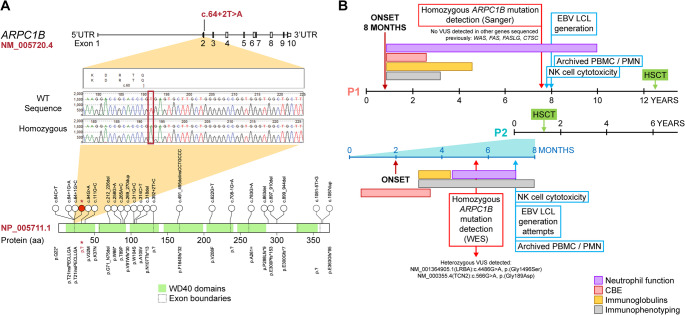 Figure 1
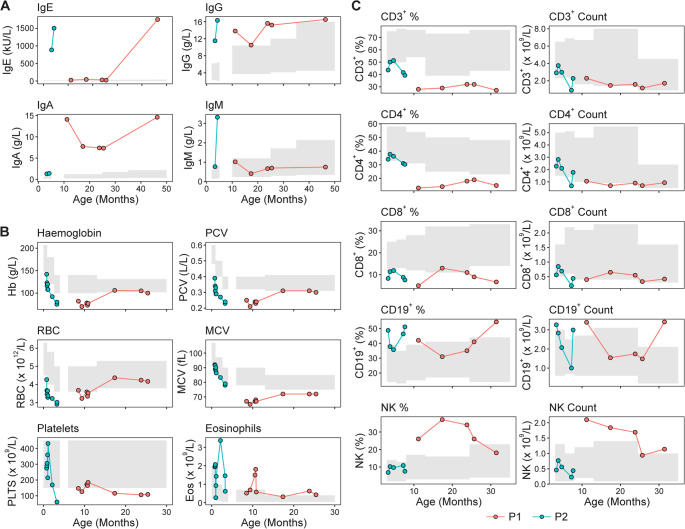 Figure 2
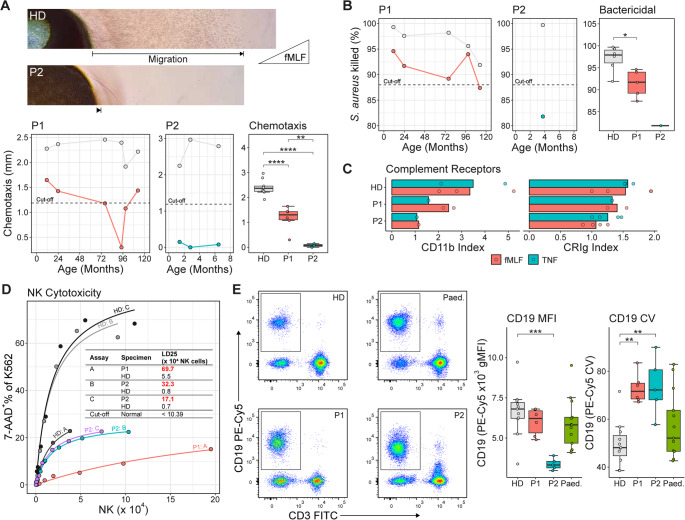 Figure 3
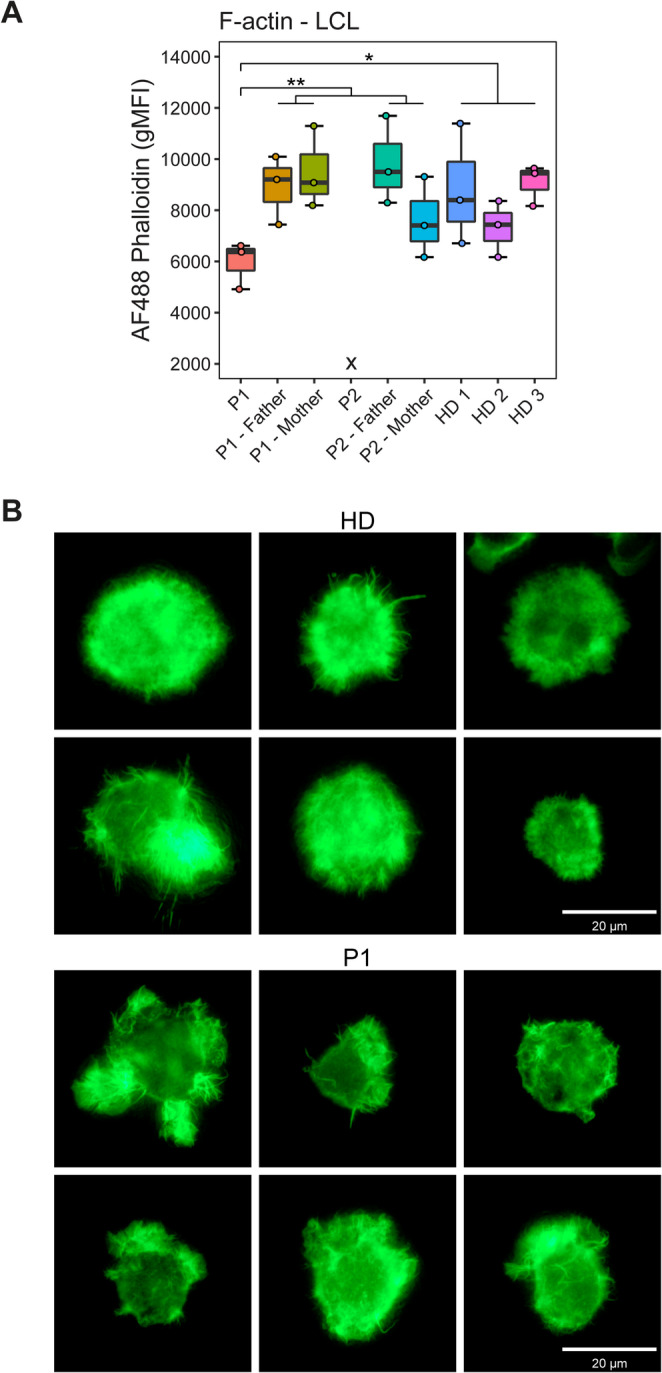 Figure 4
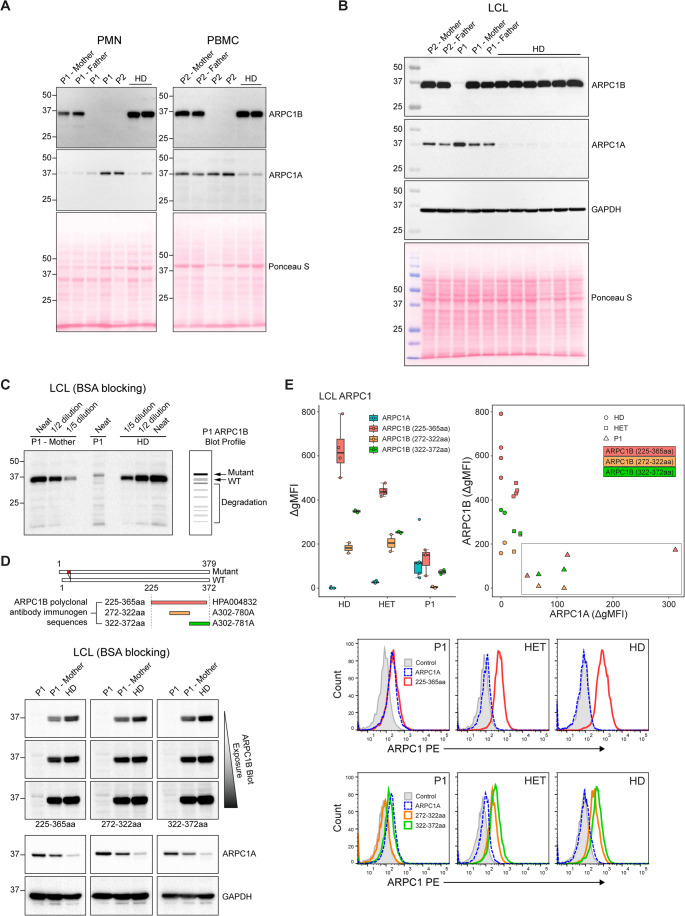 Figure 5
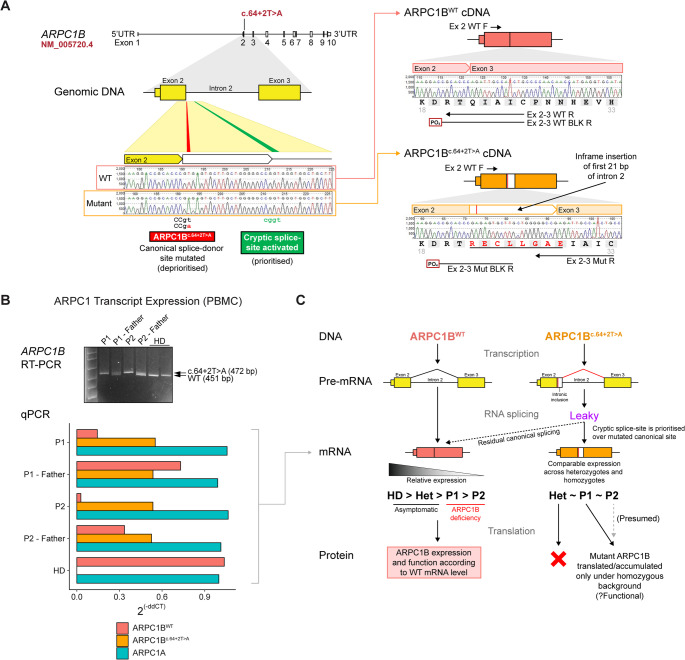 Figure 6
Peer Reviews
No public reviews on file for this paper yet. If you reviewed it on a platform where reviews are public (OpenReview, ICLR, NeurIPS, ICML), you can paste yours below so the community can read it here.
Videos
No videos yet. Explain this paper in a talk, walkthrough, or lecture? Add one.
Taxonomy
TopicsImmunodeficiency and Autoimmune Disorders · Hereditary Neurological Disorders · interferon and immune responses