Accumulation of Potentially Toxic Elements and Bioindicator Potential of Necrophagous Flies in Exposed Municipal Wastes
Kittikhun Moophayak, Chutarat Saengkul, Puntaree Taeprayoon, John Pichtel, Siwaporn Premmanee, Chonthicha Thumjan, Chalida Thala, Piyathap Avakul, Weeradej Meeinkuirt

TL;DR
This study examines how necrophagous flies accumulate toxic elements from waste in Thailand and identifies certain species as potential bioindicators of pollution.
Contribution
The study identifies specific necrophagous fly species as potential bioindicators for cadmium and zinc in polluted environments.
Findings
Musca sorbens accumulated the highest concentrations of Cd and Zn in Pha De.
Cadmium and zinc showed high enrichment in PTEs across study locations.
Atherigona spp. and Musca sorbens were highly correlated with several PTEs in specific areas.
Abstract
To assess fly diversity, abundance, and accumulation of potentially toxic elements (PTEs) in tissue, necrophagous fly communities were collected from open waste bins and landfills in western Thailand. Highest species richness was recorded in Mae Pa and Panlan, each with 11 species; however, Mae Pa exhibited a higher Margalef’s richness index and significantly greater abundance (4,874 individuals) compared to Panlan (314 individuals). Khaothong showed lowest richness with 5 species and a moderate abundance of 944 individuals. Several fly species accumulated considerable PTEs from municipal wastes. Cadmium and zinc were among the most enriched of the PTEs, showing high CF values in the study locations ࣧ 15.25 at Ban Makluea, 15.82 at Pha De and 30.43 at Khaothong, respectively. Principal component analysis indicated that Atherigona spp. and Musca sorbens were highly correlated with…
Genes, proteins, chemicals, diseases, species, mutations and cell lines named across the full text — each resolved to its canonical identifier and authoritative record.
Click any figure to enlarge with its caption.
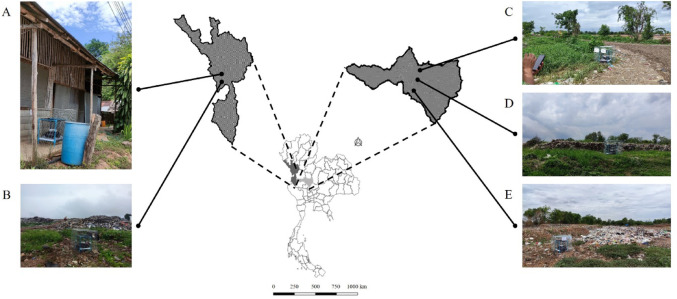 Figure 1
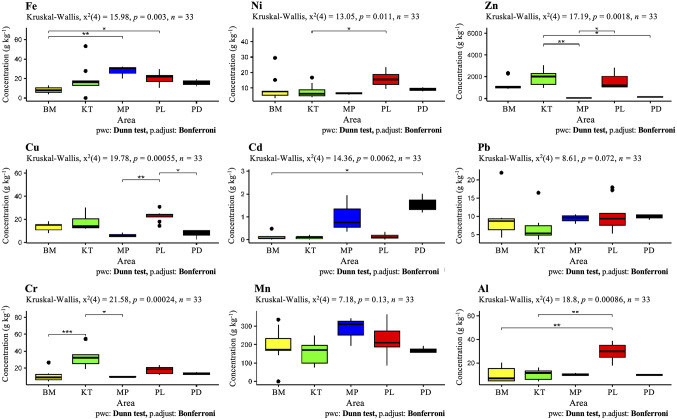 Figure 2
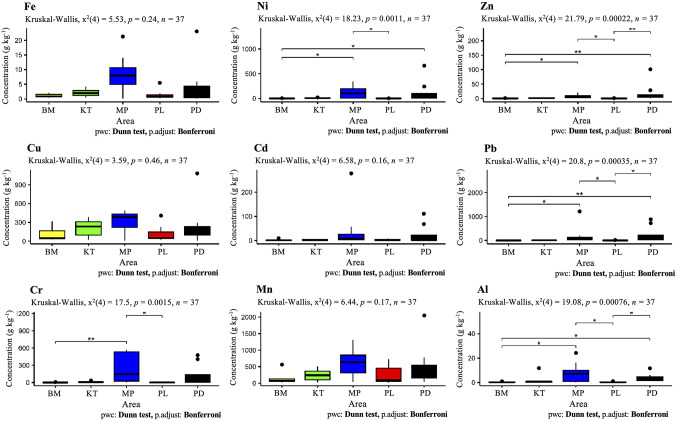 Figure 3
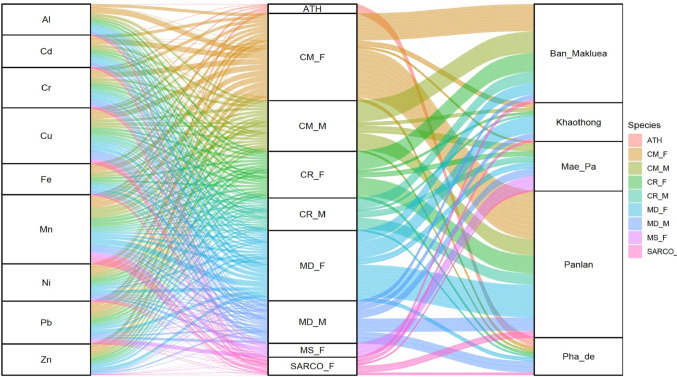 Figure 4
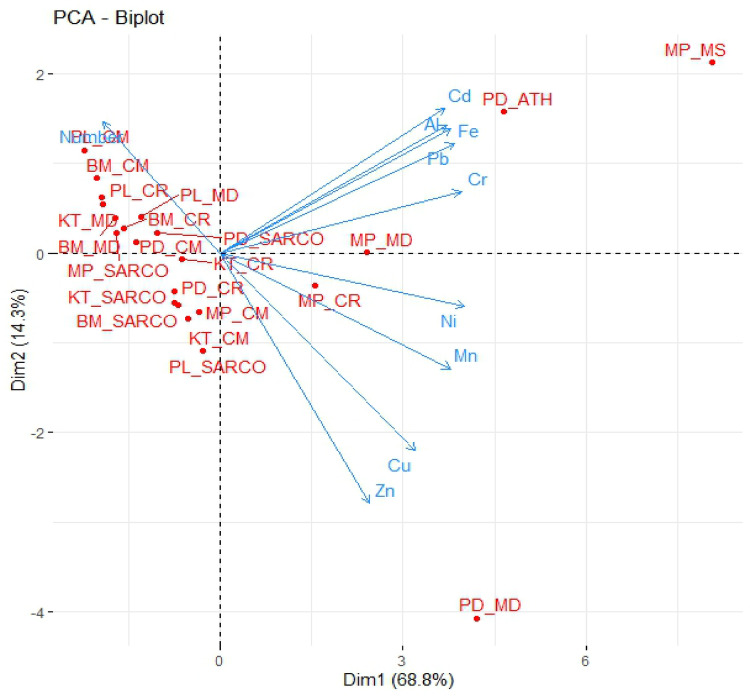 Figure 5
Peer Reviews
No public reviews on file for this paper yet. If you reviewed it on a platform where reviews are public (OpenReview, ICLR, NeurIPS, ICML), you can paste yours below so the community can read it here.
Videos
No videos yet. Explain this paper in a talk, walkthrough, or lecture? Add one.
Taxonomy
TopicsForensic Entomology and Diptera Studies · Insect Utilization and Effects · Heavy metals in environment