Detection of Microvascular Failure After Thrombectomy Directly in the Angio-Suite Using Parametric Color Coding
Ludwig Singer, Maximilian Sprügel, Jeannette Becker, Hannes Lücking, Stefan T. Gerner, Stefan Schwab, Arnd Dörfler, Tobias Engelhorn

TL;DR
This study shows that a new imaging technique can detect microvascular problems after stroke treatment, helping identify patients who might need extra therapy.
Contribution
The study introduces parametric color coding as a direct method in the angio-suite to predict microvascular failure after thrombectomy.
Findings
Prolonged microvascular transit time (mTT) was significantly associated with microvascular failure after thrombectomy.
Patients with suspected microvascular failure had worse outcomes, including higher modified Rankin Scores at 3 months.
The technique allows early identification of patients who may benefit from additional therapies like intra-arterial thrombolysis.
Abstract
The “no-reflow phenomenon” refers to persisting microvascular failure despite complete macrovascular reperfusion. We investigated whether parametric color coding (PCC) analysis of the DSA-series after successful mechanical thrombectomy could predict microvascular dysfunction. We retrospectively analyzed the STAMINA database for patients admitted to a single tertiary care center over a 5-year period with MCA-Occlusion (M1 or M2 branch), large penumbra, TICI 3 and infarct volume exceeding 15 ml on follow-up CT—presumed to reflect microvascular failure. These 55 patients were compared to 55 controls with infarcts < 15 ml on follow-up CT. As proof of concept, we included 42 non-stroke patients undergoing elective treatment of unruptured intracranial aneurysms. Using iFlow-PCC software, we calculated critical flow parameters, including cerebral circulation time (CirT), relative cortical…
Genes, proteins, chemicals, diseases, species, mutations and cell lines named across the full text — each resolved to its canonical identifier and authoritative record.
Click any figure to enlarge with its caption.
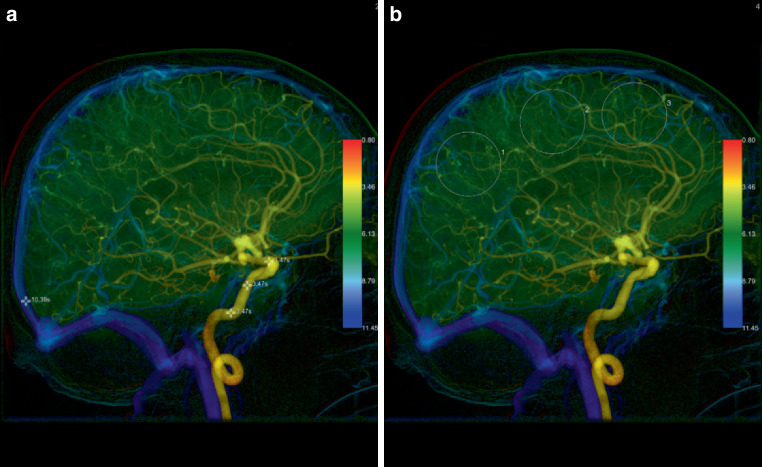 Figure 1
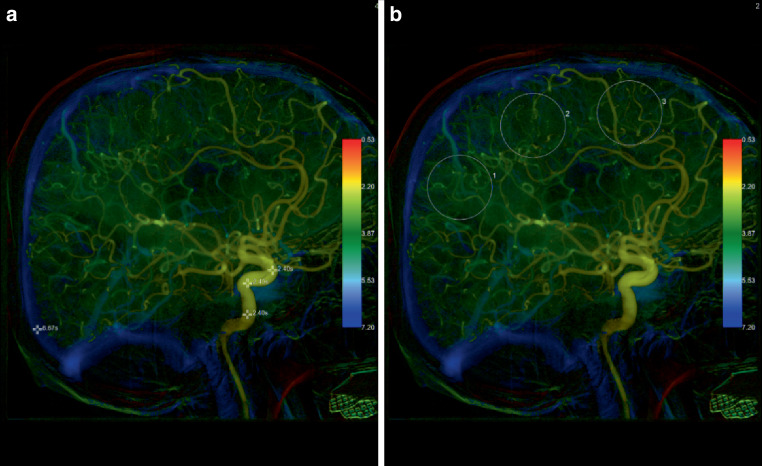 Figure 2
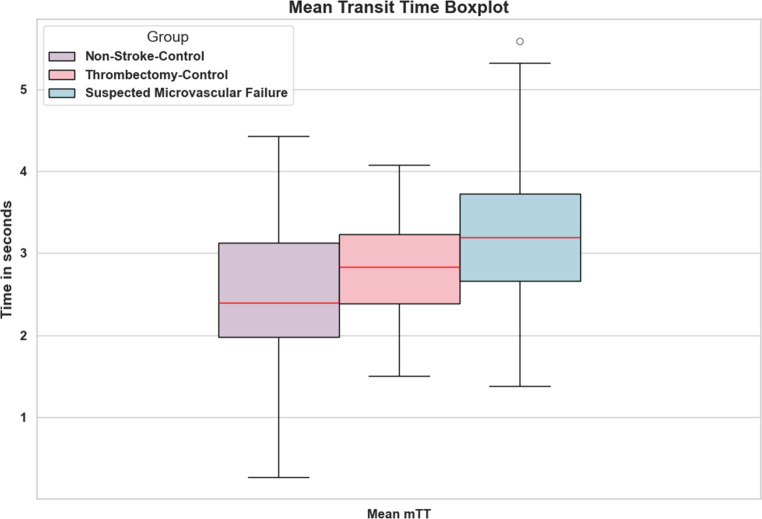 Figure 3
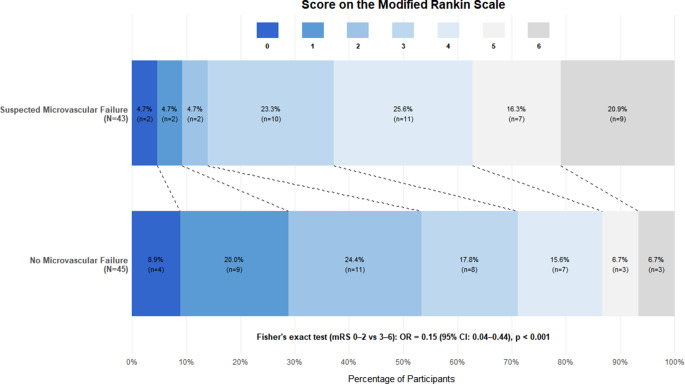 Figure 4
Peer Reviews
No public reviews on file for this paper yet. If you reviewed it on a platform where reviews are public (OpenReview, ICLR, NeurIPS, ICML), you can paste yours below so the community can read it here.
Videos
No videos yet. Explain this paper in a talk, walkthrough, or lecture? Add one.
Taxonomy
TopicsAcute Ischemic Stroke Management · Venous Thromboembolism Diagnosis and Management · Cerebrovascular and Carotid Artery Diseases