Role of Orbicularis Oculi Resection in External Levator Advancement for Aponeurotic Blepharoptosis: A Prospective Randomised Controlled Trial
Sira Rojanasakul, Bunyada Putthirangsiwong

TL;DR
This study examines whether removing a specific eyelid muscle during eyelid surgery affects dry eye symptoms or eyelid appearance in Southeast Asian patients.
Contribution
The study provides evidence that removing the orbicularis oculi muscle during eyelid surgery does not worsen dry eye symptoms or eyelid appearance.
Findings
Preseptal orbicularis oculi excision had no significant impact on dry eye parameters or eyelid appearance.
Both surgical techniques resulted in successful ptosis correction without significant lagophthalmos.
Patients reported high satisfaction regardless of whether the muscle was removed.
Abstract
Removal of the skin and preseptal orbicularis oculi is the initial step in upper eyelid surgery. Preseptal orbicularis oculi removal has been strongly associated with dry eye symptoms due to sluggish eyelid closure and lagophthalmos. We aimed to investigate the effects of concurrent upper blepharoplasty and external levator advancement (ELA) surgery with or without orbicularis oculi resection on dry eye syndrome and eyelid morphology in Southeast Asian populations. This prospective, single-centre, double-blind, randomised controlled trial involved 20 Thai patients (40 eyes) with aponeurotic blepharoptosis and excess eyelid skin undergoing combined upper blepharoplasty and ELA surgery. Patients were randomised into a skin–muscle excision group (group A) or a skin-only excision group (group B). Dry eye parameters including tear break-up time, Oxford ocular surface staining, Ocular…
Genes, proteins, chemicals, diseases, species, mutations and cell lines named across the full text — each resolved to its canonical identifier and authoritative record.
Click any figure to enlarge with its caption.
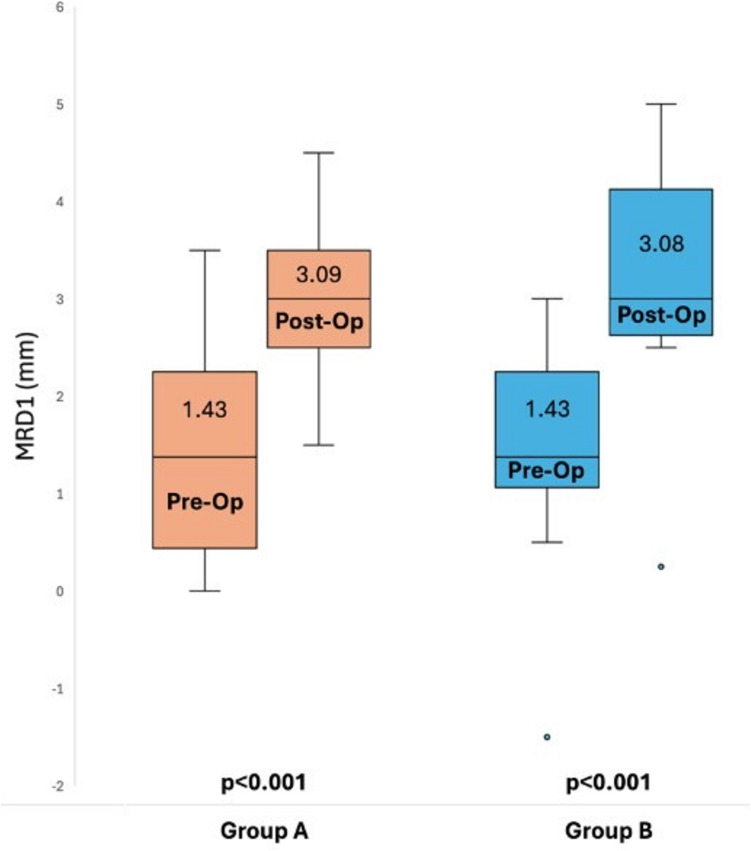 Figure 1
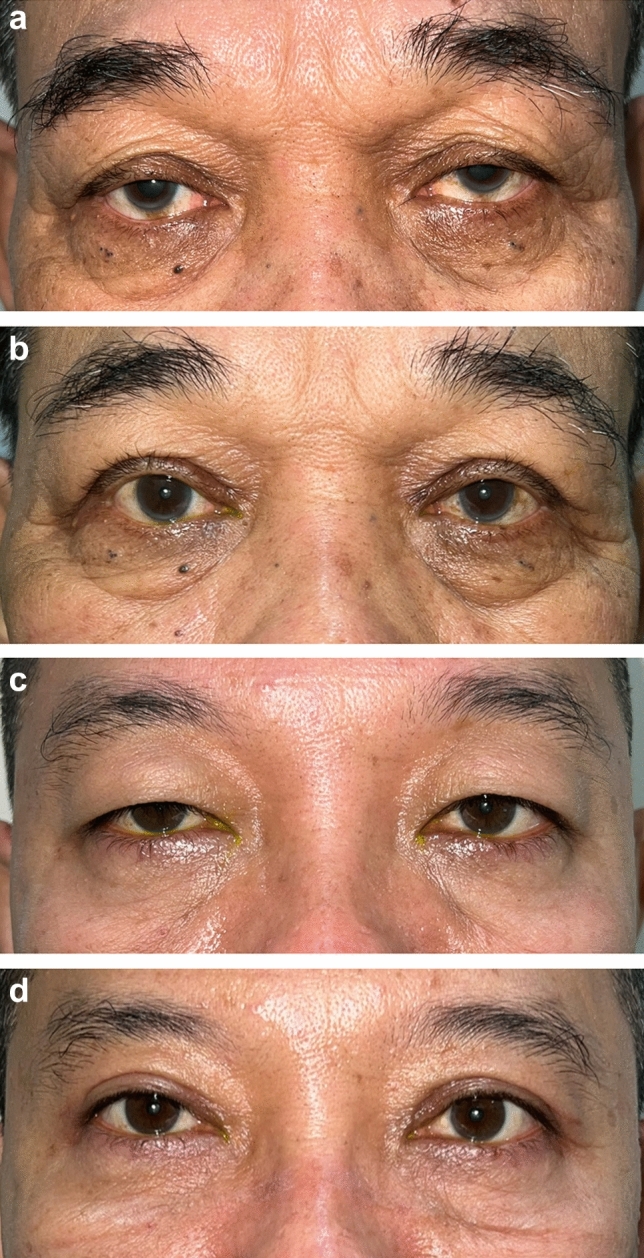 Figure 2
Peer Reviews
No public reviews on file for this paper yet. If you reviewed it on a platform where reviews are public (OpenReview, ICLR, NeurIPS, ICML), you can paste yours below so the community can read it here.
Videos
No videos yet. Explain this paper in a talk, walkthrough, or lecture? Add one.
Taxonomy
TopicsFacial Rejuvenation and Surgery Techniques · Botulinum Toxin and Related Neurological Disorders · Facial Nerve Paralysis Treatment and Research