A prospective cohort study on the association between cervical microenvironmental factors and the efficacy of treating high-risk human papillomavirus infection comorbid with cervical diseases
Lingyun Ji, Jing Wu, Yang Zhou, Xiaowen Pu, Xiao Wang, Bowen Xu, Ruixian Jiao, Wenjuan Wu, Wenhong Zhang

TL;DR
This study explores how the cervical environment affects the success of interferon-based treatment for high-risk HPV infections and cervical abnormalities.
Contribution
The study identifies specific microenvironmental and immune factors associated with successful HR-HPV clearance following interferon therapy.
Findings
The clearance group showed higher baseline expression of TRAF3IP3, ZBP1, and IFI35, and increased immune activation pathways.
Treatment failure was linked to reduced Lactobacillus and increased Gardnerella and other bacterial species in the cervical microbiome.
Cervical secretory cytokines like IL-2, IL-8, and IL-12p70 showed differences between groups, while IL-4 and IL-5 were undetectable.
Abstract
Interferon-based local therapy is an intervention for high-risk human papillomavirus (HR-HPV)-associated low-grade squamous intraepithelial lesions (LSIL) or lower-grade cervical abnormalities. This study sought to delineate the differences in clinical outcomes following interferon-based local drug treatment and elucidate the microenvironmental factors driving these disparities. Cervical secretions, cell brush specimens, and cervical tissue samples were collected from patients with persistent HR-HPV infection and LSIL/lower-grade lesions at Shanghai First Maternity and Infant Hospital. Follow-up samples were obtained at 3 months post-treatment. Cervical secretions were subjected to 16S rRNA sequencing (to profile the microbiota) and cytokine quantification. Cell brush specimens were analyzed via transcriptome sequencing, while cervical tissue samples underwent immunohistochemical…
Genes, proteins, chemicals, diseases, species, mutations and cell lines named across the full text — each resolved to its canonical identifier and authoritative record.
Click any figure to enlarge with its caption.
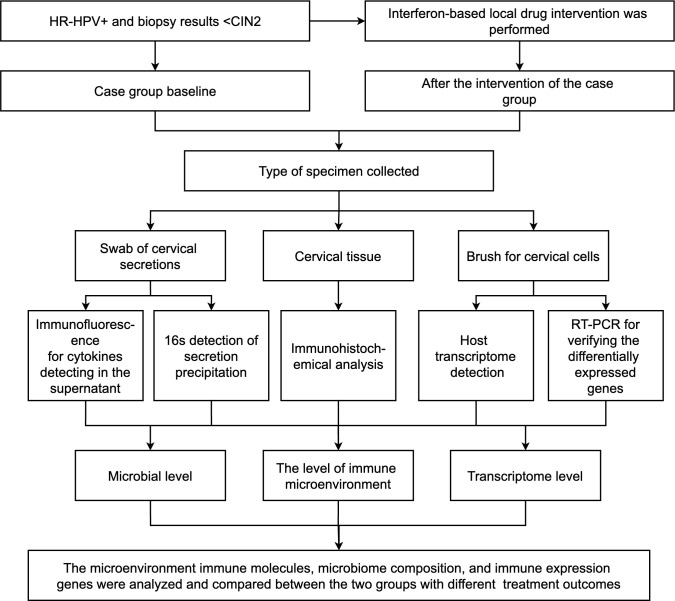 Figure 1
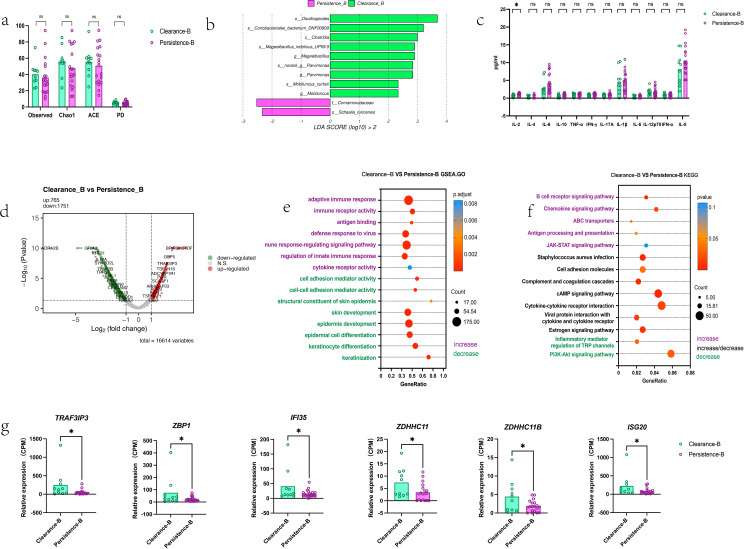 Figure 2
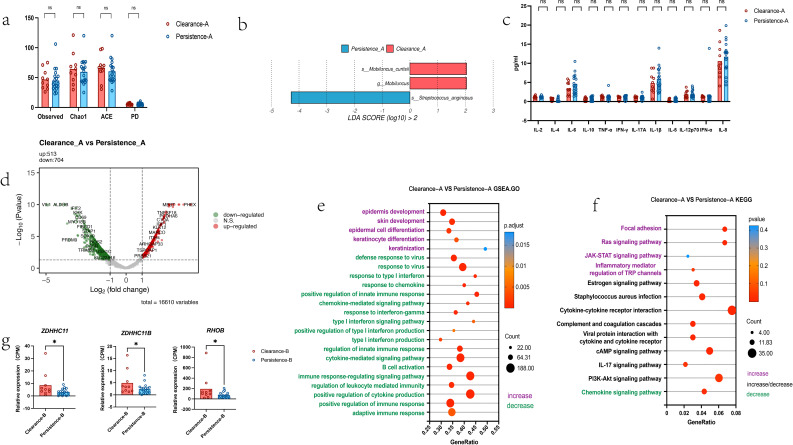 Figure 3
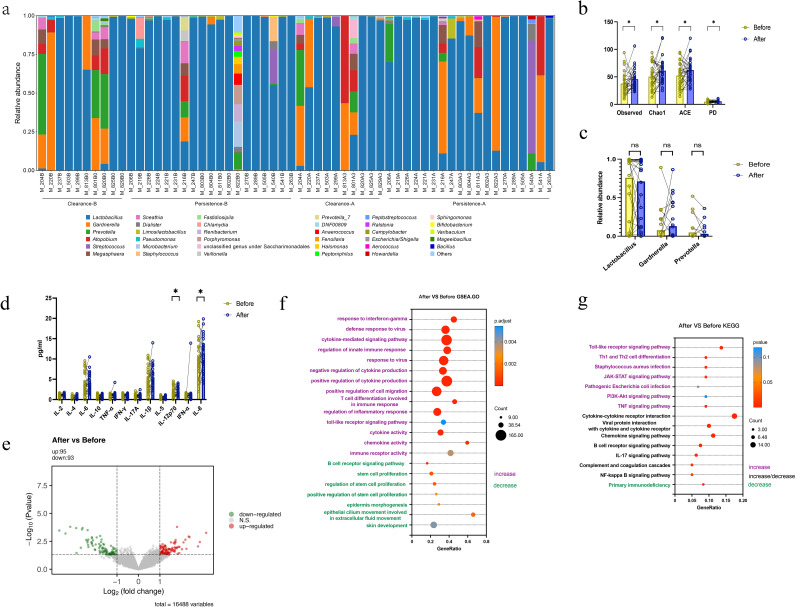 Figure 4
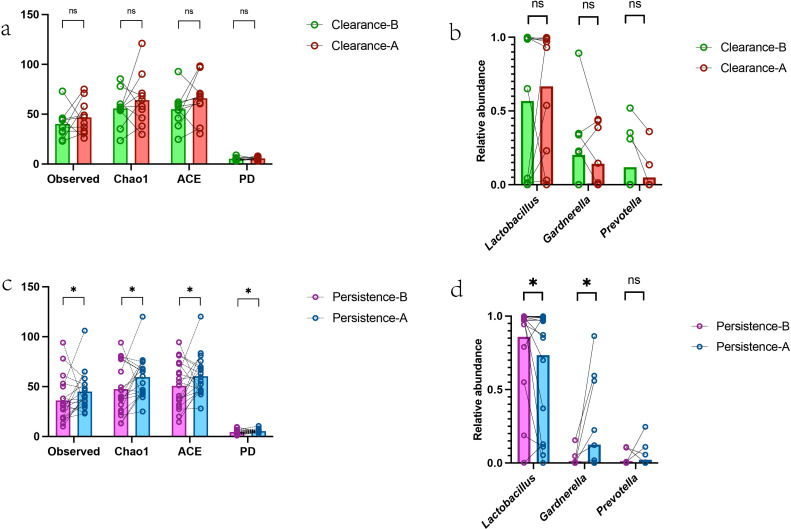 Figure 5
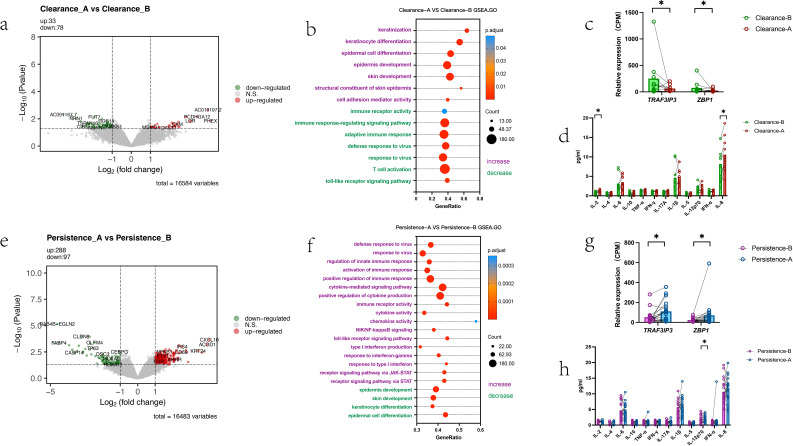 Figure 6
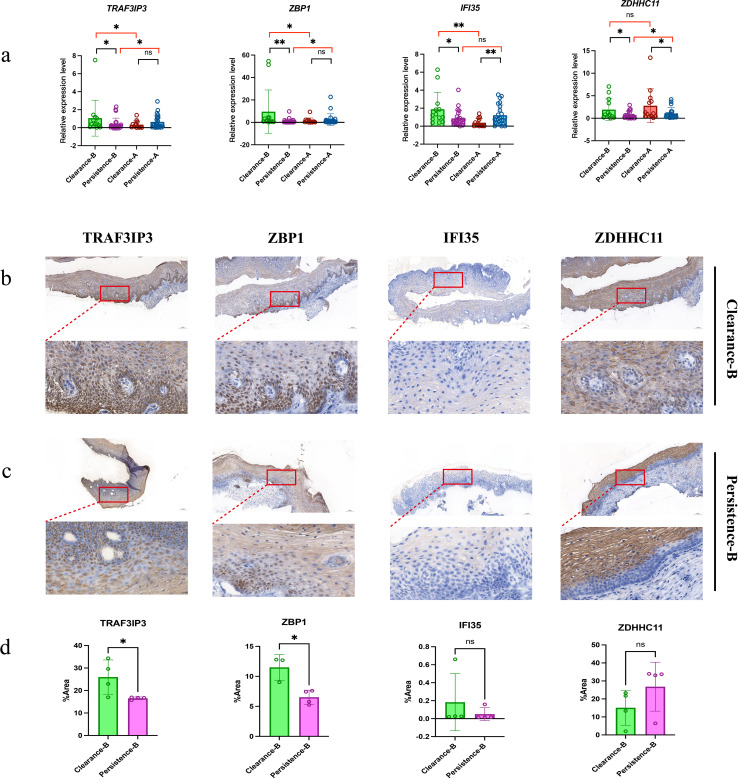 Figure 7
Peer Reviews
No public reviews on file for this paper yet. If you reviewed it on a platform where reviews are public (OpenReview, ICLR, NeurIPS, ICML), you can paste yours below so the community can read it here.
Videos
No videos yet. Explain this paper in a talk, walkthrough, or lecture? Add one.
Taxonomy
TopicsCervical Cancer and HPV Research · Reproductive tract infections research · Preterm Birth and Chorioamnionitis