Risk score to predict fibrosis among Mexican adults: results of the Health Workers Cohort Study
Edgar Denova-Gutiérrez, Berenice Rivera-Paredez, Amado D. Quezada-Sánchez, Norberto Chávez-Tapia, Paloma Muñoz-Aguirre, Brianda Armenta-Guirado, Daniela Contreras, Yvonne N. Flores, Rafael Velázquez-Cruz, Jorge Salmerón

TL;DR
This study created a non-invasive risk score to predict liver fibrosis in Mexican adults using clinical and biochemical data, offering a less costly alternative to liver biopsy.
Contribution
A novel fibrosis risk score tailored for the Mexican population with high diagnostic accuracy was developed and validated.
Findings
The risk score achieved an AUROC of 81.1% for fibrosis detection in the Mexican population.
The score outperformed existing tools like the BARD score and AST/ALT ratio in diagnostic accuracy.
It uses routinely available data, making it suitable for primary care settings.
Abstract
Fibrosis, a severe complication of metabolic-associated fatty liver disease, represents a major concern in the disease progression. Although liver biopsy remains the gold standard for fibrosis diagnosis, its invasive nature and high cost highlight the need for reliable non-invasive alternatives. This study aimed to develop a simple, non-invasive fibrosis risk score based on clinical and biochemical variables in a Mexican population. A total of 295 participants from the Health Workers Cohort Study were included. Fibrosis was assessed using transient elastography (FibroScan), which served as the reference standard for the development and validation of the risk score. Participants were classified according to the Meta-analysis of Histological Data in Viral Hepatitis (METAVIR) system. The diagnostic performance of candidate predictors was evaluated using receiver operating characteristic…
Genes, proteins, chemicals, diseases, species, mutations and cell lines named across the full text — each resolved to its canonical identifier and authoritative record.
Click any figure to enlarge with its caption.
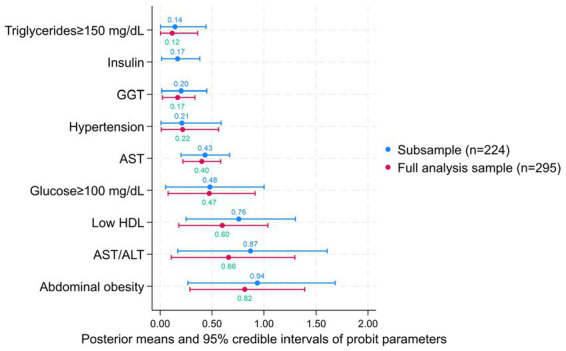 Figure 1
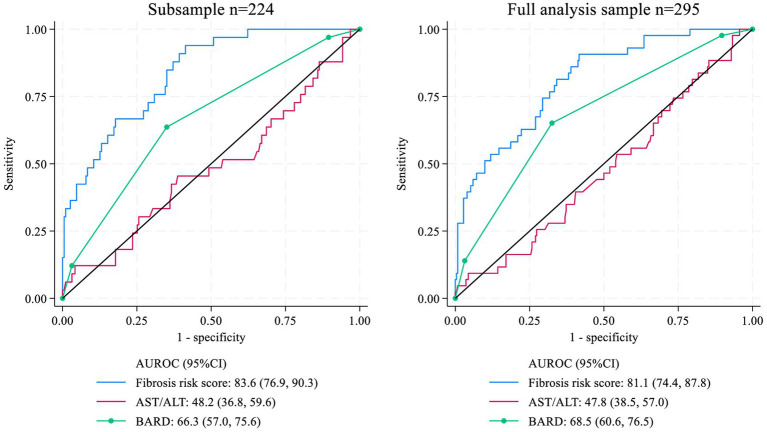 Figure 2
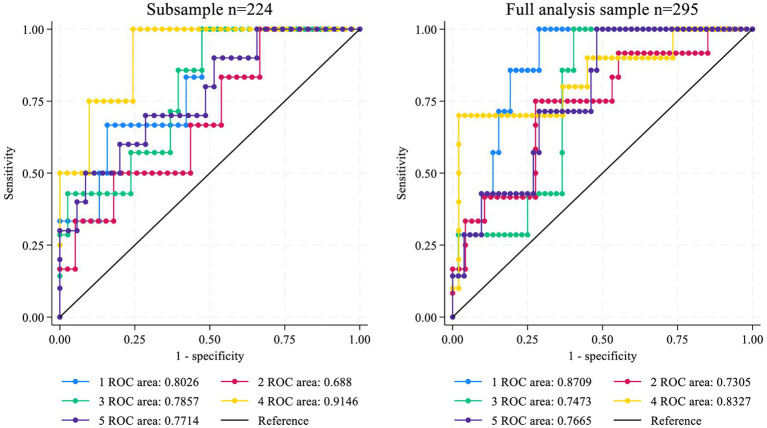 Figure 3
Peer Reviews
No public reviews on file for this paper yet. If you reviewed it on a platform where reviews are public (OpenReview, ICLR, NeurIPS, ICML), you can paste yours below so the community can read it here.
Videos
No videos yet. Explain this paper in a talk, walkthrough, or lecture? Add one.
Taxonomy
TopicsLiver Disease Diagnosis and Treatment · Hepatitis C virus research · Liver physiology and pathology