Molecular analysis of carbapenem-resistant Acinetobacter baumannii isolated from bronchoalveolar lavage fluid in a tertiary hospital in Ningxia, China
Jing Zhang, Dong Liu, Shan Li, Pengtao Wang, Wei Jia

TL;DR
This study analyzes carbapenem-resistant Acinetobacter baumannii from China, revealing high virulence and multidrug resistance, which poses a serious threat to patient outcomes.
Contribution
The study identifies prevalent CRAB clones and virulence factors in Ningxia, China, emphasizing the need for clinical surveillance.
Findings
Most CRAB strains carried blaOXA-23 and blaOXA-51 genes and showed multidrug resistance.
ST195 and ST369 were the most common sequence types, with 94.2% belonging to Global clone 2.
71 strains (58.6%) exhibited high virulence, with virulence factors detected in all tested strains.
Abstract
Infections caused by clinical carbapenem-resistant Acinetobacter baumannii (CRAB) are associated with an increased risk of mortality and present a significant challenge for hospitals worldwide. This study aims to analyze the molecular epidemiological characteristics, drug resistance traits, and virulence features of CRAB isolated from bronchoalveolar lavage fluid (BALF) at a hospital in Ningxia, China. We collected clinical characteristic data of patients with isolated strains and conducted statistical analysis. Antibiotic susceptibility testing was conducted using the VITEK-2 compact system. Carbapenemase and virulence genes were examined through PCR and Sanger sequencing. Multilocus Sequence Typing (MLST) was performed according to the Oxford MLST scheme by comparing the obtained sequences with known allele sequences available on the MLST website (http://pubmlst.org/abaumannii/ ).…
Genes, proteins, chemicals, diseases, species, mutations and cell lines named across the full text — each resolved to its canonical identifier and authoritative record.
Click any figure to enlarge with its caption.
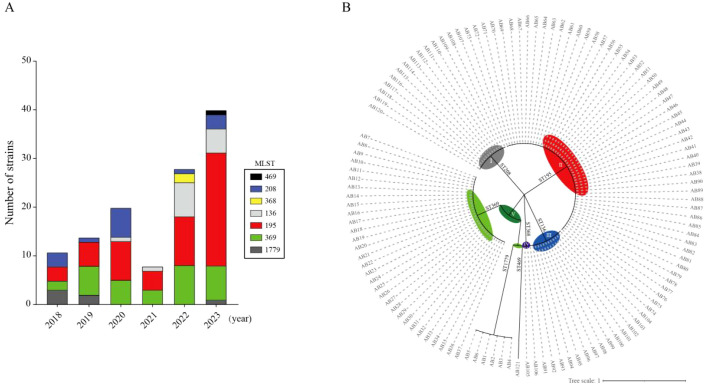 Figure 1
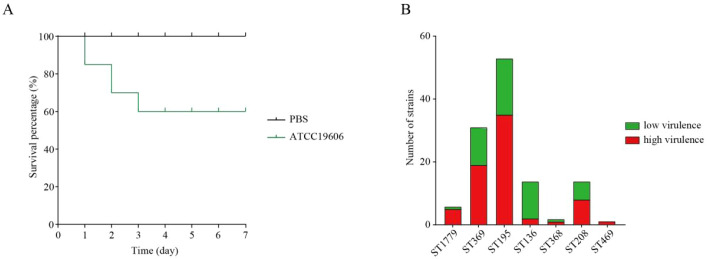 Figure 2
| Genes | Forward (5'-3') | Reverse (5'-3') | Length of PCR products |
|---|---|---|---|
|
| GATCGGATTGGAGAACCAGA | ATTTCTGACCGCATTTCCAT | 501 |
|
| TAATGCTTTGATCGGCCTTG | TGGATTGCACTTCATCTTGG | 353 |
|
| GTTTGGTCGCATATCGCAAC | AATGCGCAGCACCAGGATAG | 390 |
|
| GGTTAGTTGGCCCCCTTAAA | AGTTGAGCGAAAAGGGGATT | 246 |
|
| AAGTATTGGGGCTTGTGCTG | CCCCTCTGCGCTCTACATAC | 599 |
|
| GCGCTTCATTCACGCACTAT | GCGTAATCTCTCTCCTGGGC | 753 |
|
| GGTTTGGCGATCTGGTTTTC | CGGAATGGCTCATCACGATC | 621 |
|
| CTACCGCAGCAGAGTCTTTG | AACCAGTTTTGCCTTACCAT | 587 |
|
| TGTAAGTTACCGCGCTGAGG | CCAGACGACGGCATAGTCAT | 367 |
|
| CGCTTCTGCTGGTGCTGAAT | CGTGCAGTAGCGTTAGGGTA | 531 |
|
| GGAACTATAGATTTTGGTGAAGC | ACCCTTAGATATACGACTACC | 348 |
|
| GCTAAAGATCAGTTGTCGAAG | TTCAGCAAAGCTTTCGGCATC | 360 |
|
| CAACTGAATGAACTTGAACAG | GCTGCGTTGACACTACTTGC | 291 |
|
| GTGGCTCAAGACAGAGAATC | ACGTTCTACTCCAAGAGGAG | 297 |
|
| TCATCAGAATTCCAAGGTGTGC | TTCTAACCATTCAGCTTCAGC | 300 |
|
| GCGCTTATTGGTGGGCGCAAT | CTGAACGGTGGCTTGTTGATAATG | 246 |
|
| ATGAACCAAAATACTAATACCG | GTGTATTCAGTTTTATATTCAG | 386 |
| Clinical features | |
|---|---|
| Age, year, mean (±SD) | 56.60 ± 19.43 |
| Gender, male, % | 94 (77.7%) |
| Hospitalization stay, days, median (IQR) | 24 (15-36.5) |
| Outcome, recovered, N (%) | 53 (43.8%) |
| Laboratory features | |
| CRP, mg/L, median (IQR) | 38 (13-68) |
| WBC, 10^9/L, mean (±SD) | 12.24 ± 6.25 |
| NEUT, %, mean (±SD) | 83.59 ± 7.36 |
| LYM, %, median (IQR) | 8.32 (5.33-13.38) |
| ESR, mm/h, median (IQR) | 25 (12-46) |
| Hemoglobin, g/L, mean ± SD | 112.57 ± 27.39 |
| Platelet count, 10^9/L, median (IQR) | 212 (129.5-295) |
| PCT, ng/mL, median (IQR) | 0.51 (0.22-2.33) |
| IL-6, pg/mL, median (IQR) | 120 (38.48-210.76) |
| Clinical Department,N(%) | |
| Intensive Care Unit | 87 (71.9%) |
| Emergency Department | 4 (3.3%) |
| Department of Respiratory and Critical Care Medicine | 15 (12.3%) |
| Neurological Care Unit | 12 (9.9%) |
| Gastrointestinal Surgery | 2 (1.6%) |
| Oral and maxillofacial surgery | 1 (0.8%) |
| Combined underlying diseases,N(%) | |
| Hypertension | 28 (23.1%) |
| Diabetes mellitus | 15 (12.3%) |
| Cancer | 2 (1.6%) |
| Cardiac disease | 4 (3.3%) |
| COPD | 6 (4.9%) |
| COVID | 4 (3.3%) |
| No underlying diseases | 62 (51.2%) |
| Clinical features | ST195 ( | non-ST195 ( | |
|---|---|---|---|
| Age, year, median (IQR) | 59 (34.5-70.5) | 63.5 (52.25-70.75) | 0.133 (-1.5) |
| Gender, male, N (%) | 43 (81.1%) | 51 (75%) | 0.422 (0.646) |
| Hospitalization stay, days, median (IQR) | 27 (15.2-44) | 21 (15-34.25) | 0.272 (-1.098) |
| Outcome, recovered, N (%) | 16 (30.2%) | 37 (54.4%) | 0.008* (7.1) |
| Laboratory features | |||
| CRP, mg/L, median (IQR) | 46.3 (20-82) | 24.5 (9.01-57.07) | 0.019* (-2.343) |
| WBC, 10^9/L, median (IQR) | 13.95 (8.42-17.96) | 10.03 (7.35-14.66) | 0.011* (-2.544) |
| NEUT, %, median (IQR) | 84.6 (79.4-89.15) | 83.75 (78-89.93) | 0.629 (-0.483) |
| LYM, %, median (IQR) | 8.54 (5.68-14.32) | 7.66 (4.61-12.9) | 0.344 (-0.946) |
| ESR, mm/h, median (IQR) | 25 (12-48) | 26 (12.25-45.75) | 0.849 (-0.191) |
| Hemoglobin, g/L, median (IQR) | 108 (90-126.5) | 112 (93.25-136.75) | 0.261 (-1.123) |
| Platelet count, 10^9/L, median (IQR) | 254 (145-305) | 177 (121.5-269.75) | 0.022* (-2.291) |
| PCT, ng/mL, median (IQR) | 0.46 (0.17-3.4) | 0.625 (0.22-2.27) | 0.9 (-0.125) |
| IL-6, pg/mL, median (IQR) | 165.86 (67.77-252.1) | 76.5 (29.95-151.4) | 0.001* (-3.367) |
| Combined underlying diseases, N (%) | |||
| Hypertension | 15 (28.3%) | 13 (19.11%) | 0.235 (1.41) |
| Diabetes | 6 (11.3%) | 9 (13.2%) | 0.75 (0.1) |
| Antibiotics | All CRAB (%) | ST195 ( | non-ST195 ( | |
|---|---|---|---|---|
| IPM | 121 (100%) | 53 (100) | 68 (100) | – |
| MEM | 121 (100%) | 53 (100) | 68 (100) | – |
| MNO | 35 (28.93%) | 14 (26.4) | 21 (30.8) | – |
| PIP | 121 (100%) | 53 (100) | 68 (100) | – |
| TCC | 121 (100%) | 53 (100) | 68 (100) | – |
| TOB | 113 (93.39%) | 49 (92.4) | 64 (94.1) | – |
| PIP-TAZ | 121 (100%) | 53 (100) | 68 (100) | – |
| LVX | 105 (86.78%) | 45 (84.9) | 60 (88.2) | – |
| TMP-SMX | 59 (48.76%) | 15 (28.3) | 45 (66.2) | <0.001* (17.092) |
| TGC | 25 (20.66%) | 6 (11.3) | 19 (27.9) | 0.025* (5.019) |
| CIP | 121 (100%) | 53 (100) | 68 (100) | – |
| CAZ | 121 (100%) | 53 (100) | 68 (100) | – |
| COL | 0 (0%) | 0 (0%) | 0 (0%) | – |
| CFP-SB | 101 (83.47%) | 53 (100) | 48 (70.6) | <0.001* (18.675) |
| FEP | 117 (96.69%) | 53 (100) | 64 (94.1) | – |
| Genes | |
|---|---|
|
| 121 (100%) |
|
| 121 (100%) |
|
| 10 (8.26%) |
|
| 121 (100%) |
|
| 121 (100%) |
|
| 121 (100%) |
|
| 121 (100%) |
|
| 121 (100%) |
|
| 121 (100%) |
|
| 119 (98.35) |
|
| 92 (76.03%) |
|
| 0 (0%) |
|
| 0 (0%) |
|
| 0 (0%) |
|
| 0 (0%) |
|
| 0 (0%) |
|
| 0 (0%) |
Peer Reviews
No public reviews on file for this paper yet. If you reviewed it on a platform where reviews are public (OpenReview, ICLR, NeurIPS, ICML), you can paste yours below so the community can read it here.
Videos
No videos yet. Explain this paper in a talk, walkthrough, or lecture? Add one.
Taxonomy
TopicsAntibiotic Resistance in Bacteria · Infections and bacterial resistance · Nosocomial Infections in ICU
Introduction
Acinetobacter baumannii (A. baumannii), an aerobic, Gram-negative opportunistic pathogen commonly found in hospital settings, can lead to various infections, including ventilator-associated pneumonia, skin and wound infections, bacteremia, meningitis, and urinary tract infections (Lee et al., 2017; Mea et al., 2021). The organism’s resistance to various antibiotics, particularly carbapenems, which are a crucial class of β-lactam antibiotics frequently regarded as the last line of treatment for infections caused by A. baumannii, complicates treatment options (Ramirez et al., 2020; Müller et al., 2023). This rise can be attributed to the widespread use of broad-spectrum antibiotics, with carbapenem resistance rates exceeding 30% to 90% in regions such as Asia and Latin America (Wong et al., 2017; Shields et al., 2023). According to data from the China Antimicrobial Surveillance Network, the resistance rates of A. baumannii to meropenem and imipenem have risen from 39% and 31% in 2005 to 73.7% and 73.4% in 2023, respectively (http://www.chinets.com/). Previous studies have demonstrated that the prevalence of carbapenem-resistant Acinetobacter baumannii (CRAB) in sputum cultures from ICUs is significantly higher than that in non-ICUs (Neves et al., 2016; He et al., 2020). In China, the detection rate of CRABin intensive care units (ICUs) has been reported to be 71.4% (Liu et al., 2022). A study from Jiangxi province, China, indicates that the detection rate of CRAB isolated from blood culture in the region has increased from 33.3% in 2020 to 76.5% in 2024 (Liu et al., 2025b). Given China’s high population density and mobility, coupled with a significantly higher percentage of hospitalized patients receiving antibiotic prescriptions compared to the global average, there has been a dramatic increase in carbapenem resistance in China over the past few decades (Zhang et al., 2017). While CRAB has been documented in China, there is a notable lack of data regarding its prevalence in the Ningxia region of Northwest China. Furthermore, the acquisition of virulence genes by CRAB has led to the emergence of hypervirulent CRAB (hv-CRAB), a clone that has been rarely reported. Therefore, it is imperative to conduct a comprehensive study to analyze the prevalence of CRAB and hv-CRAB in this area.
MLST of A. baumannii was identified by sequencing the conserved regions of seven housekeeping genes located in the 16S rRNA ribosome: gltA, gyrB, gdhB, recA, cpn60, gpi, and rpoD (Bartual et al., 2005). The CRAB strains are classified into two major globally clones, referred to as Global Clone 1 (GC1) and Global Clone 2 (GC2). Currently, sequence types ST191, ST195, and ST208 represent the most prevalent CRAB strains in China, all of which are classified within the GC2 complex (Chang et al., 2015; Jiang et al., 2019; Tian et al., 2024). Furthermore, additional STs, such as ST369, ST1336, ST136, ST138, ST75, and ST381, have also been documented in China (Ruan et al., 2013; Huang et al., 2023; Zhang et al., 2025). This suggests that more new sequence types will likely be reported in the future, indicating the genetic evolution of CRAB, which may result in the emergence of new CRAB types.
The emergence of hv-CRAB is attributed to the co-presence of resistance and virulence genes. The primary mechanism of carbapenem resistance in A. baumannii is the hydrolysis of carbapenems by class D β-lactamases (CHDLs), including blaOXA-23, blaOXA-24, blaOXA-51, and blaOXA-58 (Brown and Amyes, 2005; Poirel and Nordmann, 2006; Lin and Lan, 2014; Nowak and Paluchowska, 2016). Additionally, class B metallo-β-lactamases, such as blaNDM, blaVIM, blaIMP, and blaSIM (Poirel and Nordmann, 2006; Gomaa et al., 2017), also contribute to carbapenem resistance, while class A KPC and GES β-lactamases are rare reported (Jeon et al., 2015; Müller et al., 2023). A study conducted in Zhejiang, China, revealed that 99.3% of CRAB isolates obtained from ICUs harbored blaOXA-23 (Doughty et al., 2023), which is the most commonly class D carbapenemase gene in China (Li et al., 2023). Furthermore, the pathogenicity of A. baumannii is significantly influenced by the virulence genes present in its genome, which include outer membrane proteins (such as OmpA), capsular polysaccharides, iron acquisition systems, outer membrane vesicles, secretion systems, phospholipases, and regulatory systems such as H-NS and two-component systems (Lee et al., 2017; Karampatakis et al., 2024; Lucidi et al., 2024). Overall, the emergence of hv-CRAB complicates clinical treatment and poses a more serious threat to patients.
Respiratory infections are among the most prevalent infectious diseases affecting the respiratory system (Tang et al., 2018a). The irrational use of antimicrobial drugs has led to a significant issue of antibiotic resistance in China, contributing to treatment failures in lung infections caused by pathogens (Tang et al., 2018b). The susceptibility of sputum samples to contamination by oral colonizing bacteria complicates the determination of whether the strains isolated from sputum cultures indicate infection, colonization, or contamination. In contrast, bronchoalveolar lavage fluid (BALF), which is a sterile fluid specimen obtained directly from the site of pulmonary infection, minimizes contamination interference and is regarded as a reliable method for identifying the bacterial etiology of lung infections (Escribano Montaner et al., 2018). Consequently, our study investigates the distribution of CRAB isolated from clinical bronchoalveolar lavage fluid in a tertiary hospital in Ningxia, while also identifying the clinical characteristics, resistance profiles, and virulence traits of CRAB. This research offers clinical insights for the monitoring, prevention, and treatment of CRAB in the region.
Materials and methods
Strains collection and identification
A total of 121 CRAB isolates were obtained from BALF samples at a tertiary hospital in Ningxia from 2018 to 2023. All strains were identified using MALDI-TOF mass spectrometry. According to the Clinical and Laboratory Standards Institute (CLSI) guidelines (Clinical and Laboratory Standards Institute, 2020), CRAB is defined by its resistance to either imipenem or meropenem. Basic clinical information of the patients was systematically gathered and analyzed retrospectively. This study received ethical approval from the Medical Science Ethics Institutional Review Board of the General Hospital of Ningxia Medical University (KYLL-2025-0183, approved on January 31, 2025).
Antimicrobial susceptibility testing
All strains underwent antimicrobial susceptibility testing, utilizing Escherichia coli ATCC 25922 and Pseudomonas aeruginosa ATCC 27853 as reference strains for internal quality control. The susceptibility tests were performed using the BioMérieux VITEK 2 automated susceptibility testing system. Results were interpreted according to the breakpoint criteria established by the Clinical and Laboratory Standards Institute (CLSI) in 2020. The resistance profiles of the clinical isolates were analyzed against 15 common antibiotics, including imipenem, meropenem, minocycline, piperacillin, ticarcillin-clavulanic acid, tobramycin, piperacillin-tazobactam, levofloxacin, trimethoprim-sulfamethoxazole, tigecycline, ciprofloxacin, ceftazidime, colistin, cefoperazone-sulbactam, and cefepime.
Detection of virulence and antibiotic-resistance genes
To detect resistance and virulence genes in CRAB isolates, polymerase chain reaction (PCR) assays were conducted utilizing conventional PCR amplification techniques. Total genomic bacterial DNA was extracted using a bacterial DNA extraction kit (DP302, Tiangen Biotechnology, Beijing, China). The primers of carbapenemase genes (blaOXA-23, blaOXA-51, blaVIM, blaOXA-24, blaOXA-58, blaGES, blaNDM, blaIMP, and blaKPC), as well as eight virulence genes (ompA, csuA, pgaA, adeH, abaI, basJ, plcD, and ptk) were listed in Table 1. The PCR amplification were performed using conditions described by Neil Woodford et al (Woodford et al., 2006). All PCR products were subjected to Sanger sequencing to identify the various gene subtypes.
Multilocus sequence typing identification
Strains were typed according to Oxford scheme of A.baumannii, using PCR conditions and primers that have been described previously (Bartual et al., 2005). Oxford MLST scheme by comparing the sequences with known allele sequences available on the MLST website (http://pubmlst.org/abaumannii/). This scheme utilizes seven housekeeping genes (cpn60, gpi, gltA, gyrB, recA, gdhB, and rpoD) for PCR amplification followed by Sanger sequencing. Following the acquisition of the allele and its subsequent classification as MLST type, the data were analyzed using GrapeTree software (https://doi.org/10.1101/gr.232397.117) to construct a phylogenetic tree based on the seven housekeeping genes using the maximum-likelihood method.
Galleria mellonella infection assay
In vivo infection assays using Galleria mellonella (G. mellonella) were conducted following the methodology described by Josephine et al (Hubloher et al., 2023). G. mellonella larvae, approximately 20 mm in length and weighing about 250 mg, were procured from Tianjin Huiyude Biotech Company (Tianjin, China) for use as experimental samples. A. baumannii was washed to eliminate the culture medium and subsequently resuspended in sterile physiological saline. For each infection experiment, a total of 10 µl of the cell suspension (1 × 10^6 CFU) was injected into the last proleg of the selected larvae, with 10 larvae injected for each strain. The negative control group received an injection of 10 µl of sterile physiological saline, and ATCC19606 (Yao et al., 2024) served as a non-hypervirulent control strain. Following incubation in the dark at 37 °C for 7 days, the survival percentage of the larvae was assessed. All experiments mentioned above were repeated three times independently.
Statistical analysis
For continuous variables, we first conducted a normality test. If each group satisfied the normality assumption, we used means and standard deviations for statistical description, with t-tests for comparisons between two groups and one-way ANOVA for comparisons among multiple groups. If the normality assumption was not satisfied, we used medians (and interquartile ranges) for statistical description and employed non-parametric tests (Mann-Whitney U test) for comparisons between two groups. For categorical variables, we utilized chi-square tests or Fisher’s exact tests. All significance tests were two-tailed, with a p-value of < 0.05 indicating significance. This study utilized SPSS version 27 (SPSS, Chicago, IL) for calculations.
Results
Clinical characteristics of 121 patients with CRAB
This study collected samples of CRAB from bronchoalveolar lavage fluid obtained from patients at Ningxia Medical University General Hospital between 2018 and 2023. A statistical analysis of the basic clinical information of patients revealed that males constituted the majority, with 94 cases (77.7%), while females accounted for 27 cases (22.3%). The average age was 56.60 ± 19.43 years, and the average length of hospitalization was 24 days (15-36.5). After treatment, 53 patients (43.8%) recovered well. Laboratory examination of related factors showed that the C-reactive protein (CRP) level was 38 (13-68) mg/L, white blood cell count (WBC) was 12.24 ± 6.25 × 10^9/L, erythrocyte sedimentation rate (ESR) was 25 (12-46) mm/h, hemoglobin was 112.57 ± 27.39 g/L, platelet count was 212 (129.5-295) × 10^9/L, procalcitonin (PCT) was 0.51 (0.22-2.33) ng/mL, and interleukin-6 (IL-6) was 120 (38.48-210.76) pg/mL. All these elevated inflammatory factors indicates severe bacterial infection. The patients included in this study were sourced from various departments: the Intensive Care Unit (ICU) accounted for 87 patients (71.9%), the Department of Respiratory and Critical Care Medicine had 15 patients (12.3%), and the Neurological Care Unit (NCU) consisted of 12 patients (9.9%). Additionally, patients from several other departments were also included. Among these patients, 28 (23.1%) were diagnosed with hypertension, 15 (12.3%) with diabetes, 16 (13.2%) with other diseases, while 62 (51.2%) had no underlying conditions. These findings are summarized in Table 2.
MLST of 121 CRAB isolates
MLST was determined by analyzing seven housekeeping genes of A. baumannii (cpn60, fusA, gltA, pyrG, recA, rplB, and rpoB) through PCR amplification and Sanger sequencing. The results indicated the presence of seven ST types: ST195 with 53 strains (43.8%), ST369 with 31 strains (25.6%), ST136 with 14 strains (11.5%), ST208 with 14 strains (11.5%), ST1779 with 6 strains (4.9%), ST368 with 2 strains (1.6%), and ST469 with 1 strain (0.8%). The annual distribution indicates that the highest number of detected CRAB cases occurred in 2022 (n=28) and 2023 (n=40), predominantly represented by ST195 and ST369 (Figure 1A). This suggests a rising trend in the prevalence of CRAB. The genetic backgrounds of all strains are closely related, as evidenced by phylogenetic tree analysis, which reveals five distinct clades: Clade I (ST208), Clade II (ST195), Clade III (ST136), Clade IV (ST368), and Clade V (ST1779, ST469, ST369) (Figure 1B).
The analysis of MLST typing and the phylogenetic tree of CRAB from 2018 to 2023 is presented. (A) A total of seven ST types have been identified, and their annual distribution is illustrated. (B) The dendrogram of the phylogenetic tree constructed from 121 CRAB strains using GrapeTree software is presented. The colors gray, red, blue, purple, and dark green represent Clades I, II, III, IV, and V, respectively. Additionally, light green indicates two subgroups within Clade V.
Clinical characteristic differences between ST195 positive patients and non-ST195 positive patients
MLST analysis revealed that ST195 is predominant in the region. Consequently, we further investigated the clinical characteristics of patients with ST195 in comparison to those with other sequence types (non-ST195). The results indicated no significant differences in age, gender, or length of hospital stay between the ST195 group and the non-ST195 group. However, the recovery rate for patients with ST195 was 30.2%, significantly lower than the 54.4% recovery rate observed in the non-ST195 group (P = 0.008). This finding suggests a poorer prognosis for patients infected with ST195. Regarding biochemical indicators, no significant differences were found between the two groups in terms of procalcitonin, hemoglobin, ESR, lymphocyte count, and neutrophil count levels. However, the ST195 group exhibited significantly higher levels of C-reactive protein (CRP) and interleukin-6 (IL-6), as well as elevated white blood cell (WBC) and platelet counts compared to the non-ST195 group, indicating a more severe immune response. Additionally, there were no significant differences in the distribution of underlying diseases, such as hypertension and diabetes, between the two groups. All results are summarized in Table 3.
Resistance analysis of CRAB strains
We conducted antimicrobial susceptibility testing on 121 strains of CRAB strainsagainst 15 antibiotics. The results indicated that all strains were resistant to seven antibiotics: imipenem (IPM), meropenem (MEM), piperacillin (PIP), ticarcillin-clavulanate (TCC), piperacillin-tazobactam (PIP-TAZ), ciprofloxacin (CIP), and ceftazidime (CAZ), thereby confirming that these 121 CRAB strains are multidrug-resistant. The resistance rates for cefepime (FEP), tobramycin (TOB), levofloxacin (LVX), and cefoperazone-sulbactam (CFP-SB) were recorded at 96.69%, 93.39%, 86.78%, and 83.47%, respectively. Resistance to trimethoprim-sulfamethoxazole (TMP-SMX) was observed at 48.76%. Additionally, the resistance rates for minocycline (MNO) and tigecycline (TGC) were found to be 28.93% and 20.66%, respectively. All strains were sensitive to colistin (COL). Although there were no differences in resistance to 13 antibiotics between ST195 and non-ST195 CRAB, the proportion of ST195 strains resistant to CFP-SB was significantly higher (100% vs 70.6%, p<0.001), while the proportions resistant to TMP-SMX and TGC were lower (28.3% vs 66.2%, p<0.001; 11.3% vs 27.9%, p=0.025). All results are detailed in Table 4.
Features of resistance and virulence genes
The previous results indicate that these strains belong to multi-drug resistant CRAB, with over 50% of infected patients exhibiting a poor prognosis, suggesting the presence of specific virulence factors. Consequently, we conducted polymerase chain reaction (PCR) assays to detect the resistance and virulence genes carried by these strains. The results revealed that all strains harbored blaOXA-51 and blaOXA-23, with 10% additionally carrying blaVIM, while other resistance genes such as blaNDM, blaIMP, blaKPC, blaOXA-24, and blaOXA-58 were not detected. Virulence factors ompA, adeH, pgaA, abal, basJ, and plcD were identified in all 121 CRAB strains, with 98.35% carrying csuA and 76.03% carrying ptK. The presence of these resistance genes and virulence factors may account for the resistance and virulence exhibited by CRAB. All related results are detailed in Table 5.
Galleria mellonella infection experiment
Galleria mellonella (G. mellonella) is frequently utilized to examine host–pathogen interactions due to its low cost, straight-forward handling, and an innate immune response comparable to that of mammals. Consequently, numerous studies have employed the G. mellonella infection model to investigate the pathogenic mechanisms of A. baumannii (Bjorge and Baillie, 1985; Tao et al., 2021; Sharma et al., 2025). In our study, we utilized the G. mellonella infection model to assess the CRAB strains carrying multiple virulence factors. The results show that the survival rate of G. mellonella larvae injected with PBS was 100% after 7 days, while the non-hypervirulent control ATCC19606 had a survival rate of 60% (Figure 2A). We define strains with a survival rate lower than 60%, corresponding to the survival rate of G. mellonella infected with ATCC19606, as hypervirulent CRAB. The results demonstrated that 71 strains (58.6%) fell into the high virulence category, comprising 35 strains of ST195, 19 strains of ST369, 8 strains of ST208, 5 strains of ST1779, 2 strains of ST136, 1 strain of ST368, and 1 strain of ST469. Notably, the proportions of high virulence strains were particularly high in ST1779, ST195, ST369, and ST208, at 83.3%, 66%, 61.3%, and 57.1%, respectively (Figure 2B). Clinical data indicated that 56.2% of patients experienced poor prognoses, potentially linked to the high virulence characteristics of these strains.
The Galleria mellonella infection assay was conducted to evaluate the pathogenicity of clinical carbapenem-resistant Acinetobacter baumannii (CRAB), with phosphate-buffered saline (PBS) serving as the negative control and ATCC19606 as the non-hypervirulent strain control. (A) The survival curves of Galleria mellonella injected with PBS and ATCC19606 over a period of 7 days are presented. (B) Statistical results regarding the prevalence of high-virulence and low-virulence strains among different sequence types (ST) of CRAB are summarized.
Discussion
Acinetobacter baumannii (A. baumannii), a prevalent opportunistic pathogen responsible for hospital-acquired infections, is capable of causing a range of diseases, primarily lung and bloodstream infections (Dijkshoorn et al., 2007; Alsan and Klompas, 2010; McConnell et al., 2013). Multiple studies have demonstrated the presence of A. baumannii in BALF from patients suffering from lung infections (Jiang et al., 2024; Liu et al., 2024). Epidemiological data further indicate that A. baumannii is a significant pathogen associated with severe pulmonary infections, as evidenced by bacterial culture results from BALF samples collected from 4,080 children in Italy between January 2017 and December 2022 (Yu et al., 2025). Consequently, the detection of A. baumannii in BALF is crucial for the accurate diagnosis and effective treatment of lung infections. Furthermore, the resistance of this strain to carbapenem antibiotics has led to the emergence of carbapenem-resistant A. baumannii (CRAB), with its primary resistance mechanism closely linked to the production of OXA-type beta-lactamases (Poirel and Nordmann, 2006; Müller et al., 2023). Our study revealed that 121 strains of CRAB isolated from BALF at a hospital in Ningxia carried the blaOXA-23 and blaOXA-51 genes. Multilocus sequence typing (MLST) analysis indicated that sequence types ST195 and ST369 were the most prevalent, both of which belong to Global Clone 2 (GC2) that has contributed to the global dissemination of CRAB (Wang et al., 2023). The results of the Galleria mellonella infection assay revealed that 71strains (58.6%) exhibited high virulence phenotype. Additionally, virulence factors such as ompA, adeH, pgaA, abal, basJ, and plcD were detected in all tested strains, confirming an evolutionary trend towards high virulence in CRAB, which poses a serious threat to clinical treatment and patient prognosis.
The patients infected with CRAB included in this study were primarily sourced from the Intensive Care Unit (ICU) and had undergone invasive surgeries, resulting in a mortality rate of 56.2%. Lim et al. reported that the mortality rate for pneumonia caused by A. baumannii infections can reach as high as 42.6%, underscoring the significant challenge pneumonia from A. baumannii poses to patient survival (Mohd Sazlly Lim et al., 2019). Prior research has indicated that infections caused by CRAB are linked to elevated morbidity and mortality rates (Esterly et al., 2011; Quyen et al., 2025). Our phylogenetic analysis reveals that all strains share a closely related genetic background, suggesting the potential for clonal transmission among ICU patients over varying periods. Moreover, patients infected with ST195 exhibit a more severe immune response and poorer outcomes compared to those infected with non-ST195 strains, indicating a correlation between ST195 and unfavorable clinical prognosis. Research indicates that clinically isolated ST195 CRAB exhibits high virulence (Ali et al., 2017; Park et al., 2023), and patients infected with ST195 experience severe infections accompanied by organ damage (Niu et al., 2023). This suggests that the shift in dominant sequence types of CRAB strains from ST191 to ST195 in China may be attributed to ST195’s adaptation through the acquisition of higher virulence.
These CRAB strains exhibit not only resistance to carbapenem antibiotics but also a complete resistance (100%) to piperacillin, tigecycline, piperacillin-tazobactam, ciprofloxacin, and ceftazidime. Furthermore, they demonstrate high resistance rates (80%) to cefepime, tobramycin, levofloxacin, and cefoperazone-sulbactam, while showing low resistance to minocycline and tigecycline, and are fully sensitive (100%) to colistin. These findings are consistent with a study conducted in Guangdong Province, China (Karampatakis et al., 2024), where the majority of CRAB isolates, with the exception of tigecycline (49.2% resistant) and colistin (100% sensitive), demonstrated resistance to all tested antibiotics. This indicates that a significant proportion of A. baumannii infections among hospitalized respiratory patients are caused by multidrug-resistant strains, resulting in limited treatment options. Polymyxin and tigecycline remain the most effective antimicrobial agents against CRAB, multidrug-resistant Acinetobacter baumannii (MDR-AB), and extensively drug-resistant A. baumannii (XDR-AB) (Liu et al., 2025a). However, widespread resistance to tigecycline has been reported globally (Sun et al., 2013; Nowak et al., 2017; Qian et al., 2023), particularly due to their overuse in countries such as Germany (Eigenbrod et al., 2019), Egypt (Jalal et al., 2021), Greece (Papadopoulou et al., 2024). Aside from cefoperazone-sulbactam, trimethoprim-sulfamethoxazole, and tigecycline, no significant differences in antibiotic resistance have been observed between ST195 and non-ST195 CRAB strains in our study.
OXA-type hydrolases are the primary mechanism underlying CRAB, with all isolates from the Ningxia region harboring the blaOXA-51 and blaOXA-23 genes. Additionally, approximately 10% of these isolates carry the blaVIM gene. Notably, other resistance genes such as blaNDM, blaIMP, blaKPC, blaOXA-24, and blaOXA-58 were not detected in this population. The blaOXA-51 gene is known to be a chromosomal intrinsic gene of A. baumannii (Turton et al., 2006), while blaOXA-23 is recognized as the most prevalent carbapenemase gene among CRAB isolates (Abbott et al., 2013; Fouad et al., 2013; Kuo et al., 2018; Huang et al., 2023). The presence of blaOXA-51 and blaOXA-23 genes is likely a significant factor contributing to the resistance of A. baumannii in hospital settings (Guo et al., 2022). Furthermore, the dissemination of carbapenemase-encoding genes is largely attributed to their association with integrons and mobile elements, such as ISAba1, ISAba4, and ISAba125 (Mugnier et al., 2010; Lopes and Amyes, 2012; Nigro and Hall, 2015, 2016). However, the presence of these elements in the CRAB isolates in our study requires further verification.
In addition to multidrug resistance, CRAB also exhibits a high virulence, resulting in increased morbidity and mortality associated with the virulence factors they possess. These factors include the outer membrane gene ompA, which is involved in the invasion of bronchial epithelial cells (Choi et al., 2008), the efflux pump gene adeH (Choi et al., 2009), the biofilm formation related gene pgaA (Geisinger and Isberg, 2017), the quorum sensing system related gene abaI (Shan et al., 2022), the iron transporter synthesis gene basJ (Sheldon and Skaar, 2020), secretion system genes plcD and csuA involved in biofilm growth and fimbrial assembly (Zarrilli, 2016), and the membrane polysaccharide synthesis-related gene ptk (Ibrahim et al., 2021). PCR results indicated that a majority (76.3%) of resistant strains harbor these genes, demonstrating that these CRAB strains belong to hypervirulent CRAB. This was further evidenced by experiments utilizing Galleria mellonella, where 71 out of 121 strains (58.6%) were identified as hv-CRAB. The observed differences in mortality rates among strains carrying identical virulence factors in Galleria mellonella may be attributed to the mRNA expression levels of these factors, necessitating further validation. Seven highly virulent CRAB strains were isolated from hospitalized patients in central-southern China, and the mortality rate of patients infected with these strains averaged 42.9% within 7 days (Li et al., 2020). This indicates that CRAB isolates are increasingly multidrug-resistant and virulent, and the synergistic effect of these two phenotypes may contribute to treatment failure.
ST191 was the predominant CRAB isolate in China before 2018; however, ST195 emerged as the most prevalent ST type in China in 2018 (Park et al., 2023). Moreover, there are regional differences in the prevalence of STs across various parts of China. ST191 and ST195 are prevalent in Beijing, while ST208 and ST368 are found in Chongqing, and ST92 is present in Henan Province (Guo et al., 2016; Huang et al., 2017; Ning et al., 2017). In Ningxia, ST195 and ST369 dominate, with ST369 from China accounting for over 50% of the global epidemic ST369 clone (Huang et al., 2023). Additionally, other sequence types belonging to CC2, such as ST208, ST136, ST469, and ST368, have also been identified in our study area. We discovered another rare sequence type, ST1779, which has only been reported in Jilin and Beijing, with no occurrences in other locations according to the PubMLST database. CRAB isolates exhibiting a high virulent phenotype were observed across all STs identified in the study, suggesting that virulence genes may be widely disseminated and transferred among different strains, thereby necessitating further experimental validation.
However, this study has several limitations. First, the lack of follow-up data on the infected patients significantly restricts the clinical significance of our findings. Secondly, although we observed that most CRAB strains in this region exhibit multidrug resistance and high virulence phenotypes, there is a notable absence of genetic information analysis; we plan to incorporate whole-genome sequencing in future research. Thirdly, in addition to PCR detection of virulence genes and Galleria mellonella infection assays, further experiments are necessary to substantiate the virulence phenotypes, including serum resistance and mouse infection models.
Conclusion
This study investigates the clinical characteristics, drug resistance, and virulence phenotypes of CRAB sourced from bronchoalveolar lavage fluid in Ningxia region from January 2018 to December 2023. The results indicate that the predominant sequence types are ST195 and ST369, with the rare ST1779 also identified. Patients infected with ST195 exhibited more severe immune responses and poorer prognoses compared to those infected with non-ST195 strains. In clinical treatment, it is essential to closely monitor the vital signs of patients infected with the ST195 CRAB strain and to make corresponding clinical decisions based on the trajectory of these changes. Most strains displayed high virulence phenotypes and harbored a significant number of resistance and virulence genes, suggesting that high-virulence CRAB has begun to spread in this region. This finding underscores the necessity for close monitoring and the development of appropriate preventive measures to avert further dissemination.
The reference list from the paper itself. Each links out to its DOI / PubMed record.
- 1Abbott I. Cerqueira G. M. Bhuiyan S. Peleg A. Y. (2013). Carbapenem resistance in Acinetobacter baumannii: laboratory challenges, mechanistic insights and therapeutic strategies. Expert Rev. Anti Infect. Ther. 11, 395–409. doi: 10.1586/eri.13.21, PMID: 23566149 · doi ↗ · pubmed ↗
- 2Ali H. M. Salem M. Z. M. El-Shikh M. S. Megeed A. A. Alogaibi Y. A. Talea I. A. (2017). Investigation of the virulence factors and molecular characterization of the clonal relations of multidrug-resistant Acinetobacter baumannii isolates. J. AOAC Int. 100, 152–158. doi: 10.5740/jaoacint.16-0139, PMID: 27765082 · doi ↗ · pubmed ↗
- 3Alsan M. Klompas M. (2010). Acinetobacter baumannii: an emerging and important pathogen. J. Clin. Outcomes Manag 17, 363–369. 26966345 PMC 4782967 · pubmed ↗
- 4Bartual S. G. Seifert H. Hippler C. Luzon M. A. D. Wisplinghoff H. Rodríguez-Valera F. (2005). Development of a multilocus sequence typing scheme for characterization of clinical isolates of Acinetobacter baumannii. J. Clin. Microbiol. 43, 4382–4390. doi: 10.1128/JCM.43.9.4382-4390.2005, PMID: 16145081 PMC 1234098 · doi ↗ · pubmed ↗
- 5Bjorge S. M. Baillie T. A. (1985). Inhibition of medium-chain fatty acid beta-oxidation in vitro by valproic acid and its unsaturated metabolite, 2-n-propyl-4-pentenoic acid. Biochem. Biophys. Res. Commun. 132, 245–252. doi: 10.1016/0006-291x(85)91014-9, PMID: 3933498 · doi ↗ · pubmed ↗
- 6Brown S. Amyes S. G. B. (2005). The sequences of seven class D beta-lactamases isolated from carbapenem-resistant Acinetobacter baumannii from four continents. Clin. Microbiol. Infect. 11, 326–329. doi: 10.1111/j.1469-0691.2005.01096.x, PMID: 15760431 · doi ↗ · pubmed ↗
- 7Chang Y. Luan G. Xu Y. Wang Y. Shen M. Zhang C. . (2015). Characterization of carbapenem-resistant Acinetobacter baumannii isolates in a Chinese teaching hospital. Front. Microbiol. 6. doi: 10.3389/fmicb.2015.00910, PMID: 26388854 PMC 4555021 · doi ↗ · pubmed ↗
- 8Choi A. H. K. Slamti L. Avci F. Y. Pier G. B. Maira-Litrán T. (2009). The pga ABCD locus of Acinetobacter baumannii encodes the production of poly-beta-1-6-N-acetylglucosamine, which is critical for biofilm formation. J. Bacteriol 191, 5953–5963. doi: 10.1128/JB.00647-09, PMID: 19633088 PMC 2747904 · doi ↗ · pubmed ↗