Electrochemically Enhanced Low-Impedance Ti3C2Tx MXene Epidermal Electrodes for Accurate Electrophysiological Monitoring
Liubing Fan, Fangfang Gao, Liangxu Xu, Xiaochen Xun, Shuchang Zhao, Bing Yang, Han Bi, Xuan Zhao, Qingliang Liao, Yue Zhang

TL;DR
Researchers developed a new type of skin-friendly electrode using MXene that improves signal quality for wearable health monitoring.
Contribution
A novel MXene-based epidermal electrode with low impedance and high signal-to-noise ratio for accurate electrophysiological monitoring.
Findings
MXene epidermal electrodes showed 53 kΩ cm² impedance, much lower than commercial Ag/AgCl gel electrodes.
The signal-to-noise ratio improved by 2.4 times, enabling accurate monitoring of electrophysiological signals.
The electrode was successfully applied in gesture recognition and health monitoring scenarios.
Abstract
Large Ti3C2Tx MXene (~6.5 μm) was prepared through combined precursor particle sedimentation and mild shear-force-assisted delamination to enhance conductivity and capacitance.The epidermal electrode with orderly stacking structure was constructed using hydrogen bonding crosslinking and in-situ curing, demonstrating lower interfacial impedance (53 kΩ cm2 at 10 Hz) and higher signal-to-noise (39 dB) compared to commercial Ag/AgCl gel electrode.The portable recording system was integrated with the epidermal electrodes, enabling applications in muscular status and healthcare monitoring. Large Ti3C2Tx MXene (~6.5 μm) was prepared through combined precursor particle sedimentation and mild shear-force-assisted delamination to enhance conductivity and capacitance. The epidermal electrode with orderly stacking structure was constructed using hydrogen bonding crosslinking and in-situ curing,…
Genes, proteins, chemicals, diseases, species, mutations and cell lines named across the full text — each resolved to its canonical identifier and authoritative record.
Click any figure to enlarge with its caption.
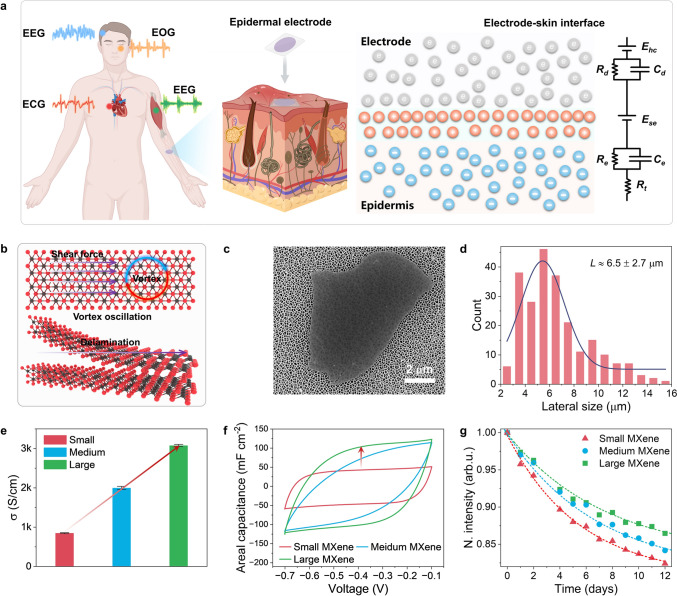 Figure 1
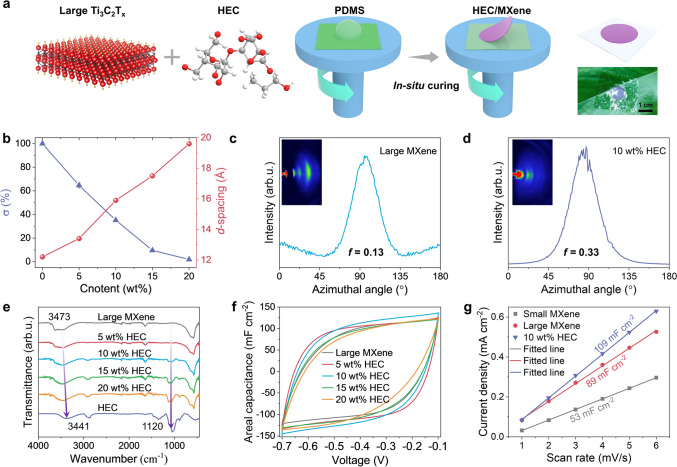 Figure 2
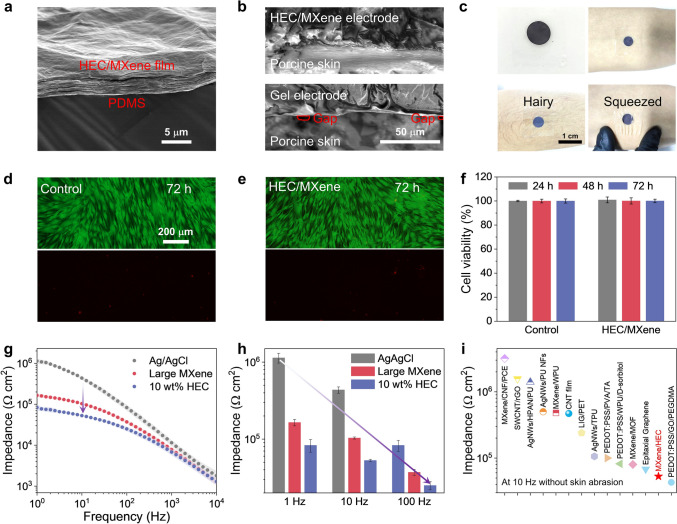 Figure 3
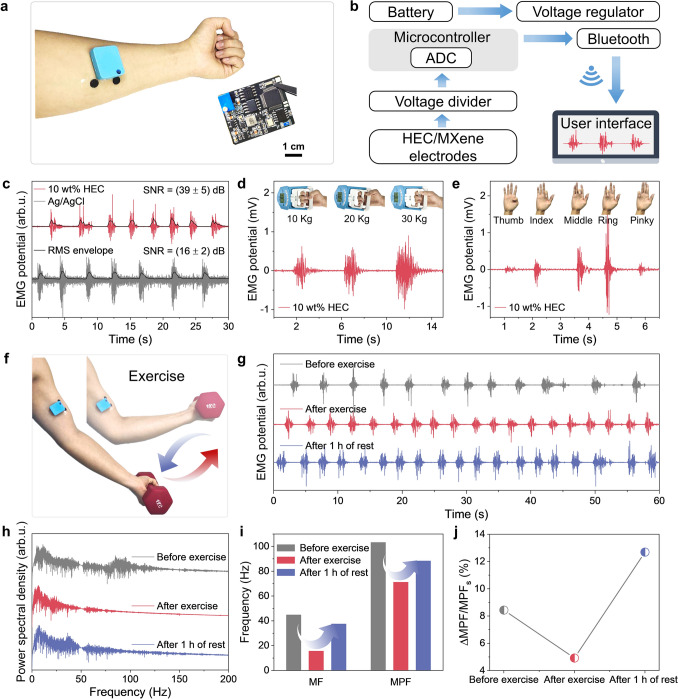 Figure 4
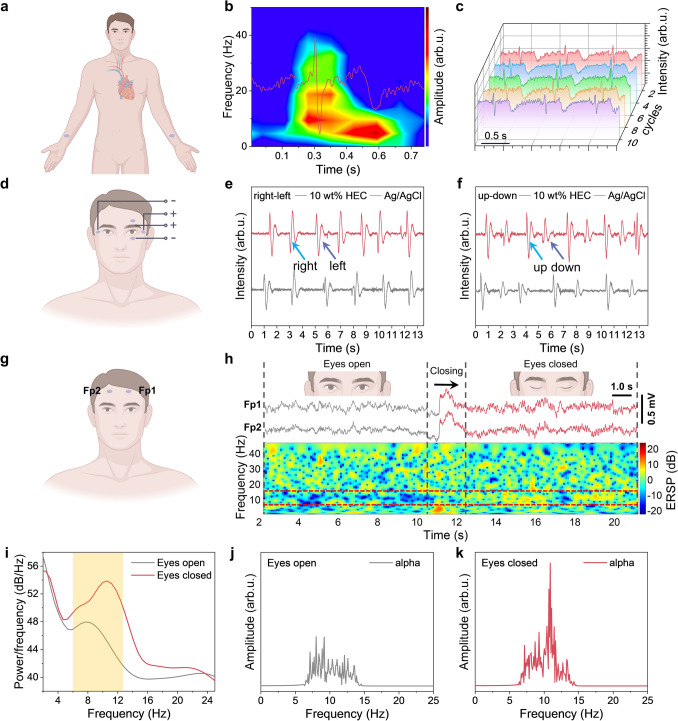 Figure 5
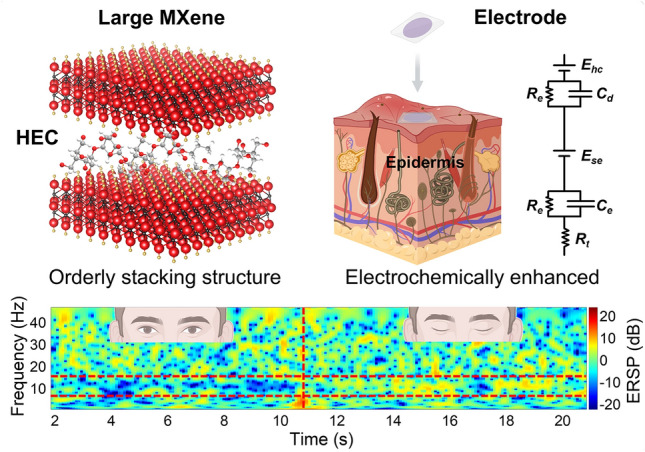 Figure 6
Peer Reviews
No public reviews on file for this paper yet. If you reviewed it on a platform where reviews are public (OpenReview, ICLR, NeurIPS, ICML), you can paste yours below so the community can read it here.
Videos
No videos yet. Explain this paper in a talk, walkthrough, or lecture? Add one.
Taxonomy
TopicsMXene and MAX Phase Materials · Advanced Sensor and Energy Harvesting Materials · Nanomaterials and Printing Technologies