How Temporal Predictability of Threat and Action Preparation Affect Defensive Freezing Responses
Alina Koppold, Mana R. Ehlers, Alexandros Kastrinogiannis, Felix H. Klaassen, Karin Roelofs, Tina B. Lonsdorf

TL;DR
This study explores how humans prepare for threats and finds that freezing behavior involves both parasympathetic and sympathetic systems, regardless of whether the threat is predictable or not.
Contribution
The study introduces a modified paradigm to examine human action preparation under varying threat predictability using multimodal measures.
Findings
Threat conditions activated both parasympathetic (postural freezing) and sympathetic systems (skin conductance).
Temporal unpredictability of threat did not modulate freezing-like behavior or skin conductance responses.
Startle responses were inhibited during all conditions, indicating a generalized defensive mode.
Abstract
Defensive responses to threat are critical for survival and often involve freezing‐like behavior, which has been linked to action preparation. However, it remains unclear how this preparatory mechanism is influenced by unpredictable aversive stimuli that are difficult to discriminate or anticipate. In this study, we introduce a modified paradigm to examine how freezing‐like behavior is affected by action preparation under temporal threat predictability, unpredictability, and safety. Using a multimodal approach in a large sample (n = 235, 148 female), we assessed postural sway and heart rate as markers of freezing‐like behavior, alongside skin conductance levels, electromyographic startle responses, behavioral performance, and subjective ratings. Behaviorally, participants responded faster but less accurately under threat compared to safety, replicating previous findings.…
Genes, proteins, chemicals, diseases, species, mutations and cell lines named across the full text — each resolved to its canonical identifier and authoritative record.
Click any figure to enlarge with its caption.
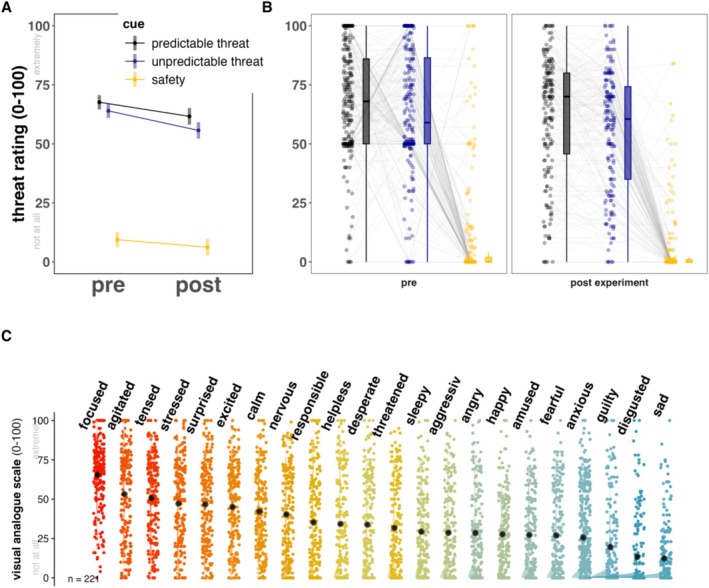 Figure 1
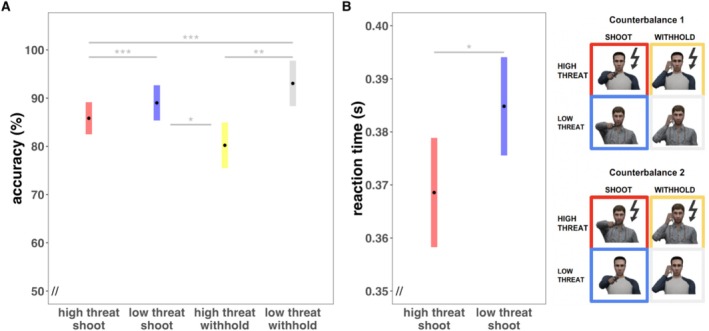 Figure 2
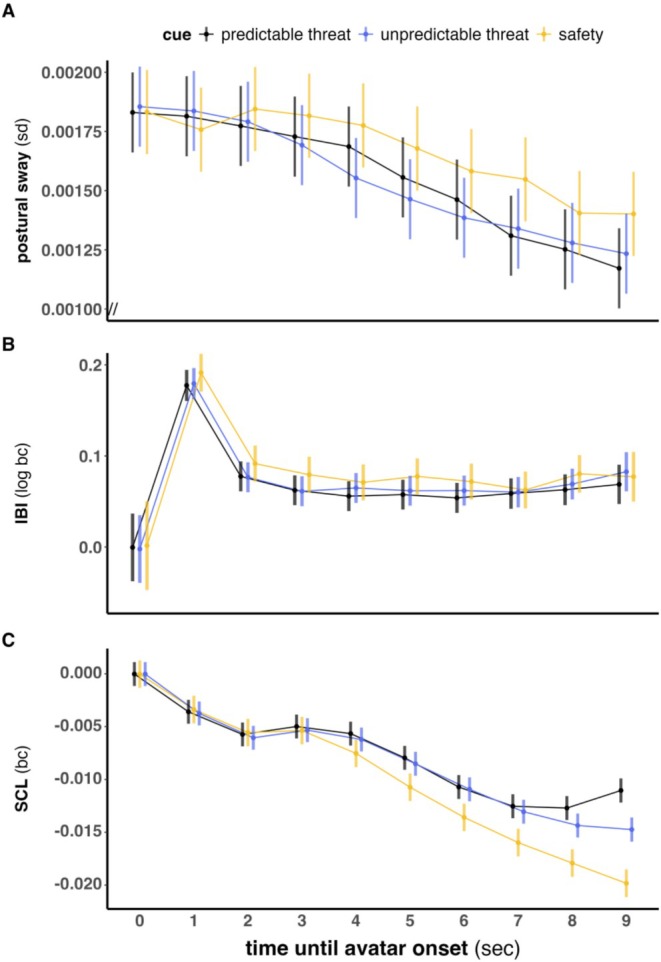 Figure 3
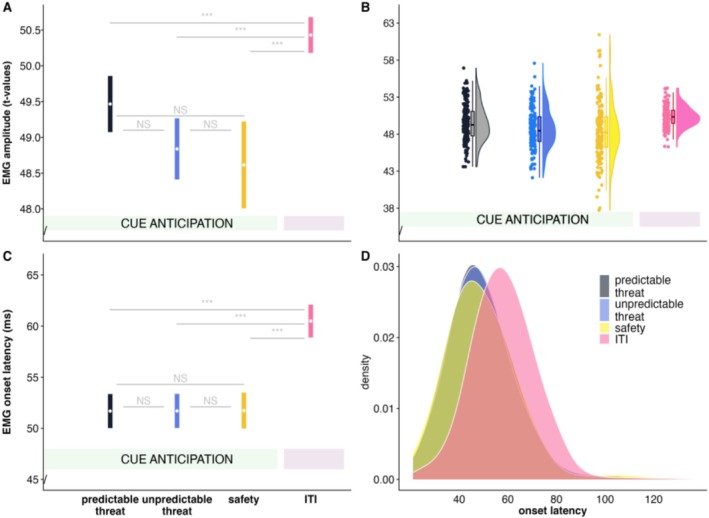 Figure 4
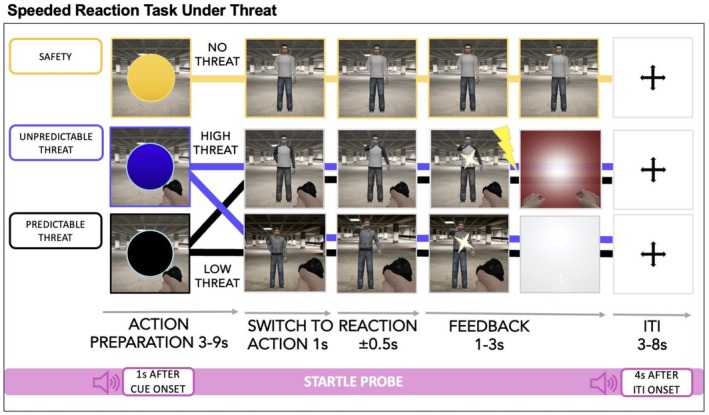 Figure 5
Peer Reviews
No public reviews on file for this paper yet. If you reviewed it on a platform where reviews are public (OpenReview, ICLR, NeurIPS, ICML), you can paste yours below so the community can read it here.
Videos
No videos yet. Explain this paper in a talk, walkthrough, or lecture? Add one.
Taxonomy
TopicsAction Observation and Synchronization · Stress Responses and Cortisol · Neural and Behavioral Psychology Studies