Computational Modelling of Novelty Detection in the Mismatch Negativity Protocols and Its Impairments in Schizophrenia
Ahmed Eissa, Jan Fredrik Kismul, Atle Bråthen Pentz, Torbjørn Elvsåshagen, Christoph Metzner, Ibrahim Akkouh, Srdjan Djurovic, Alexey Shadrin, Marja‐Leena Linne, Gaute T. Einevoll, Ole A. Andreassen, Tuomo Mäki‐Marttunen

TL;DR
This paper develops a computational model to understand how the brain detects novel sounds and how this process is impaired in schizophrenia.
Contribution
A novel integrate-and-fire spiking network model is introduced to simulate auditory novelty detection and its disruption in schizophrenia.
Findings
The model reliably reproduces MMN-like novelty detection and can test SCZ-related cellular alterations.
Reduced pyramidal cell excitability and decreased spine density impair novelty detection, with spine density loss causing stronger deficits.
Phase locking in a synfire chain network with STDP can theoretically achieve rhythmic stimulus entrainment.
Abstract
The human auditory system rapidly distinguishes between novel and familiar sounds, a process reflected in mismatch negativity (MMN), an electroencephalogram (EEG)‐based biomarker of auditory novelty detection. MMN is impaired in psychiatric conditions, most notably schizophrenia (SCZ), yet the neuronal mechanisms underlying this deficit remain unclear. Here, we combined computational modelling and genetic analyses to investigate how SCZ‐associated cellular abnormalities affect auditory novelty detection. We developed an integrate‐and‐fire spiking network model capable of detecting four types of auditory novelty, including stimulus omission. Based on assumptions of short‐term depressing synapses between the subpopulations of the network and the existence of neuronal inputs that are phase‐locked to the rhythm of the recently experienced stimulus sequence, we showed that the model reliably…
Genes, proteins, chemicals, diseases, species, mutations and cell lines named across the full text — each resolved to its canonical identifier and authoritative record.
Click any figure to enlarge with its caption.
 Figure 1
 Figure 2
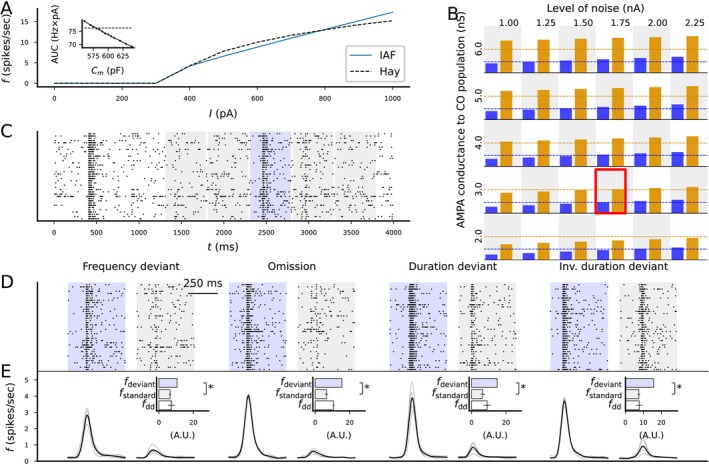 Figure 3
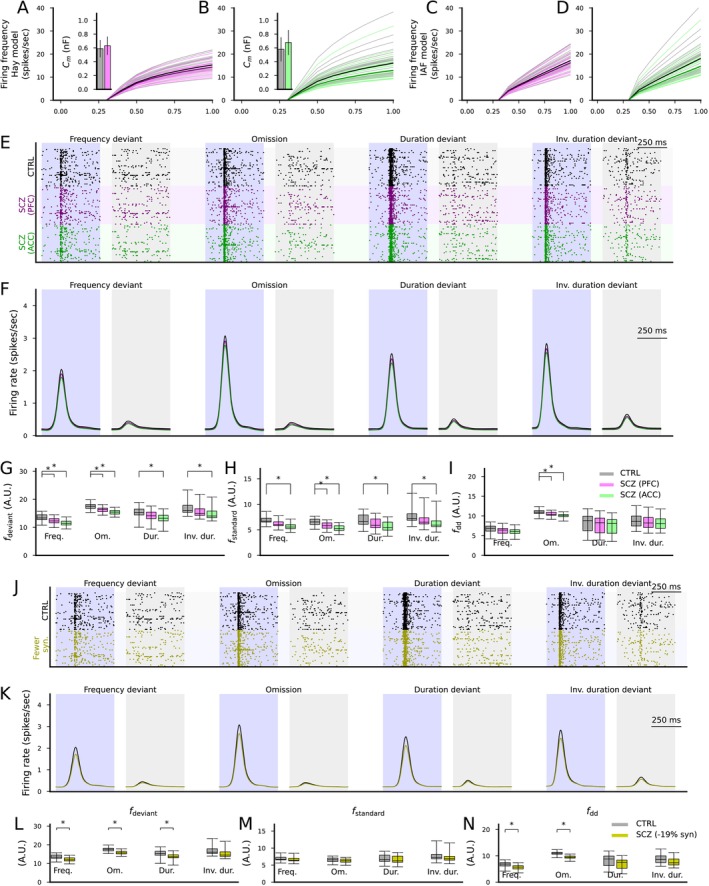 Figure 4
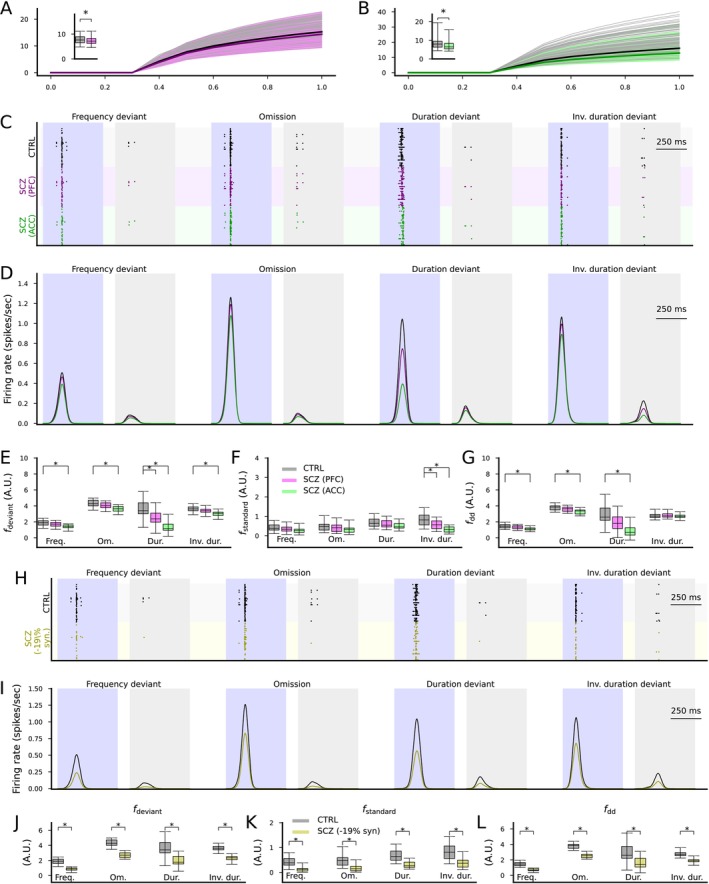 Figure 5
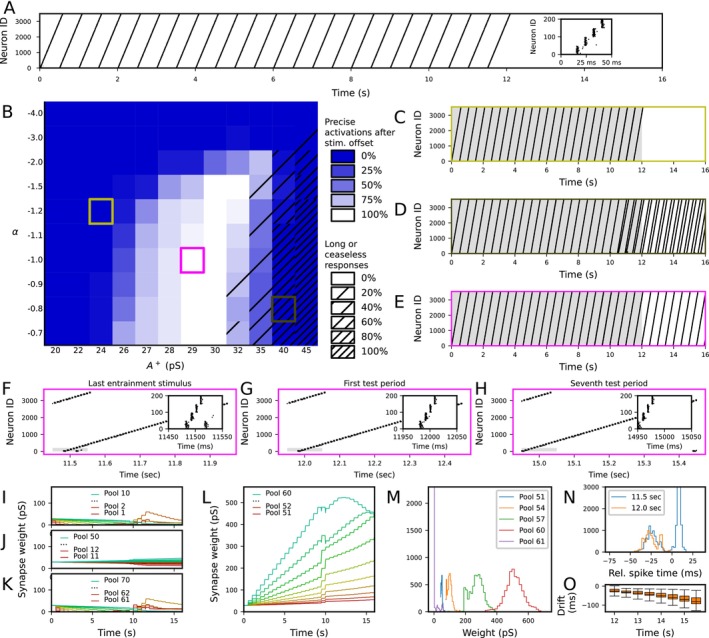 Figure 6
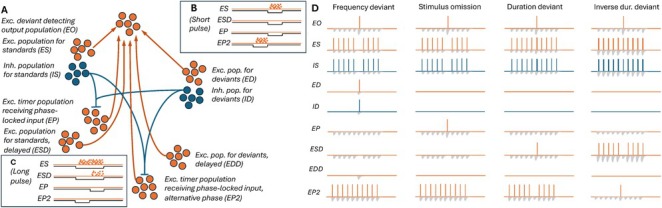 Figure 7
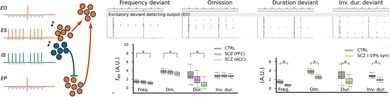 Figure 8
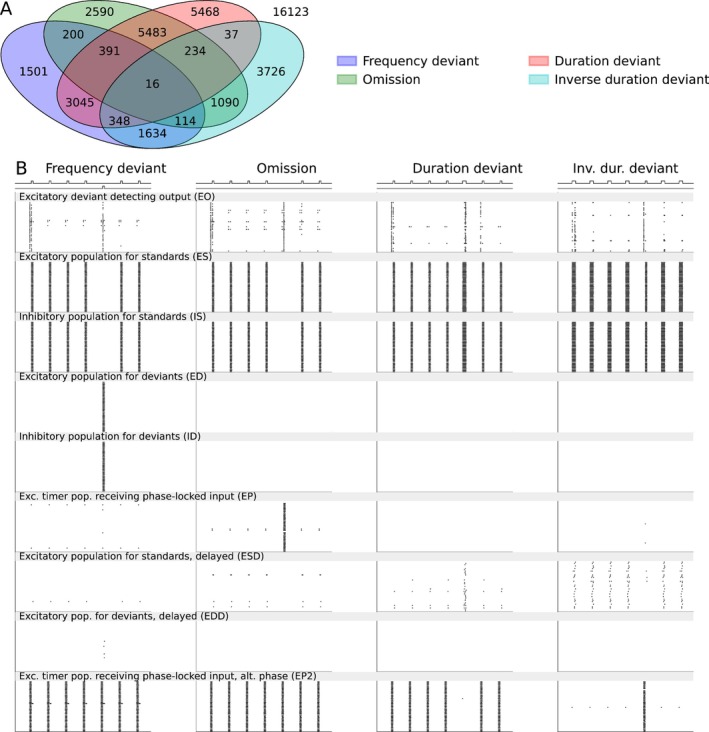 Figure 9
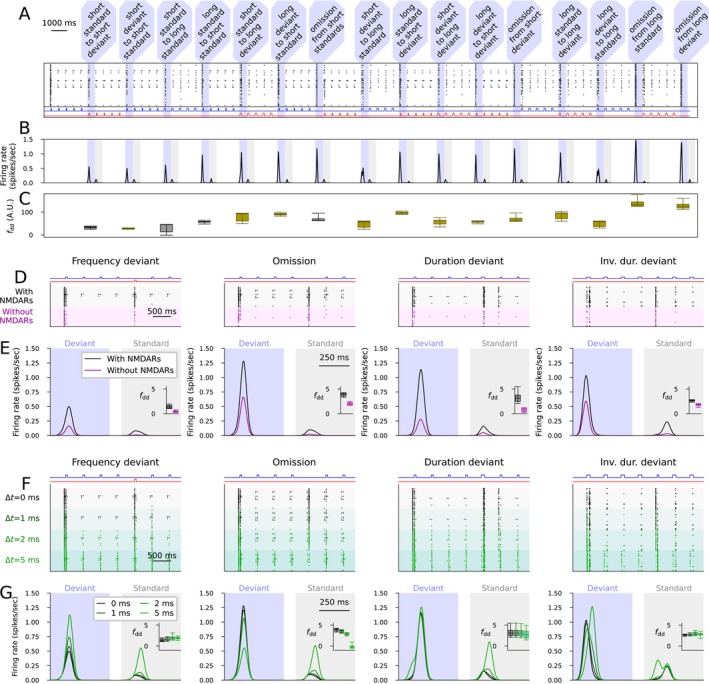 Figure 10
Peer Reviews
No public reviews on file for this paper yet. If you reviewed it on a platform where reviews are public (OpenReview, ICLR, NeurIPS, ICML), you can paste yours below so the community can read it here.
Videos
No videos yet. Explain this paper in a talk, walkthrough, or lecture? Add one.
Taxonomy
TopicsNeuroscience and Music Perception · Neural dynamics and brain function · Music and Audio Processing