Blood-based biomarkers for Alzheimer’s disease diagnosis: a joint position paper from the Italian Societies of Neurology (SIN) and of Clinical Biochemistry and Clinical Molecular Biology - Laboratory Medicine(SIBioC) and from the Autonomous Association affiliated with SIN for dementia (SINdem)
Lorenzo Gaetani, Luisa Agnello, Andrea Pilotto, Alberto Benussi, Annachiara Cagnin, Lucilla Parnetti, Marco Bozzali, Alessandro Padovani, Marcello Ciaccio, Marco Canevelli, Marco Canevelli, Giordano Cecchetti, Giuseppe Di Fede, Giulia Giacomucci, Guido Maria Giuffrè

TL;DR
This paper outlines guidelines for using blood-based biomarkers in diagnosing Alzheimer's disease, emphasizing their potential and the need for standardized clinical implementation.
Contribution
The paper provides consensus recommendations for integrating blood-based Alzheimer’s biomarkers into clinical practice in Italy.
Findings
Phosphorylated tau at threonine 217 (p-tau217) shows high diagnostic accuracy for Alzheimer’s disease.
Fully automated platforms improve analytical robustness and reproducibility of blood biomarker testing.
The paper emphasizes pre-analytical handling and contextual interpretation of biomarker results.
Abstract
Blood-based biomarkers are reshaping the diagnostic paradigm of Alzheimer’s disease (AD), offering a minimally invasive alternative to cerebrospinal fluid (CSF) and positron emission tomography (PET). However, their clinical implementation requires harmonized analytical validation, standardized procedures, and clear guidance on appropriate use and interpretation. This joint position paper was developed by the Study Groups on Biomarkers in Neurology of the Italian Society of Neurology (SIN) and the Italian Society of Clinical Biochemistry and Clinical Molecular Biology – Laboratory Medicine (SIBioC), together with the Autonomous Association affiliated with SIN for Dementia (SINdem). A multidisciplinary panel of neurologists and laboratory experts systematically reviewed current evidence, international guidelines, and regulatory frameworks to formulate consensus recommendations for…
Genes, proteins, chemicals, diseases, species, mutations and cell lines named across the full text — each resolved to its canonical identifier and authoritative record.
Click any figure to enlarge with its caption.
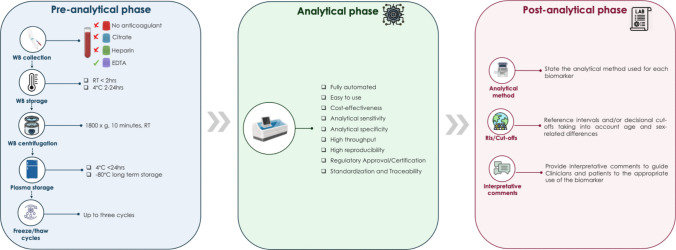 Figure 1
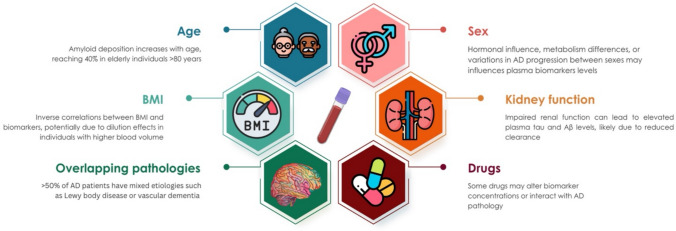 Figure 2
Peer Reviews
No public reviews on file for this paper yet. If you reviewed it on a platform where reviews are public (OpenReview, ICLR, NeurIPS, ICML), you can paste yours below so the community can read it here.
Videos
No videos yet. Explain this paper in a talk, walkthrough, or lecture? Add one.
Taxonomy
TopicsDementia and Cognitive Impairment Research · Alzheimer's disease research and treatments · Intracerebral and Subarachnoid Hemorrhage Research