Treatment failure in a dog with acute Babesia canis infection using lower-range therapeutic doses of imidocarb dipropionate
Ingo Schäfer, Vanessa Baitis, Christina Strube, Kriti Jindal, Elisabeth Müller, Torsten J. Naucke, Andreas Moritz

TL;DR
A dog with acute Babesia canis infection did not respond to standard doses of imidocarb dipropionate but recovered after higher doses, highlighting treatment guidelines and monitoring.
Contribution
This case report highlights treatment failure with lower-range imidocarb dipropionate doses and recommends higher dosages and molecular confirmation for B. canis infections.
Findings
The dog remained PCR positive after two lower-dose imidocarb dipropionate injections.
Clinical recovery and PCR negativity occurred after administering higher doses of imidocarb dipropionate.
Corticosteroid use in non-immunosuppressive doses is discouraged for B. canis infections without hemolytic anemia.
Abstract
Canine babesiosis caused by Babesia canis is considered an emerging disease in Central and Eastern European countries, including Germany. Imidocarb dipropionate is recommended for treatment of acute B. canis infections. A nine-year-old, male intact Golden Retriever living in Saxony, Germany, was presented in November 2025 due to lethargy, inappetence, vomiting, fever (39.6 °C), and darkened urine to a small animal veterinary practice. Ectoparasite prophylaxis was discontinued three months before the onset of clinical signs. An acute B. canis infection was diagnosed based on microscopic detection of large merozoites in peripheral blood smears, followed by Babesia spp. PCR and sequencing. Hematological examination revealed marked thrombocytopenia, mild non-regenerative anemia, lymphopenia, and eosinopenia. The dog remained PCR positive after two imidocarb dipropionate injections (2.0…
Genes, proteins, chemicals, diseases, species, mutations and cell lines named across the full text — each resolved to its canonical identifier and authoritative record.
Click any figure to enlarge with its caption.
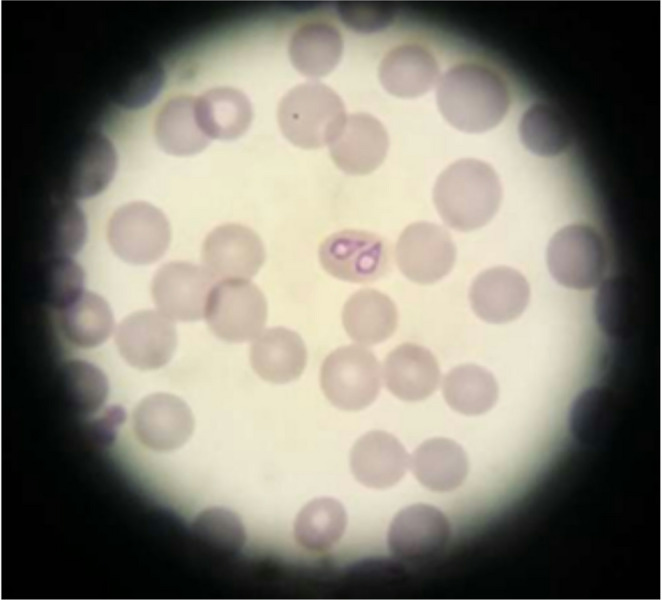 Figure 1
Peer Reviews
No public reviews on file for this paper yet. If you reviewed it on a platform where reviews are public (OpenReview, ICLR, NeurIPS, ICML), you can paste yours below so the community can read it here.
Videos
No videos yet. Explain this paper in a talk, walkthrough, or lecture? Add one.
Taxonomy
TopicsVector-borne infectious diseases · Rabies epidemiology and control · Herpesvirus Infections and Treatments