Intraductal cryobiopsy via percutaneous cholangioscopy for biliary strictures: a multicenter feasibility study
Jan Peveling-Oberhag, Christian Gerges, Jörg Albert, Lukas Welsch, Philip Grunert, Gilbert Rahe, Alexander Dechene, Axel Eickhoff, Matthias Dettmer, Walter Linzenbold, Markus Enderle, Thomas Rösch, Katharina Zimmermann-Fraedrich

TL;DR
This study shows that a new biopsy method called intraductal cryobiopsy, used through a percutaneous cholangioscopy, can collect larger and better-quality tissue samples from biliary strictures than traditional methods.
Contribution
The first feasibility study demonstrating intraductal cryobiopsy via percutaneous cholangioscopy for biliary stricture tissue sampling.
Findings
Cryobiopsy produced significantly larger and more representative tissue samples compared to forceps biopsies.
Cryobiopsy samples had higher histologic quality and fewer artifacts than forceps biopsies.
The procedure was safe with no major adverse events reported.
Abstract
Tissue diagnosis of biliary strictures is challenging and often requires multiple methods. Cryobiopsy, which is well established in bronchoscopy with high tissue yield, is presented here for the first time as a proof-of-principle feasibility study performed via the percutaneous route for biliary strictures. Patients undergoing percutaneous cholangioscopy for intraductal diagnosis of biliary strictures underwent six forceps biopsies and three cryobiopsies in a randomized order. The main objective was to assess feasibility, defined as the retrieval of at least one adequate sample per method per patient. Among 15 patients (53% women; mean age 60.2 years), all had at least one adequate sample obtained by each method. Cryobiopsy yielded significantly larger (8.54 vs. 1.87 mm 2 ; P < 0.001) and more representative specimens (97.6% vs. 74.7%; P = 0.001). It also scored higher on overall…
Genes, proteins, chemicals, diseases, species, mutations and cell lines named across the full text — each resolved to its canonical identifier and authoritative record.
Click any figure to enlarge with its caption.
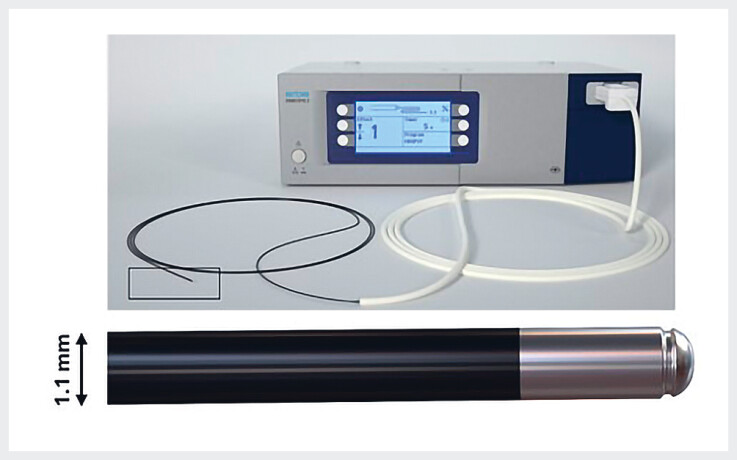 Figure 1
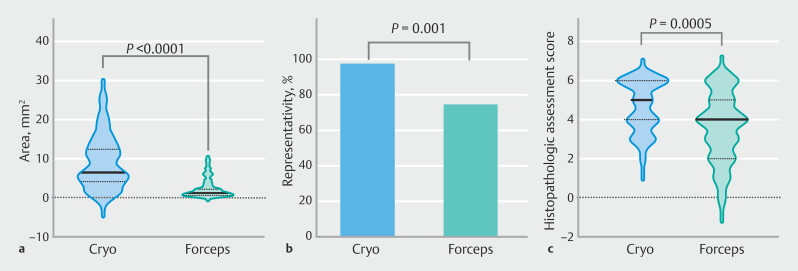 Figure 2
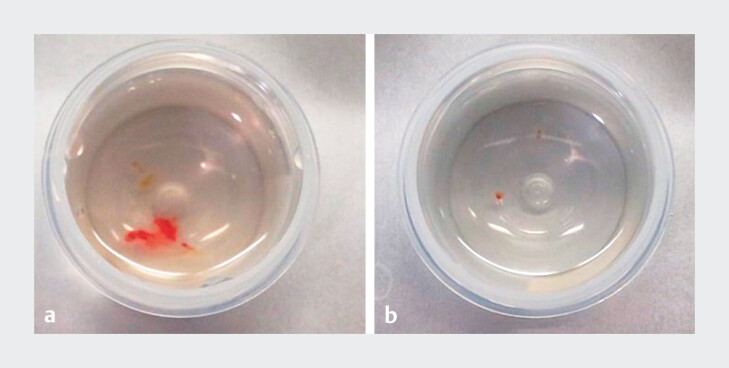 Figure 3
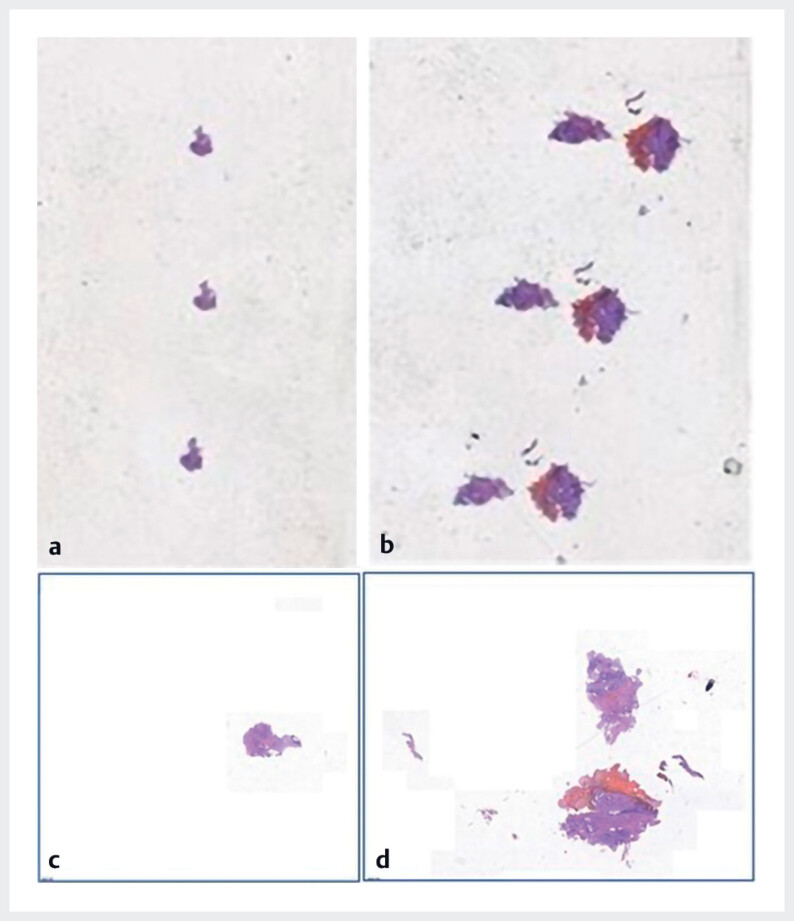 Figure 4
Peer Reviews
No public reviews on file for this paper yet. If you reviewed it on a platform where reviews are public (OpenReview, ICLR, NeurIPS, ICML), you can paste yours below so the community can read it here.
Videos
No videos yet. Explain this paper in a talk, walkthrough, or lecture? Add one.
Taxonomy
TopicsGallbladder and Bile Duct Disorders · Biliary and Gastrointestinal Fistulas · Cholangiocarcinoma and Gallbladder Cancer Studies