Signal Amplification in the HPT Axis—Evidence for Its Existence, Location, Significance, and Molecular Mechanisms
Li Jing, Sarahna A. Moyd, Qiang Zhang

TL;DR
This paper explores how the HPT axis maintains stable thyroid hormone levels through signal amplification in the brain, offering insights into its mechanisms and implications for thyroid health.
Contribution
The paper introduces the concept of signal amplification in the brain as a key mechanism for robust thyroid hormone homeostasis.
Findings
Signal amplification occurs in the brain, not the thyroid, to maintain stable thyroid hormone levels.
Multiple signaling pathways in the hypothalamus and pituitary amplify T3 signals for effective feedback control.
This mechanism provides evolutionary advantages by minimizing disruptions to thyroid hormone levels.
Abstract
Thyroid hormones (THs) are under negative feedback regulation via the hypothalamic–pituitary‐thyroid (HPT) axis. How this axis operates to keep the circulating THs within a narrow physiological range is not well understood quantitatively. Led by the design principle of robust homeostatic feedback control, here we review and synthesize the literature under a unifying theme of signal amplification in the HPT axis, providing evidence for its existence, location, functional significance, and potential molecular mechanisms. Drawing on human studies of the circulating TSH‐T4 relationship, we assert that a signal amplifier exists in the brain, where the TH feedback signal is amplified to inhibit TRH and TSH. With mathematical models we illustrate that placing the signal amplifier of the HPT feedback loop in the brain, not in the thyroid, provides an evolutionary advantage, which minimizes the…
Genes, proteins, chemicals, diseases, species, mutations and cell lines named across the full text — each resolved to its canonical identifier and authoritative record.
Click any figure to enlarge with its caption.
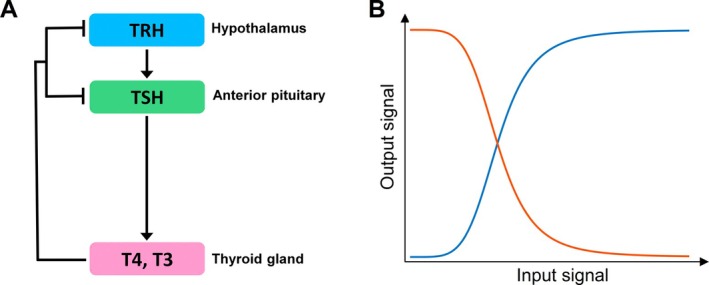 Figure 1
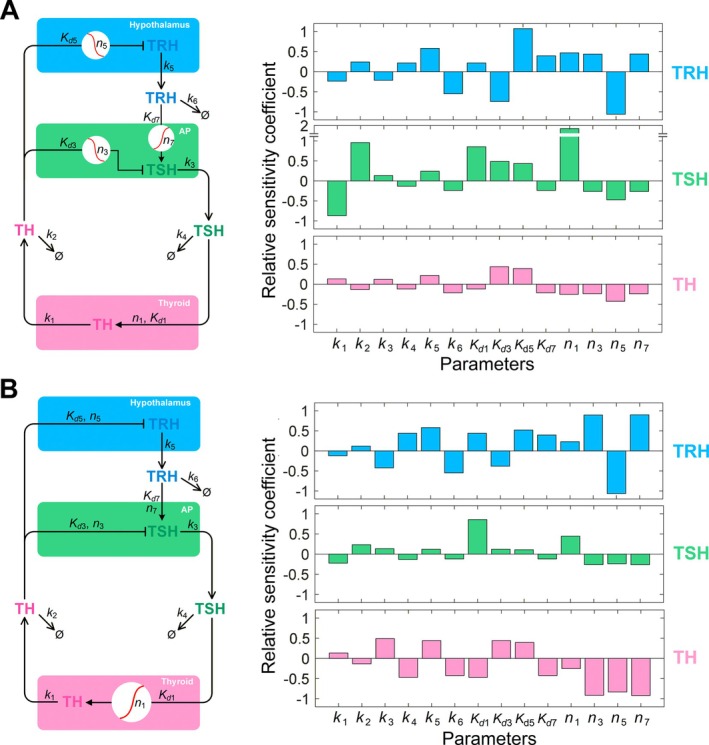 Figure 2
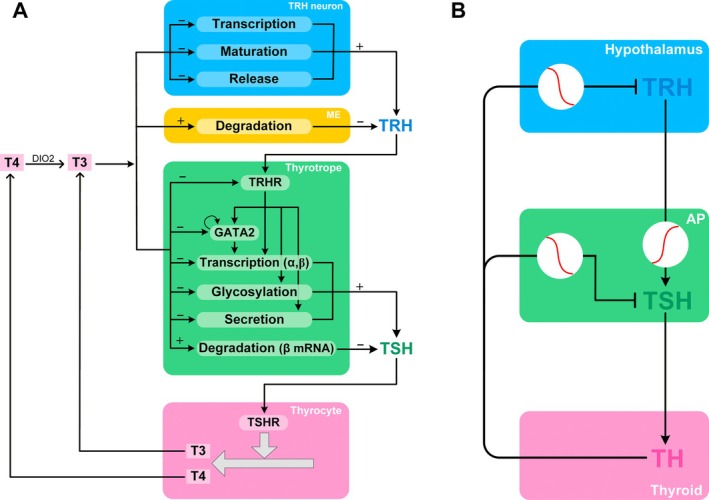 Figure 3
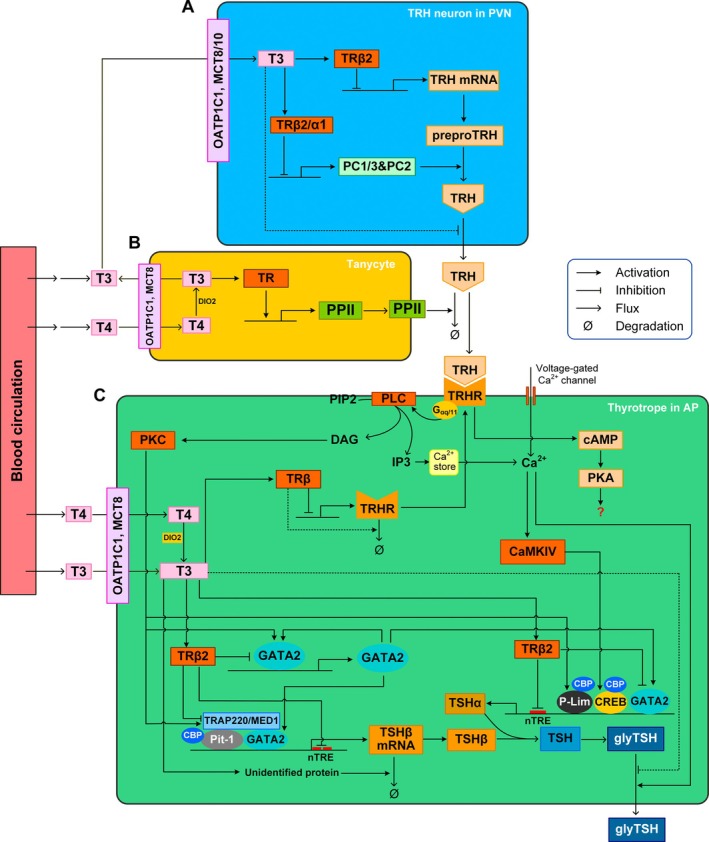 Figure 4
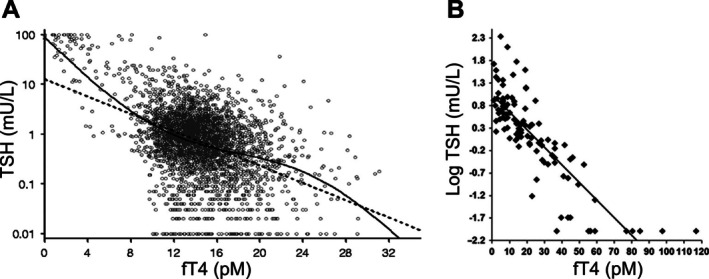 Figure 5
Peer Reviews
No public reviews on file for this paper yet. If you reviewed it on a platform where reviews are public (OpenReview, ICLR, NeurIPS, ICML), you can paste yours below so the community can read it here.
Videos
No videos yet. Explain this paper in a talk, walkthrough, or lecture? Add one.
Taxonomy
TopicsThyroid Disorders and Treatments · Growth Hormone and Insulin-like Growth Factors · Hypothalamic control of reproductive hormones