Bayesian-calibrated global sensitivity analysis for mathematical models using generative AI
Xuyuan Wang, Katharina Kusejko, Katharina Kusejko, Katharina Kusejko, Katharina Kusejko

TL;DR
This paper introduces a new method using generative AI to analyze how sensitive biological models are to parameter changes, even when parameters are correlated.
Contribution
A novel Bayesian-calibrated global sensitivity analysis framework using generative models that handles parameter correlations without restrictive assumptions.
Findings
The method effectively captures parameter sensitivities in the presence of correlations in biological models.
It achieves scalability and flexibility improvements over existing sensitivity analysis techniques.
Applications to a COVID-19 and cancer immunotherapy model demonstrate its effectiveness.
Abstract
We present a generative modeling framework for global sensitivity analysis (GSA) in complex systems characterized by strong and potentially high-dimensional parameter correlations. Traditional variance-based GSA methods rely on the assumption of independent inputs, which rarely holds for Bayesian-calibrated models. While recent extensions using Rosenblatt transformations and Shapley effects theoretically address this limitation, their implementation requires accurate conditional sampling from correlated joint distributions, a task that remains challenging. Existing solutions suffer from restrictive assumptions on input dependence, which limit their applicability to complex data-driven problems. Our method addresses these challenges by reframing sensitivity analysis as a post calibration task on Bayesian posterior distributions, where parameter correlations are learned from data using…
Genes, proteins, chemicals, diseases, species, mutations and cell lines named across the full text — each resolved to its canonical identifier and authoritative record.
Click any figure to enlarge with its caption.
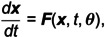 Figure 1
 Figure 2
 Figure 3
 Figure 4
 Figure 5
 Figure 6
 Figure 7
 Figure 8
 Figure 9
 Figure 10
 Figure 11
 Figure 12
 Figure 13
 Figure 14
 Figure 15
 Figure 16
 Figure 17
 Figure 18
 Figure 19
 Figure 20
 Figure 21
 Figure 22
 Figure 23
 Figure 24
 Figure 25
 Figure 26
 Figure 27
 Figure 28
 Figure 29
 Figure 30
 Figure 31
 Figure 32
 Figure 33
 Figure 34
 Figure 35
 Figure 36
 Figure 37
 Figure 38
 Figure 39
 Figure 40
 Figure 41
 Figure 42
 Figure 43
 Figure 44
 Figure 45
 Figure 46
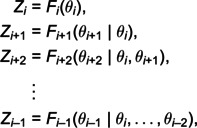 Figure 47
 Figure 48
 Figure 49
 Figure 50
Peer Reviews
No public reviews on file for this paper yet. If you reviewed it on a platform where reviews are public (OpenReview, ICLR, NeurIPS, ICML), you can paste yours below so the community can read it here.
Videos
No videos yet. Explain this paper in a talk, walkthrough, or lecture? Add one.
Taxonomy
TopicsModel Reduction and Neural Networks · Generative Adversarial Networks and Image Synthesis · Tensor decomposition and applications