Physical Mechanisms of an Unconventional Green Fluorescent Protein Indicator for Chloride
Mfon V. Sunday, Ke Ji, Derik A. Adams, Weicheng Peng, Sheel C. Dodani, Alice R. Walker

TL;DR
This paper explores how a unique green fluorescent protein from a jellyfish responds to different anions like chloride, using simulations and experiments to understand its behavior.
Contribution
The study reveals a new mechanism of anion sensitivity in a green fluorescent protein through combined theoretical and experimental approaches.
Findings
cgreGFP is sensitive to anions including chloride, bromide, iodide, and nitrate.
Anion binding alters the chromophore equilibrium, causing a turn-off fluorescence response at acidic pH.
Mutagenesis of the anion entry pathway validates the theoretical predictions.
Abstract
Fluorescent proteins bearing an intrinsic tripeptide chromophore exhibit diverse, tunable photophysical features that are exceptional for biosensing applications. However, atomic-level details of these sensing mechanisms are obscured experimentally, particularly as protein motions, including the chromophore, cannot be divined from the structure alone. Molecular dynamics (MD) simulations can bridge this gap, providing a landscape of global and local protein motions with resolution to key amino acids connected to function and potential for engineering. In this study, we uncover that the green fluorescent protein from the jellyfish Clytia gregaria (cgreGFP) is sensitive to anions, including chloride, bromide, iodide, and nitrate, with a combination of theoretical and experimental investigations. Constant pH molecular dynamics (CpHMD) simulations reveal a coordinated entry of all four…
Genes, proteins, chemicals, diseases, species, mutations and cell lines named across the full text — each resolved to its canonical identifier and authoritative record.
Click any figure to enlarge with its caption.
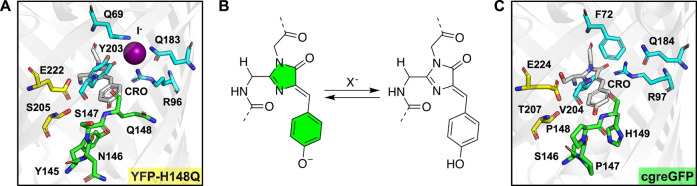 Figure 1
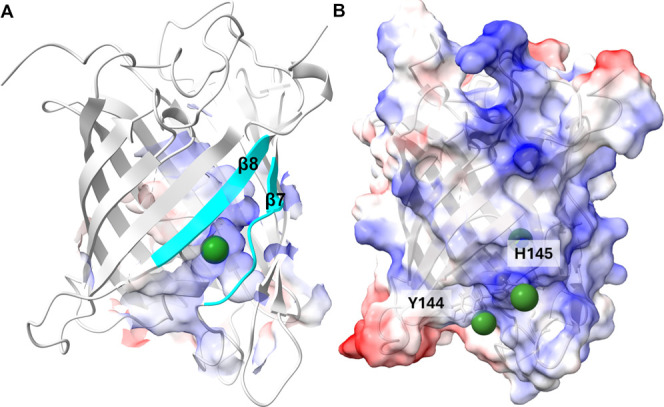 Figure 2
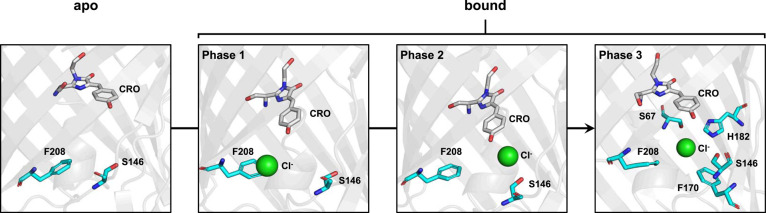 Figure 3
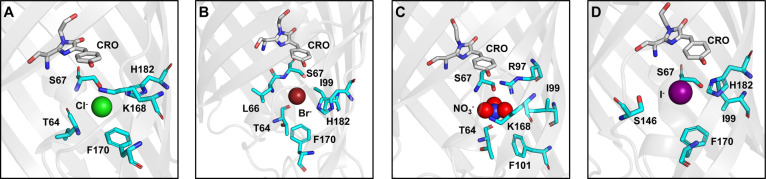 Figure 4
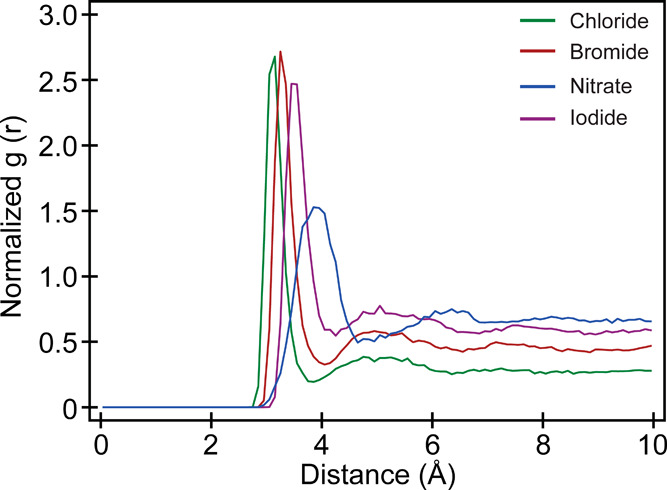 Figure 5
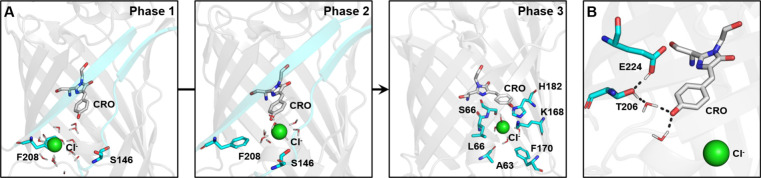 Figure 6
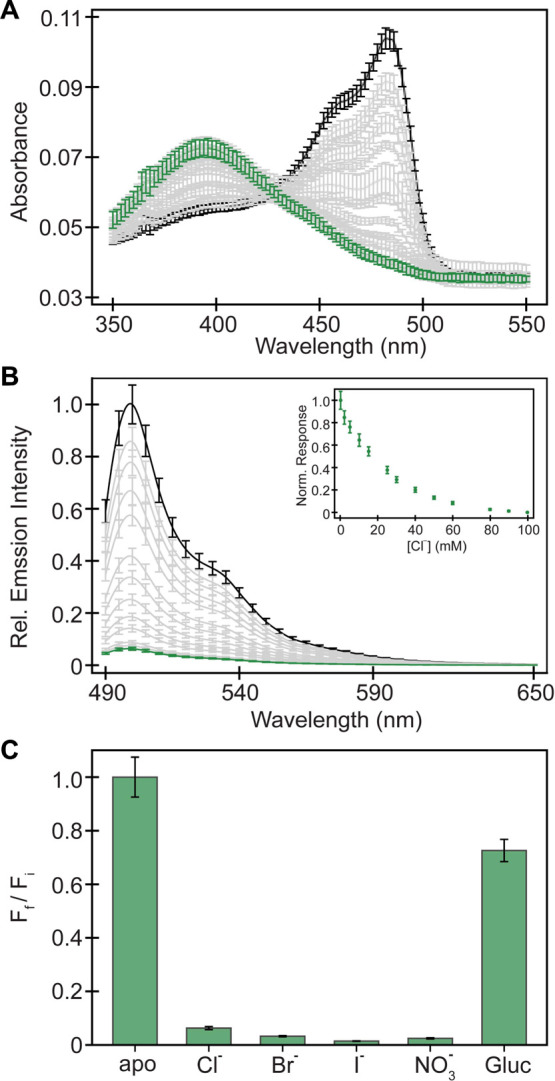 Figure 7
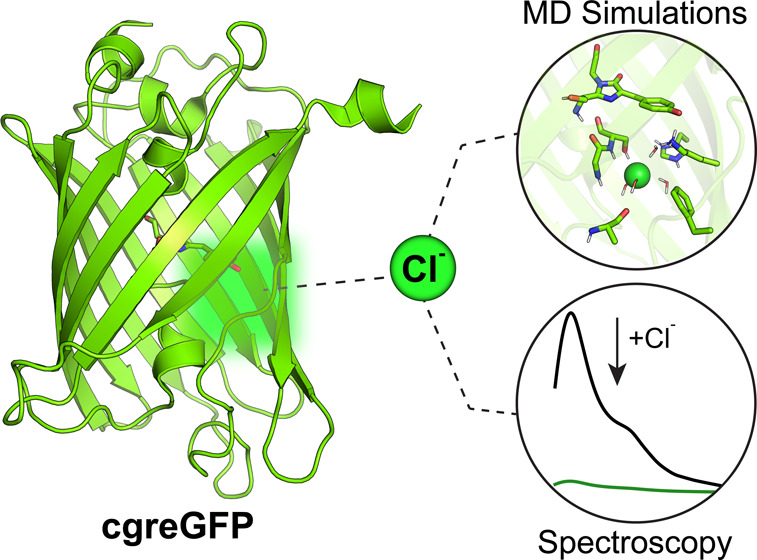 Figure 8
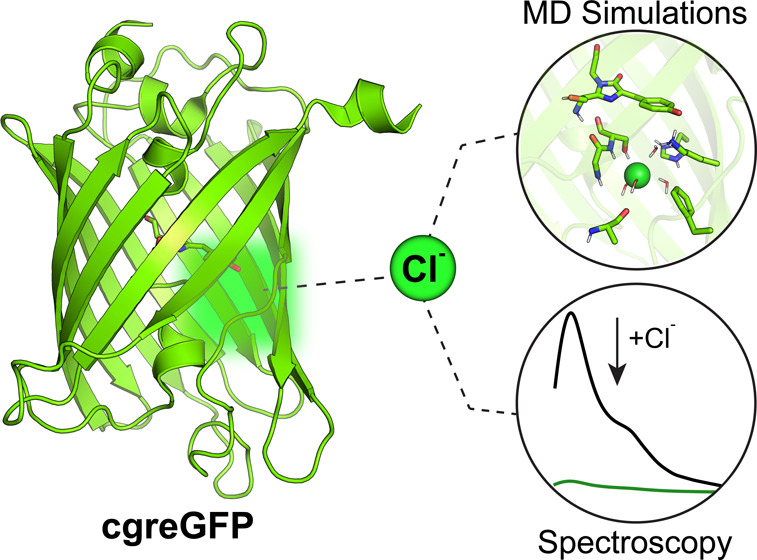 Figure 9
 Figure 10
Peer Reviews
No public reviews on file for this paper yet. If you reviewed it on a platform where reviews are public (OpenReview, ICLR, NeurIPS, ICML), you can paste yours below so the community can read it here.
Videos
No videos yet. Explain this paper in a talk, walkthrough, or lecture? Add one.
Taxonomy
TopicsAdvanced Fluorescence Microscopy Techniques · Photoreceptor and optogenetics research · Spectroscopy and Quantum Chemical Studies