Eye movements reflect memory-related theta activity in the human brain
Humza N. Zubair, Matthias Stangl, Uros Topalovic, Cory Inman, Martin Seeber, Sonja Hiller, Vikram R. Rao, Casey H. Halpern, Dawn Eliashiv, Itzhak Fried, Nanthia Suthana, Christian Schnell, PhD, Christian Schnell, PhD, Christian Schnell, PhD, Christian Schnell, PhD

TL;DR
The study shows that eye movements, especially during memory tasks, are linked to theta brain activity in the medial temporal lobe during human navigation.
Contribution
The study reveals a novel link between saccadic eye movements and memory-related theta activity in the human medial temporal lobe during navigation.
Findings
MTL theta power increases during saccades under memory demands.
Theta power is higher during exploratory gaze patterns and better memory performance.
Theta activity aligns with saccade timing during both memory- and visually-guided navigation.
Abstract
Numerous studies across species emphasize the importance of theta oscillations within medial temporal lobe (MTL) regions, such as the hippocampus, in relation to memory. In rodents, physical movement strongly influences theta activity, while this relationship remains more ambiguous in primates. This disparity could stem from the increased reliance on visual search in primates during navigation. To explore this, we analyzed intracranial electroencephalographic (iEEG) activity from the human MTL recorded simultaneously with body and eye movements during ambulatory navigation. We found that MTL theta power was significantly higher during periods when saccadic eye movements were taking place, and this effect was observed only during periods with overt memory demands. The largest increases occurred during saccades with more variable and exploratory gaze patterns, on trials with better memory…
Genes, proteins, chemicals, diseases, species, mutations and cell lines named across the full text — each resolved to its canonical identifier and authoritative record.
Click any figure to enlarge with its caption.
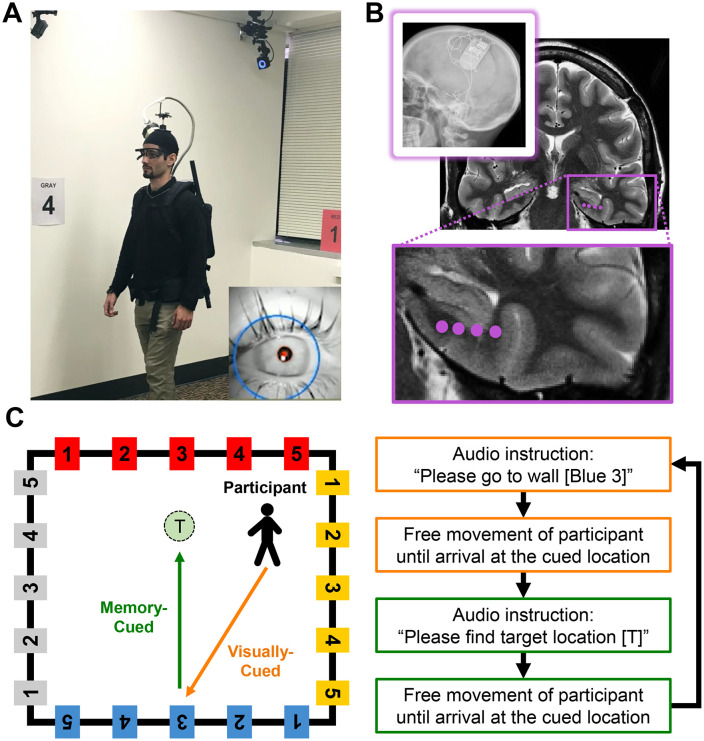 Figure 1
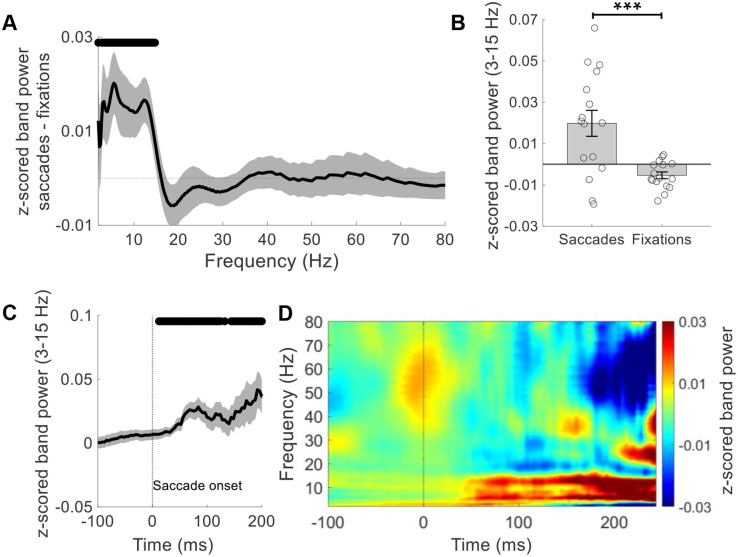 Figure 2
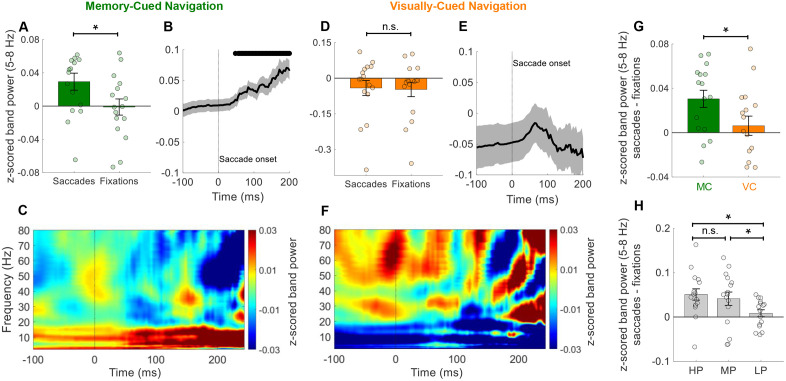 Figure 3
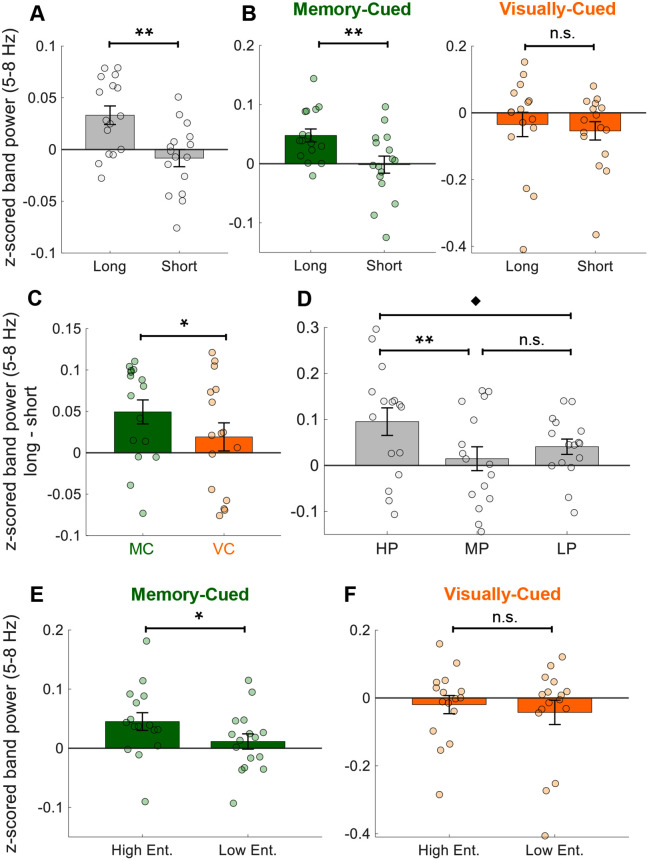 Figure 4
Peer Reviews
No public reviews on file for this paper yet. If you reviewed it on a platform where reviews are public (OpenReview, ICLR, NeurIPS, ICML), you can paste yours below so the community can read it here.
Videos
No videos yet. Explain this paper in a talk, walkthrough, or lecture? Add one.
Taxonomy
TopicsMemory and Neural Mechanisms · Neural and Behavioral Psychology Studies · Neuroscience and Music Perception