IVA-FL: An information-value-aware federated learning framework for Privacy-Preserving Financial data Risk Management
Jinyu Wu, Hanjie Xu, Tianfan Zhang, Ronghu Xu, Haozheng Wu, Zhengxi Huang

TL;DR
IVA-FL is a new privacy-preserving framework for financial risk management that improves model performance on rare events while maintaining data privacy.
Contribution
IVA-FL introduces a value-driven privacy preservation approach with adaptive mechanisms to handle class imbalance in financial data.
Findings
IVA-FL outperforms state-of-the-art methods in metrics like Recall, AUC, KS Statistic, and Brier Score under strict privacy constraints.
The framework is robust to data heterogeneity and adaptable to scenarios with feature heterogeneity and concept drift.
Adaptive noise injection maximizes signal-to-noise ratio for critical risk signals in imbalanced datasets.
Abstract
Federated Learning (FL) has emerged as a critical paradigm for enabling financial institutions to collaboratively train models while preserving data privacy. However, a fundamental challenge arises when applying Differential Privacy (DP) to financial risk management tasks characterized by severe class imbalance. The uniform noise injection of standard DP mechanisms disproportionately submerges the critical risk signals from rare events such as fraud or default. To address this, we introduce IVA-FL (Information-Value-Aware Federated Learning), a novel framework that shifts the privacy preservation paradigm from data-agnostic optimization to a value-driven approach. IVA-FL integrates three synergistic mechanisms: 1) an Information Value Scoring (IVS) mechanism that dynamically quantifies the importance of each sample based on real-time training loss; 2) an Adaptive Gradient Processing…
Genes, proteins, chemicals, diseases, species, mutations and cell lines named across the full text — each resolved to its canonical identifier and authoritative record.
Click any figure to enlarge with its caption.
 Figure 1
 Figure 2
 Figure 3
 Figure 4
 Figure 5
 Figure 6
 Figure 7
 Figure 8
 Figure 9
 Figure 10
 Figure 11
 Figure 12
 Figure 13
 Figure 14
 Figure 15
 Figure 16
 Figure 17
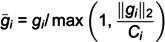 Figure 18
 Figure 19
 Figure 20
 Figure 21
 Figure 22
 Figure 23
 Figure 24
 Figure 25
 Figure 26
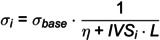 Figure 27
 Figure 28
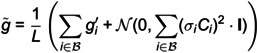 Figure 29
 Figure 30
 Figure 31
 Figure 32
 Figure 33
 Figure 34
 Figure 35
 Figure 36
 Figure 37
 Figure 38
 Figure 39
 Figure 40
 Figure 41
 Figure 42
 Figure 43
 Figure 44
 Figure 45
 Figure 46
 Figure 47
 Figure 48
 Figure 49
 Figure 50
Peer Reviews
No public reviews on file for this paper yet. If you reviewed it on a platform where reviews are public (OpenReview, ICLR, NeurIPS, ICML), you can paste yours below so the community can read it here.
Videos
No videos yet. Explain this paper in a talk, walkthrough, or lecture? Add one.
Taxonomy
TopicsFinancial Distress and Bankruptcy Prediction · Privacy-Preserving Technologies in Data · Imbalanced Data Classification Techniques