Unveiling the ecology and spatial dynamics of Trypanosoma cruzi, its DTUs and Triatoma vitticeps in the Atlantic Forest of south-eastern Espírito Santo State, Brazil
Raphael Testai, Felipe de Oliveira, Maria Augusta Dario, Ane Luíse Quinze Dias de Faro de Oliveira, Flávio Luis de Mello, Ana Maria Jansen, Samanta Cristina das Chagas Xavier

TL;DR
This study explores how environmental factors influence the spread of Trypanosoma cruzi and its vector, Triatoma vitticeps, in Brazil's Atlantic Forest.
Contribution
The study identifies wind speed as a novel abiotic factor influencing long-distance transmission of T. cruzi via infected triatomines.
Findings
T. vitticeps is most prevalent in high-altitude, humid regions with dense vegetation in Espírito Santo.
Wind speed, mammal richness, and temperature are key factors influencing T. vitticeps infection and dispersal.
Decision tree analysis correctly identified 84% of infected triatomines, highlighting the predictive potential of machine learning in this context.
Abstract
The transmission dynamics of Trypanosoma cruzi in natural environments exhibit considerable variation at the micro-locality scale. However, the specific biotic and abiotic factors driving this heterogeneity remain largely unidentified. The Atlantic Forest of the state of Espírito Santo (ES) presents a unique transmission network of T. cruzi, in which Triatoma vitticeps represents the absolute majority among existing triatomines, with high infection rates and diversity of genotypes, frequently invading homes. No infection was found in peridomestic mammals. This study aimed to elucidate the spatial and environmental distribution patterns of T. vitticeps and its infection by T. cruzi DTUs throughout Espírito Santo, quantifying the influence of abiotic variables on both vector occurrence and infection dynamics. Species Distribution Modeling (SDM) of T. cruzi genotypes in T. vitticeps…
Genes, proteins, chemicals, diseases, species, mutations and cell lines named across the full text — each resolved to its canonical identifier and authoritative record.
Click any figure to enlarge with its caption.
 Figure 1
 Figure 2
 Figure 3
 Figure 4
 Figure 5
 Figure 6
 Figure 7
 Figure 8
 Figure 9
 Figure 10
 Figure 11
 Figure 12
 Figure 13
 Figure 14
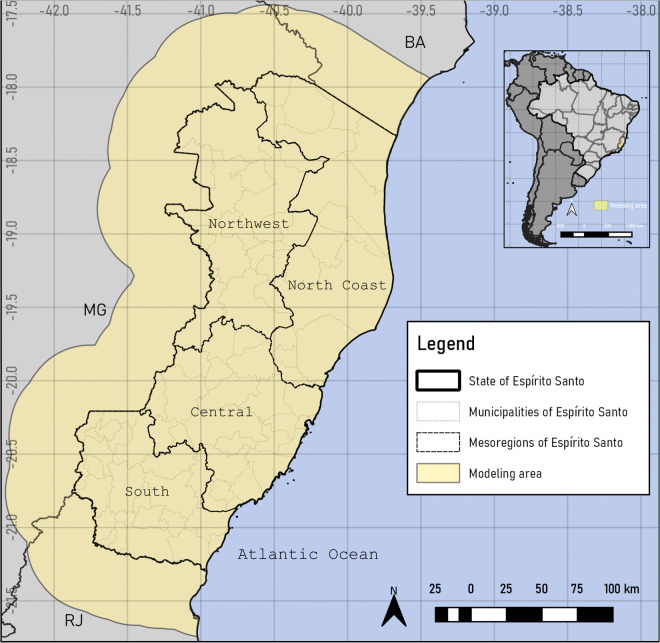 Figure 15
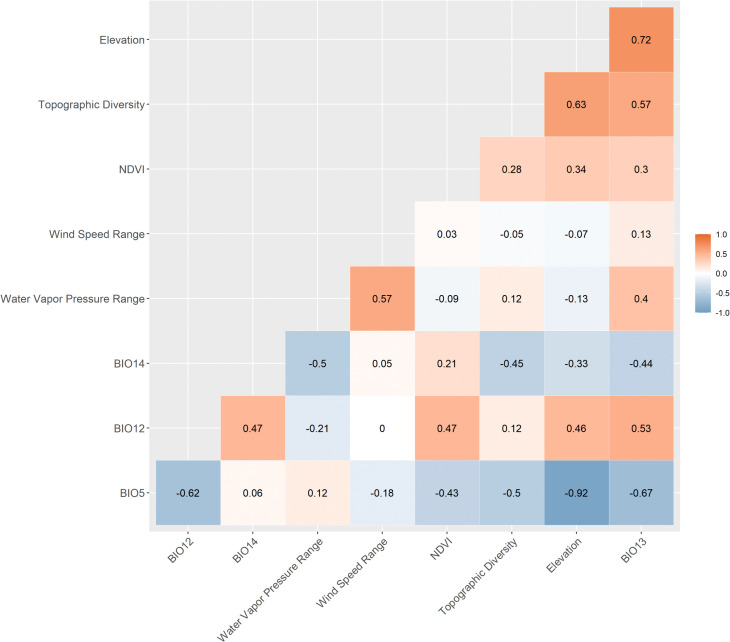 Figure 16
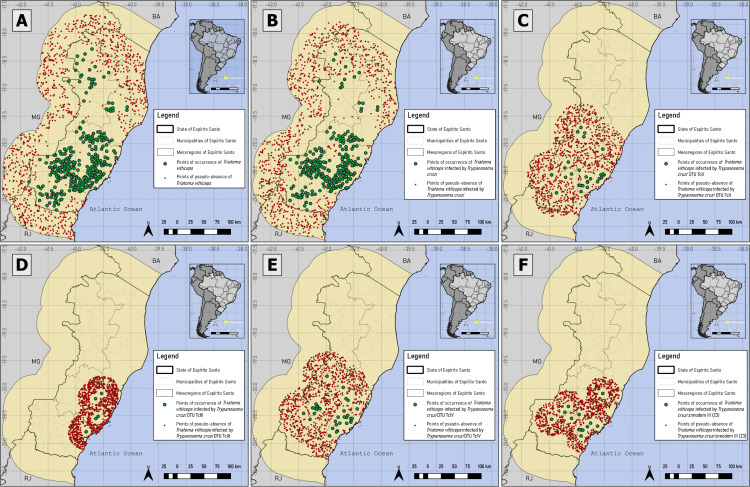 Figure 17
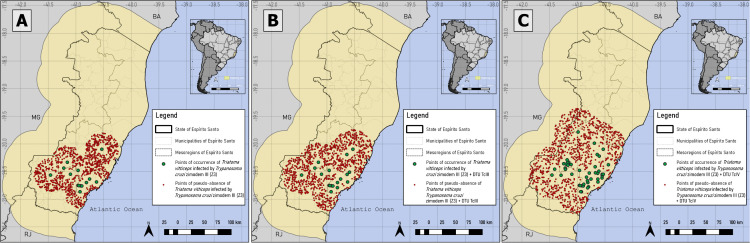 Figure 18
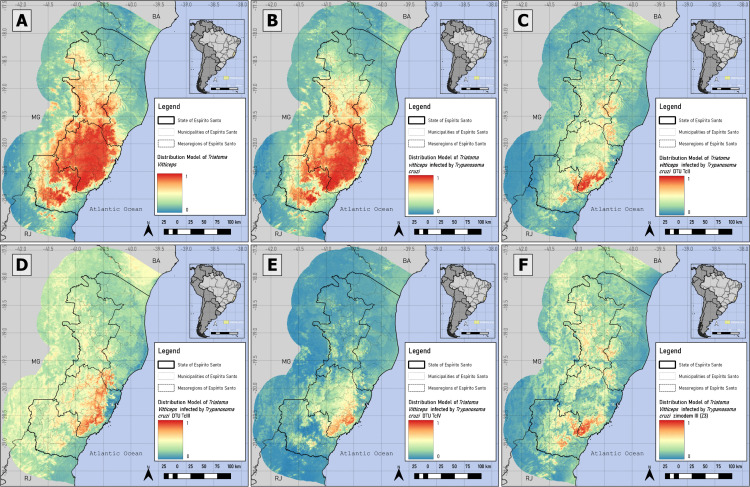 Figure 19
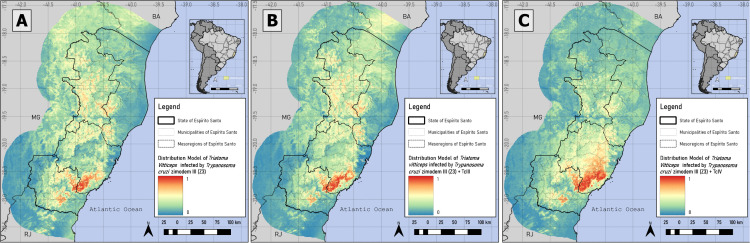 Figure 20
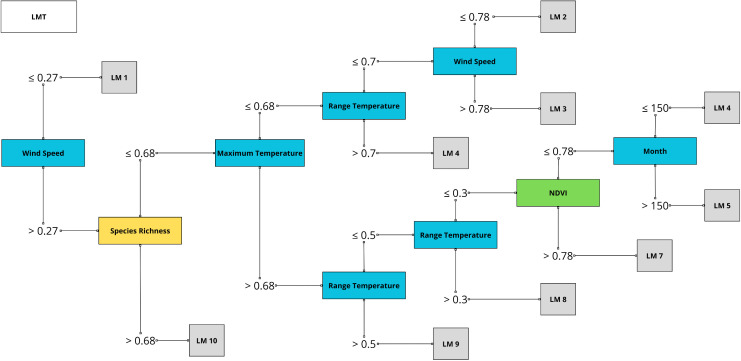 Figure 21
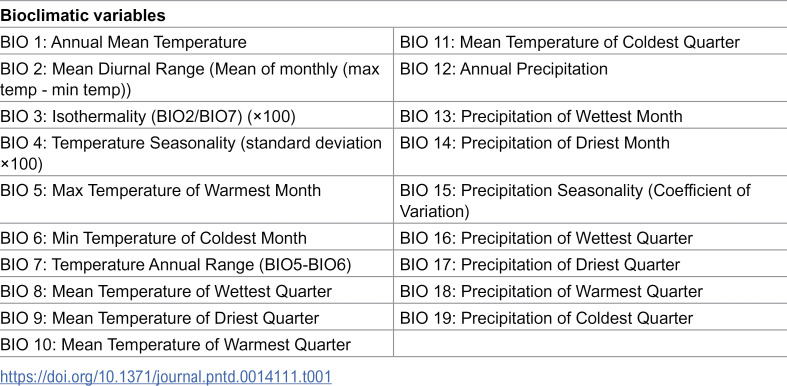 Figure 22
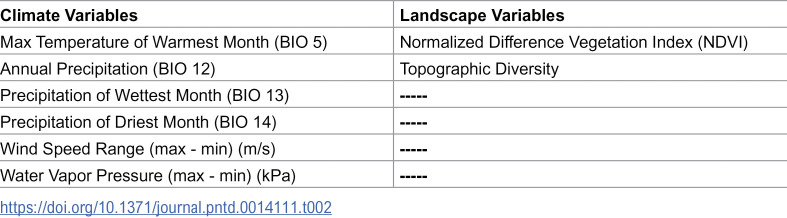 Figure 23
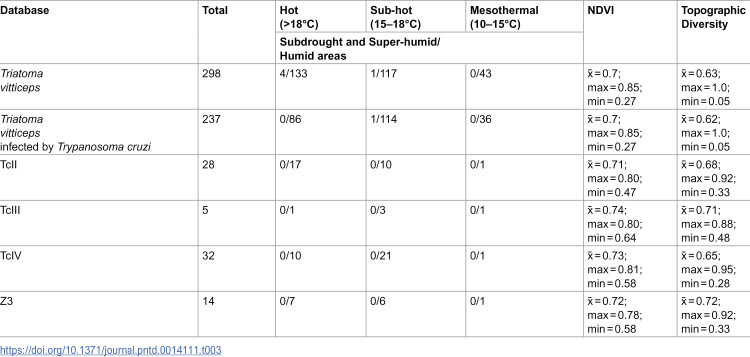 Figure 24
 Figure 25
 Figure 26
Peer Reviews
No public reviews on file for this paper yet. If you reviewed it on a platform where reviews are public (OpenReview, ICLR, NeurIPS, ICML), you can paste yours below so the community can read it here.
Videos
No videos yet. Explain this paper in a talk, walkthrough, or lecture? Add one.
Taxonomy
TopicsTrypanosoma species research and implications · Evolution and Paleontology Studies · Mosquito-borne diseases and control