Scoping review of knowledge, attitudes, and practices to zoonotic diseases among abattoir workers and residents in proximity to abattoirs in low-middle income countries
Oluwafemi Babatunde Daodu, Patricia Uche Ogbo, Ahmed Sherif Isa, Toyosi Yekeen Raheem, Uche Thecla Igbasi, Oluwabukola Mary Ola, Oluwatosin Eunice Olorunmoteni, Olabisi Adejibike Oduwole, Oluchukwu Perpetual Okeke, Folahanmi Tomiwa Akinsolu, Olajide Odunayo Sobande

TL;DR
This review maps knowledge, attitudes, and practices of abattoir workers in LMICs regarding zoonotic diseases, highlighting gaps in prevention and a lack of research on nearby residents.
Contribution
The study identifies a major research gap by showing no studies have examined residents near abattoirs and introduces a conceptual framework for future interventions.
Findings
Abattoir workers in LMICs have variable knowledge of zoonotic diseases but poor preventive practices.
No studies have assessed the KAP of residents living near abattoirs, indicating a significant research gap.
A conceptual framework was developed to guide future research and interventions on zoonotic disease prevention.
Abstract
Zoonotic diseases pose a significant public health threat in low- and middle-income countries (LMICs). This scoping review aimed to map the knowledge, attitudes, and practices (KAP) of abattoir workers and residents living near abattoirs regarding zoonotic diseases in LMICs. A comprehensive search was conducted in SCOPUS, PubMed, Web of Science and Google Scholar for articles published between 2010 and 2023. Studies were included if they were conducted in LMICs, published in English, and focused on the KAP of zoonotic diseases among abattoir workers or nearby residents. Data extraction was conducted using a double-blind approach, and discrepancies were resolved by consensus. Of the 4,276 articles screened, 16 met the inclusion criteria. The studies were conducted in nine LMICs, with Nigeria (6; 38%) and Ethiopia (3; 19%) accounting for the highest number. Most studies reported on…
Genes, proteins, chemicals, diseases, species, mutations and cell lines named across the full text — each resolved to its canonical identifier and authoritative record.
Click any figure to enlarge with its caption.
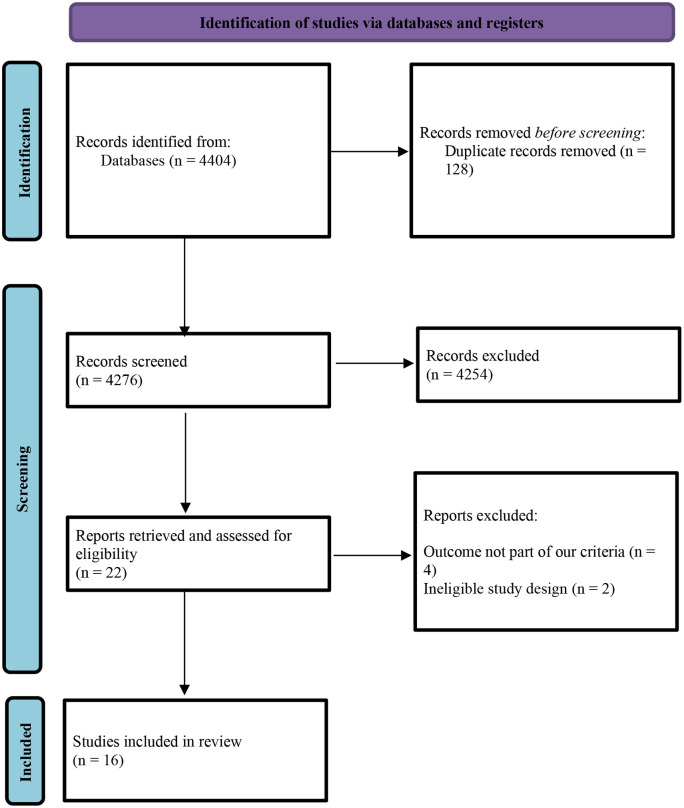 Figure 1
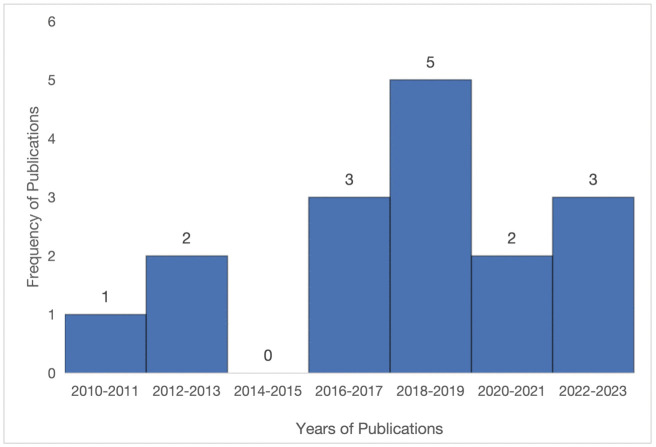 Figure 2
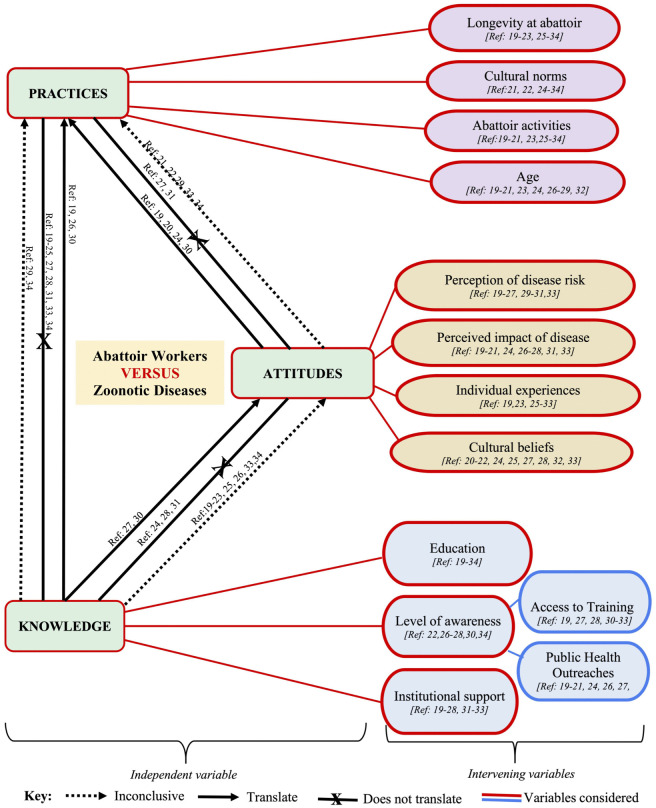 Figure 3
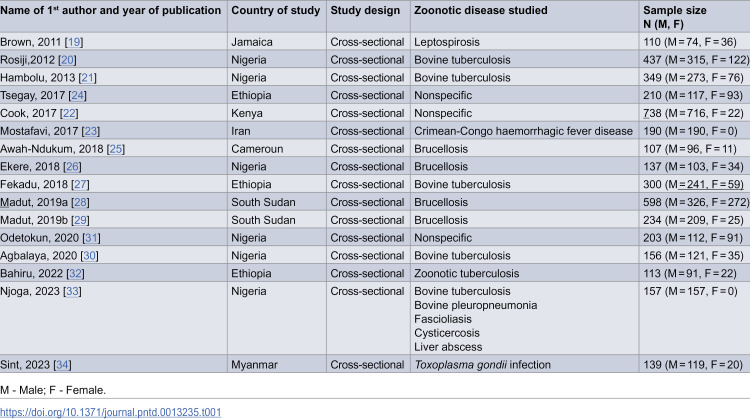 Figure 4
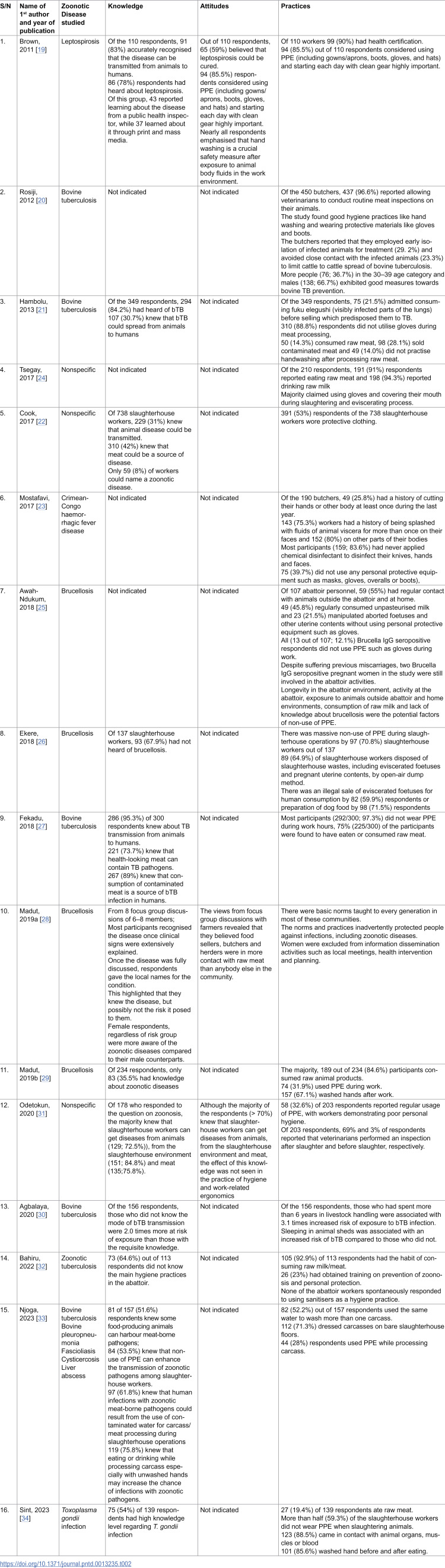 Figure 5
Peer Reviews
No public reviews on file for this paper yet. If you reviewed it on a platform where reviews are public (OpenReview, ICLR, NeurIPS, ICML), you can paste yours below so the community can read it here.
Videos
No videos yet. Explain this paper in a talk, walkthrough, or lecture? Add one.
Taxonomy
TopicsZoonotic diseases and public health · Fecal contamination and water quality · Brucella: diagnosis, epidemiology, treatment