LL-37 selectively targets Plasmodium-infected erythrocytes and exhibits antimalarial activity
Xiaoqin He, Yutong Zhang, Junchao Lou, Jingyao Wu, Sui Xu, Guoding Zhu, Jianxia Tang, Yaqun Fang, Jun Cao

TL;DR
LL-37, a human antimicrobial peptide, selectively kills malaria-infected red blood cells and shows antimalarial potential in mice.
Contribution
LL-37/CRAMP selectively targets infected cells via membrane disruption, revealing a novel host defense mechanism against malaria.
Findings
LL-37 selectively kills Plasmodium-infected erythrocytes by targeting membrane alterations like PS externalization and cholesterol depletion.
LL-37/CRAMP administration in mice reduces parasitemia, improves survival, and modulates pro-inflammatory cytokines.
CRAMP-deficient mice show increased susceptibility to malaria, confirming its role in host defense.
Abstract
Malaria control is challenged by the emergence of resistance to virtually all antimalarial drugs, from the frontline artemisinin to other classes, highlighting the critical need for new therapies. This study demonstrates that the human antimicrobial peptide LL-37 exhibits antiplasmodial activity against both drug-sensitive and drug-resistant parasites in vitro. LL-37 selectively targets infected red blood cells through membrane disruption mediated by phosphatidylserine externalization and cholesterol depletion. Elevated plasma LL-37/CRAMP levels were observed in malaria patients and infected mice, and exogenous LL-37/CRAMP administration reduced parasitemia, improved survival, and modulated pro-inflammatory cytokine levels in a mouse model. CRAMP-deficient mice showed higher susceptibility to infection, underscoring its role in host defense. Our findings reveal a naturally occurring…
Genes, proteins, chemicals, diseases, species, mutations and cell lines named across the full text — each resolved to its canonical identifier and authoritative record.
Click any figure to enlarge with its caption.
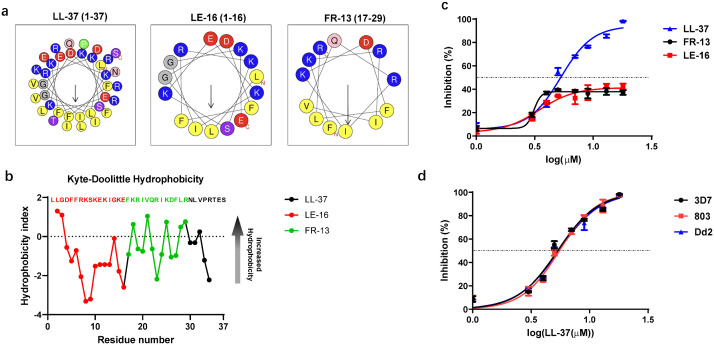 Figure 1
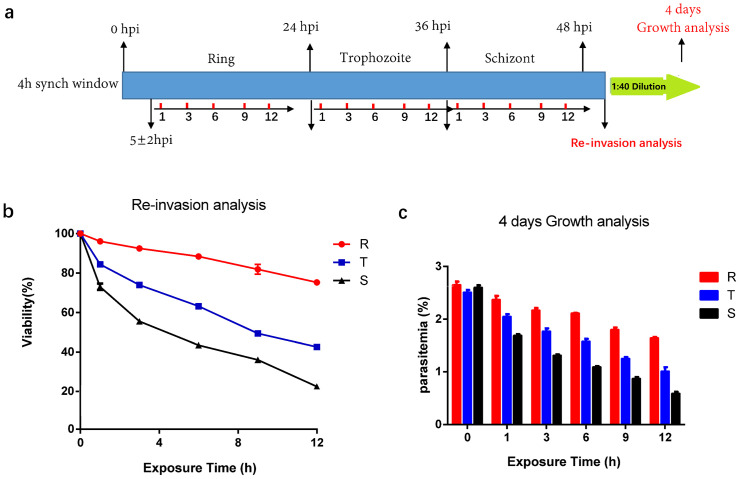 Figure 2
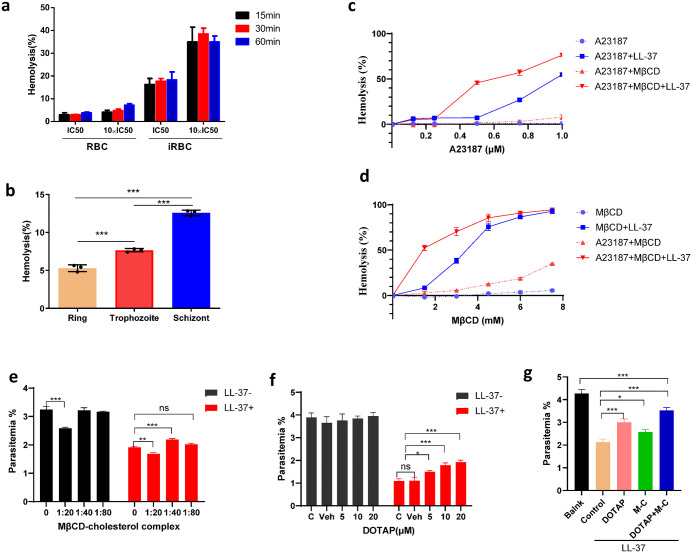 Figure 3
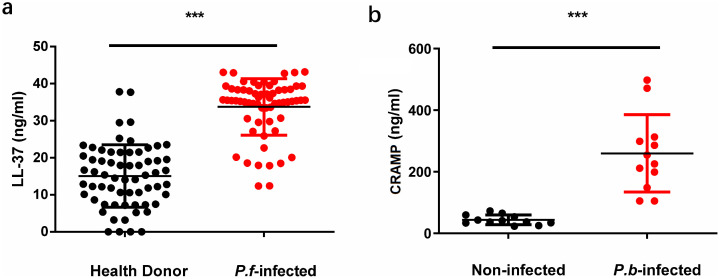 Figure 4
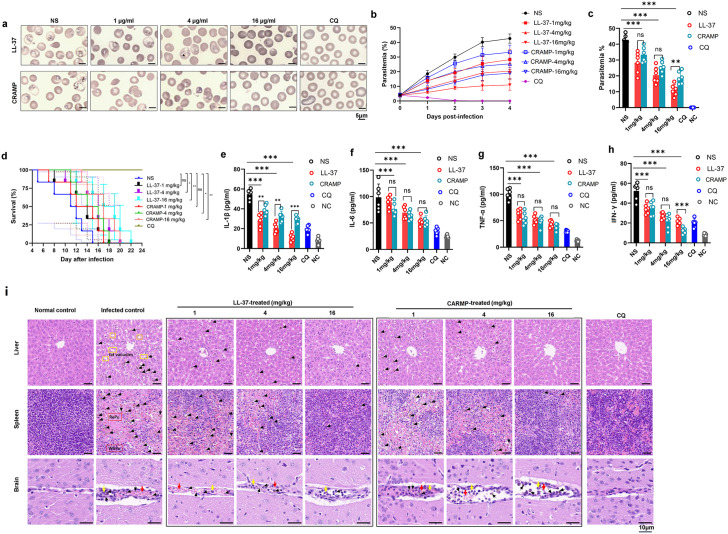 Figure 5
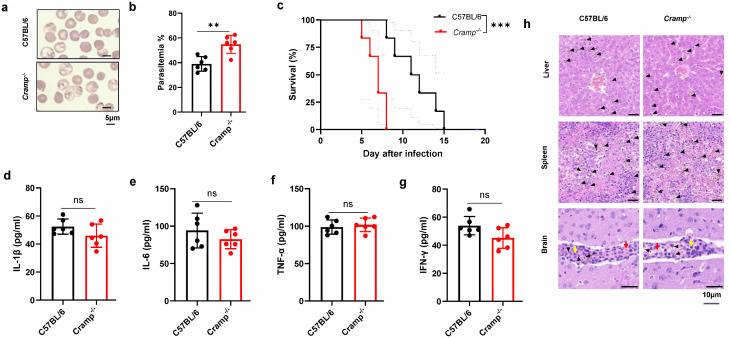 Figure 6
Peer Reviews
No public reviews on file for this paper yet. If you reviewed it on a platform where reviews are public (OpenReview, ICLR, NeurIPS, ICML), you can paste yours below so the community can read it here.
Videos
No videos yet. Explain this paper in a talk, walkthrough, or lecture? Add one.
Taxonomy
TopicsAntimicrobial Peptides and Activities · Malaria Research and Control · Invertebrate Immune Response Mechanisms