Effect of maternal education on the literacy-numeracy development of children: A propensity-score matched analysis
Md Akter Hosen, M. Iftakhar Alam, Mohaimen Mansur

TL;DR
Higher maternal education increases children's literacy and numeracy skills, especially in urban areas of Bangladesh.
Contribution
A propensity-score matched analysis to estimate the causal effect of maternal education on early childhood development.
Findings
Maternal education increases children's literacy-numeracy development by 18.4% on average.
The effect is stronger in urban areas (26.2%) compared to rural areas (16.3%).
Abstract
This study examined the causal relationship between maternal education and children’s literacy-numeracy development in Bangladesh using nationally representative data from the Bangladesh Multiple Indicator Cluster Survey. The analysis focused on 9,454 children aged 3–4 years. To strengthen causal inference, we applied propensity score matching, which reduces selection bias by balancing observed covariates between groups. From the analysis, we found that the average treatment effect of the treated was almost 18.4%, which means after matching, the probability of literacy-numeracy development in children was 18.4% higher among the mothers who had higher level of education compared to the same mothers had they not higher level of education. Subgroup analyses further revealed heterogeneity by place of residence: the effect of maternal education was stronger in urban areas (26.2%) than in…
Click any figure to enlarge with its caption.
 Figure 1
 Figure 2
 Figure 3
 Figure 4
 Figure 5
 Figure 6
 Figure 7
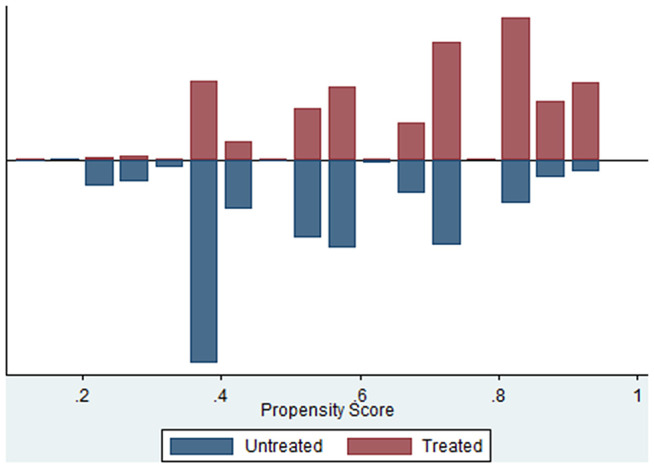 Figure 8
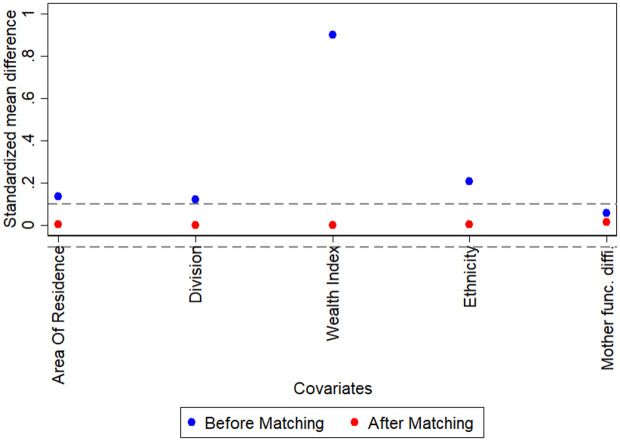 Figure 9
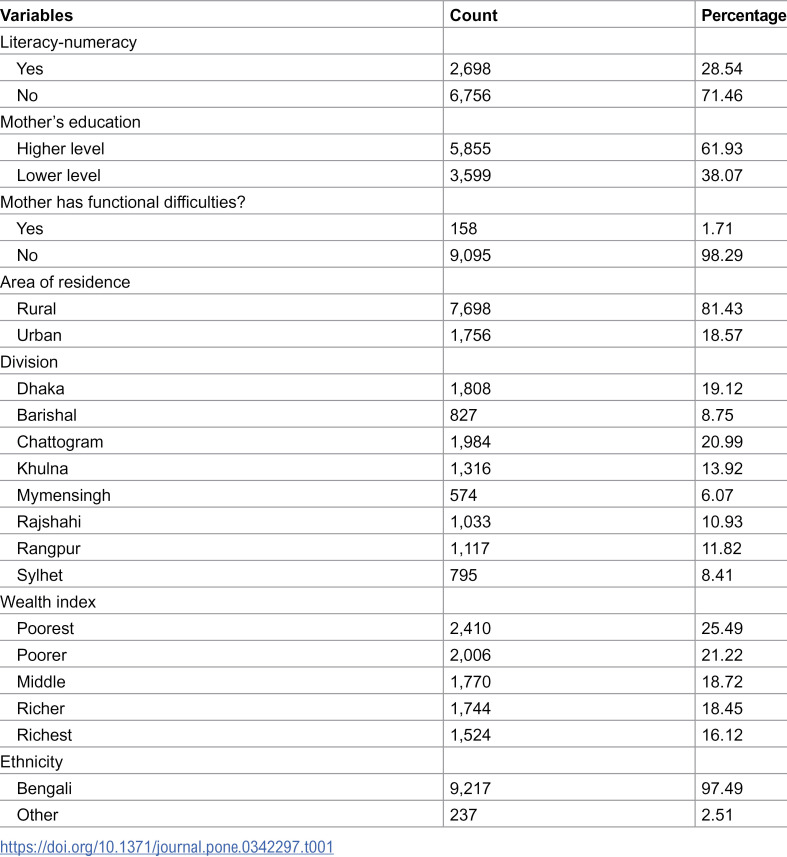 Figure 10
 Figure 11
 Figure 12
 Figure 13
 Figure 14
Peer Reviews
No public reviews on file for this paper yet. If you reviewed it on a platform where reviews are public (OpenReview, ICLR, NeurIPS, ICML), you can paste yours below so the community can read it here.
Videos
No videos yet. Explain this paper in a talk, walkthrough, or lecture? Add one.
Taxonomy
TopicsSchool Choice and Performance · Global Maternal and Child Health · Poverty, Education, and Child Welfare