“I finally found a place where I could have some safety”: A mixed-methods evaluation of non-clinical safe spaces for emotional distress and/or suicidal crisis
Scott J. Fitzpatrick, Grenville Rose, Heather Lamb, Cassandra Chakouch, Alyssa R. Morse, Amelia Gulliver, Helen T. Oni, Alison L. Calear, Michelle Banfield

TL;DR
This study evaluates non-clinical safe spaces for emotional distress and suicidal crisis, finding they offer therapeutic benefits but face challenges with demand and resources.
Contribution
The study provides empirical evidence on the feasibility and effectiveness of peer-led safe spaces for emotional and suicidal crisis support.
Findings
Safe spaces with peer workers and supportive environments reduce emotional distress and improve outcomes.
High demand and limited resources affect the perceived quality of care in safe spaces.
Implementation of entry/exit protocols impacts guest experiences and service quality.
Abstract
‘Safe Spaces’ are novel interventions that provide non–clinical, peer–led services for people experiencing emotional distress and/or suicidal crisis. To date, little empirical research has examined these service models, particularly from the perspective of those accessing and using them. Led by a team of lived experience researchers and using a convergent mixed-methods study design, this study examined whether safe spaces are a feasible and effective approach to supporting people experiencing varying degrees of emotional distress, including a suicidal crisis. Results showed that multiple features of safe space models, including the physical environment and approach to care taken by peer workers, had considerable therapeutic value, resulting in improved outcomes and reduced distress for guests. However, growing demand for services coupled with restricted resourcing and the implementation…
Genes, proteins, chemicals, diseases, species, mutations and cell lines named across the full text — each resolved to its canonical identifier and authoritative record.
Click any figure to enlarge with its caption.
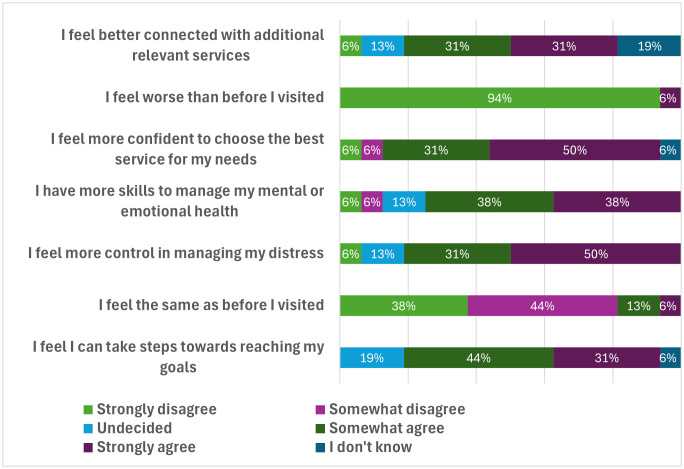 Figure 1
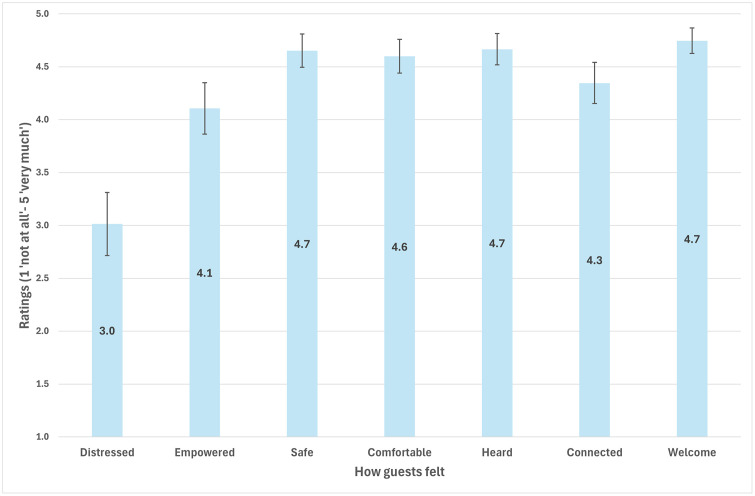 Figure 2
 Figure 3
 Figure 4
Peer Reviews
No public reviews on file for this paper yet. If you reviewed it on a platform where reviews are public (OpenReview, ICLR, NeurIPS, ICML), you can paste yours below so the community can read it here.
Videos
No videos yet. Explain this paper in a talk, walkthrough, or lecture? Add one.
Taxonomy
TopicsMental Health and Patient Involvement · Mental Health Treatment and Access · Digital Mental Health Interventions