Patterns of opioid dose escalation in patients with chronic kidney disease initiated on opioids for the treatment of non-cancer pain
Che Suraya Zin, Stefania Lando, Ailema González-Ortiz, Viyaasan Mahalingasivam, Shayan Mostafaei, Wan Rohaidah Ahmad, Mazlila Meor Ahmad Shah, Björn Wettermark, Juan Jesus Carrero, Lalit Gupta, Lalit Gupta, Lalit Gupta

TL;DR
This study examines how opioid doses increase over time in patients with chronic kidney disease and finds that dose escalation is common, especially in the first six months.
Contribution
The study provides real-world data on opioid dose escalation patterns in patients with varying levels of kidney function.
Findings
Opioid dose escalation to ≥50 MME/day occurred in 7.3% of patients, with similar rates across kidney function levels.
Patients with reduced kidney function had significantly lower risks of escalating to higher opioid doses.
Most dose escalation occurred within the first six months of starting opioids.
Abstract
Pain management in chronic kidney disease (CKD) is challenging due to altered drug metabolism, impaired excretion, and higher opioid toxicity risk. Despite this, opioids are commonly prescribed, yet real-world data on dose escalation in CKD remain limited. To investigate patterns and timing of opioid dose escalation to ≥50 and ≥90 MME/day among new opioid users across kidney function levels. This population-based cohort study used data from the Stockholm Creatinine Measurements (SCREAM) project linking diagnoses, prescriptions, and laboratory records. Adult new opioid users (no prior opioid in 12 months) from 2012–2021 were categorized by baseline eGFR (≥60, 30–59, < 30 mL/min/1.73m²). Opioids were identified using ATC codes, and daily doses (MME/day) were calculated based on strength, quantity, and equianalgesic ratios. Fine–Gray competing-risks regression assessed time to dose…
Genes, proteins, chemicals, diseases, species, mutations and cell lines named across the full text — each resolved to its canonical identifier and authoritative record.
Click any figure to enlarge with its caption.
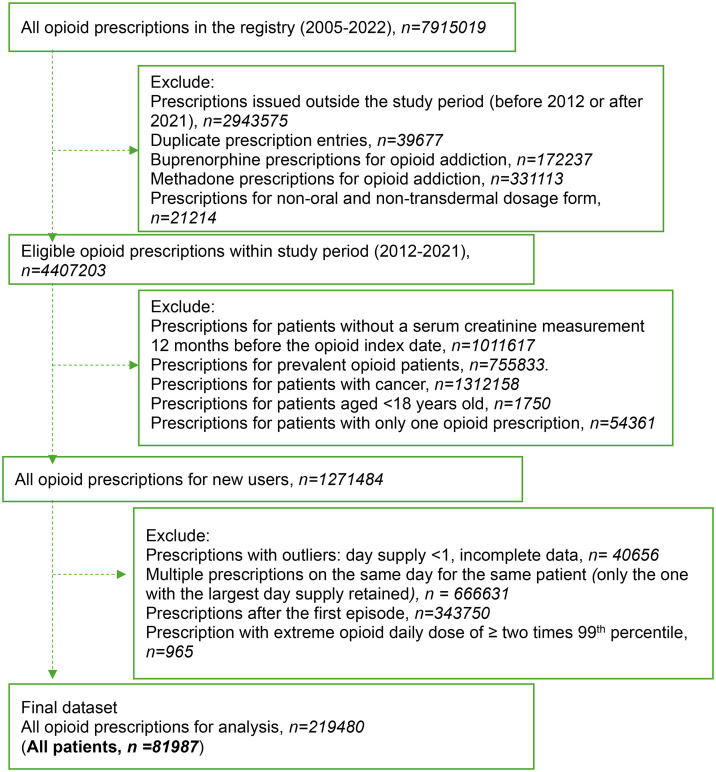 Figure 1
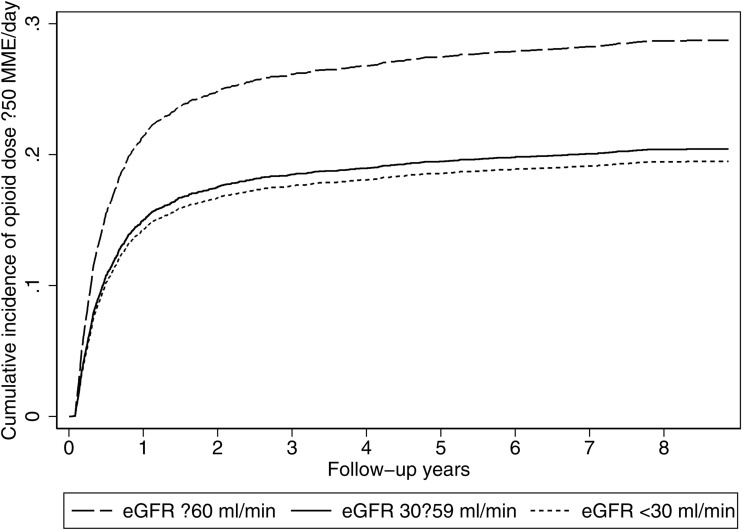 Figure 2
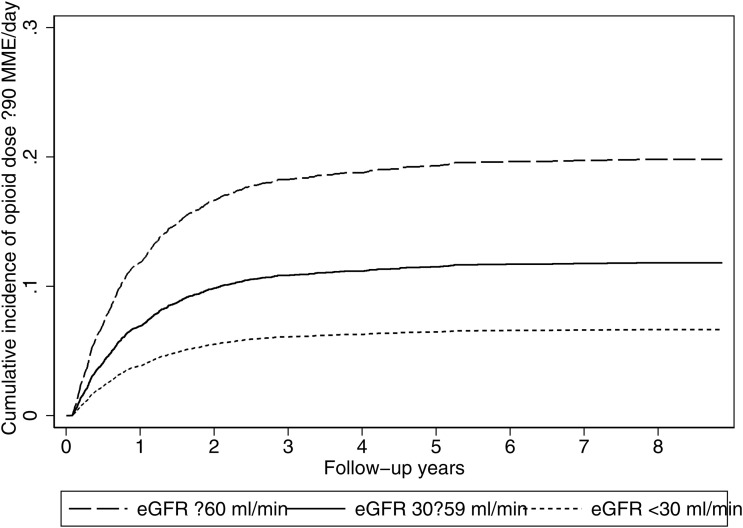 Figure 3
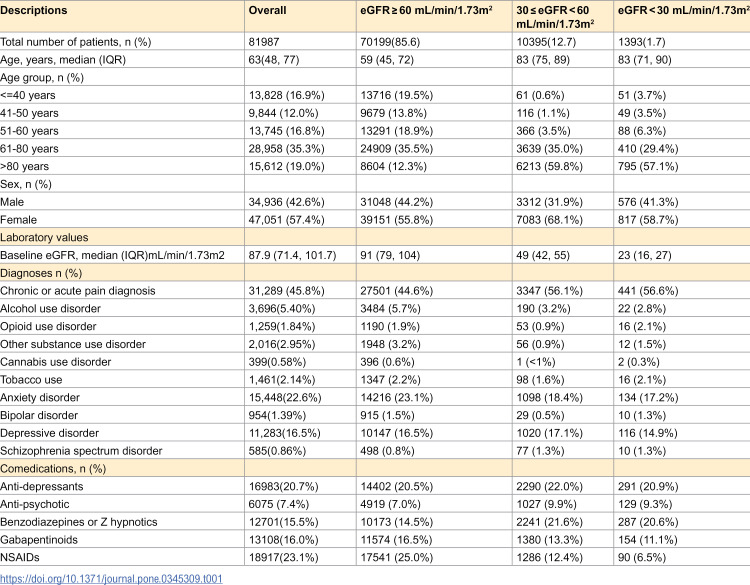 Figure 4
Peer Reviews
No public reviews on file for this paper yet. If you reviewed it on a platform where reviews are public (OpenReview, ICLR, NeurIPS, ICML), you can paste yours below so the community can read it here.
Videos
No videos yet. Explain this paper in a talk, walkthrough, or lecture? Add one.
Taxonomy
TopicsPain Management and Opioid Use · Opioid Use Disorder Treatment · Dialysis and Renal Disease Management