Predictors of non-suicidal self-injury and moderating effects of cognitive emotion regulation strategies in Korean undergraduate students: Secondary data analysis of a cross-sectional survey
Yeo Won Jeong

TL;DR
This study explores factors linked to non-suicidal self-injury in Korean undergraduates and finds that positive coping strategies can reduce its risk.
Contribution
The study identifies positive cognitive emotion regulation as a protective factor against non-suicidal self-injury.
Findings
30.3% of participants reported non-suicidal self-injury in the past six months.
Positive cognitive emotion regulation strategies moderate the link between psychological discomfort and self-injury.
Female gender and lower use of positive coping strategies are associated with higher self-injury rates.
Abstract
Non-suicidal self-injury (NSSI) is an emerging mental health issue in both clinical practice and public health worldwide, refers to intentional self-harm without suicidal intent. Exploring protective and moderating factors of NSSI is important for its prevention and intervention. However, most existing studies have focused primarily on risk factors. This study aimed to identify predictors of NSSI and examine the moderating effects of cognitive emotion regulation strategies on the relationship between psychological discomfort and NSSI. This study involved a secondary analysis of data from 188 self-reported questionnaires collected via a web-based survey in South Korea between August and September 2020 during COVID-19 pandemic. NSSI was measured using the modified NSSI subscale of the Korean version of the Self-Harm Inventory. Psychological discomfort was assessed using a 20-item symptom…
Genes, proteins, chemicals, diseases, species, mutations and cell lines named across the full text — each resolved to its canonical identifier and authoritative record.
Click any figure to enlarge with its caption.
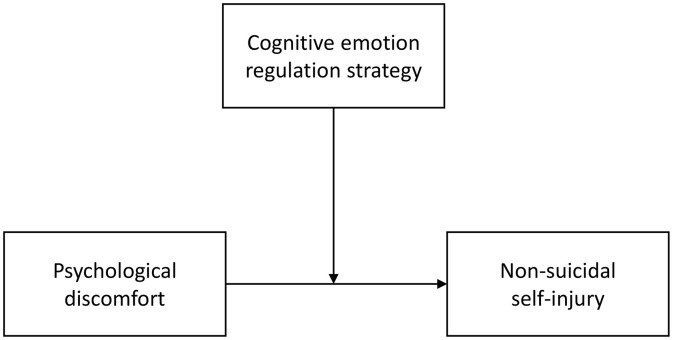 Figure 1
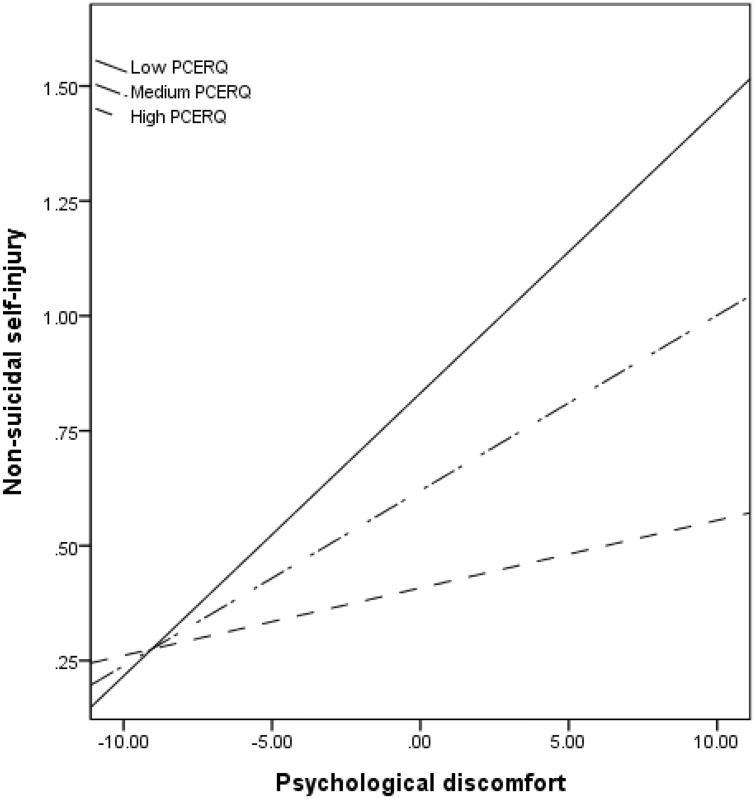 Figure 2
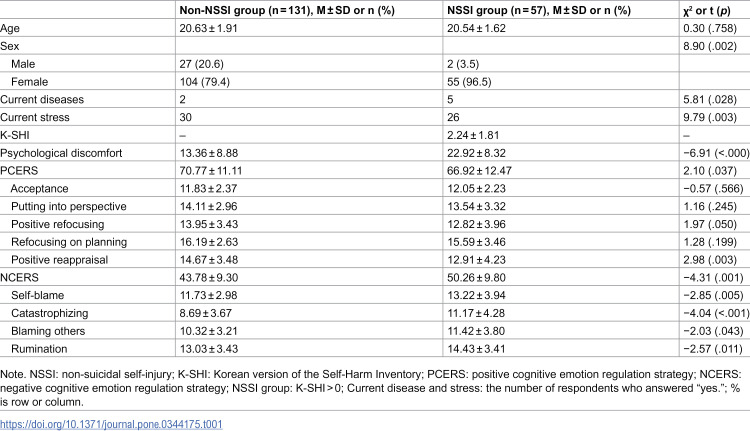 Figure 3
 Figure 4
 Figure 5
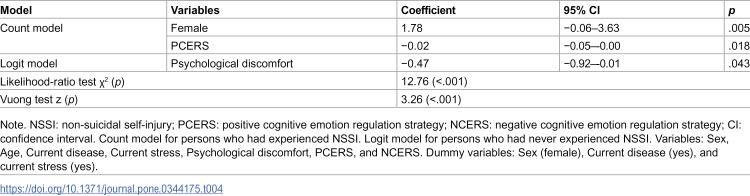 Figure 6
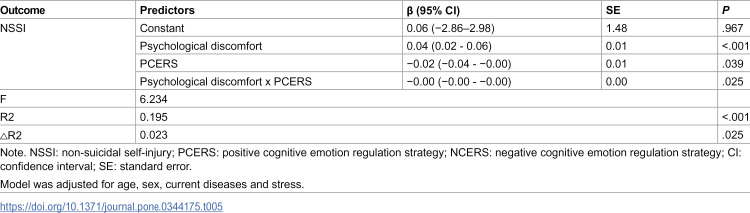 Figure 7
Peer Reviews
No public reviews on file for this paper yet. If you reviewed it on a platform where reviews are public (OpenReview, ICLR, NeurIPS, ICML), you can paste yours below so the community can read it here.
Videos
No videos yet. Explain this paper in a talk, walkthrough, or lecture? Add one.
Taxonomy
TopicsSuicide and Self-Harm Studies · COVID-19 and Mental Health · Digital Mental Health Interventions