Impact of contralateral sensorineural hearing loss on prognosis in idiopathic sudden sensorineural hearing loss
Sanlin Xie, Zhifeng Chen, Lipeng Huang, Yongjun Hong, Chang Lin, Gauri Mankekar, Gauri Mankekar, Gauri Mankekar

TL;DR
This study shows that having hearing loss in the opposite ear before sudden hearing loss worsens recovery chances, especially in older patients with high blood pressure.
Contribution
The study identifies contralateral sensorineural hearing loss as an independent risk factor for poor prognosis in sudden hearing loss.
Findings
Contralateral hearing loss increases the risk of treatment failure by 2.757 times in sudden hearing loss patients.
Older age, hypertension, and longer disease duration interact with contralateral hearing loss to worsen outcomes.
Assessing contralateral hearing is crucial for personalized treatment planning in sudden hearing loss.
Abstract
The aim of this study was to investigate the impact of contralateral sensorineural hearing loss on prognosis in idiopathic sudden sensorineural hearing loss. A retrospective analysis was conducted on 445 ISSNHL patients treated between January 2020 and January 2024. The patients were divided into two groups: recovery (234 cases, including complete and partial recovery) and no-recovery (211 cases, no recovery). Pure-tone audiometry was used for evaluation. Clinical characteristics were compared between the groups, and multivariate logistic regression was performed to identify risk factors for poor prognosis. Significant differences were observed between the two groups regarding contralateral hearing level, age, duration of illness, diabetes, hypertension, and audiometric curves. An increase in the hearing threshold of the contralateral ear was positively correlated with the risk of…
Genes, proteins, chemicals, diseases, species, mutations and cell lines named across the full text — each resolved to its canonical identifier and authoritative record.
Click any figure to enlarge with its caption.
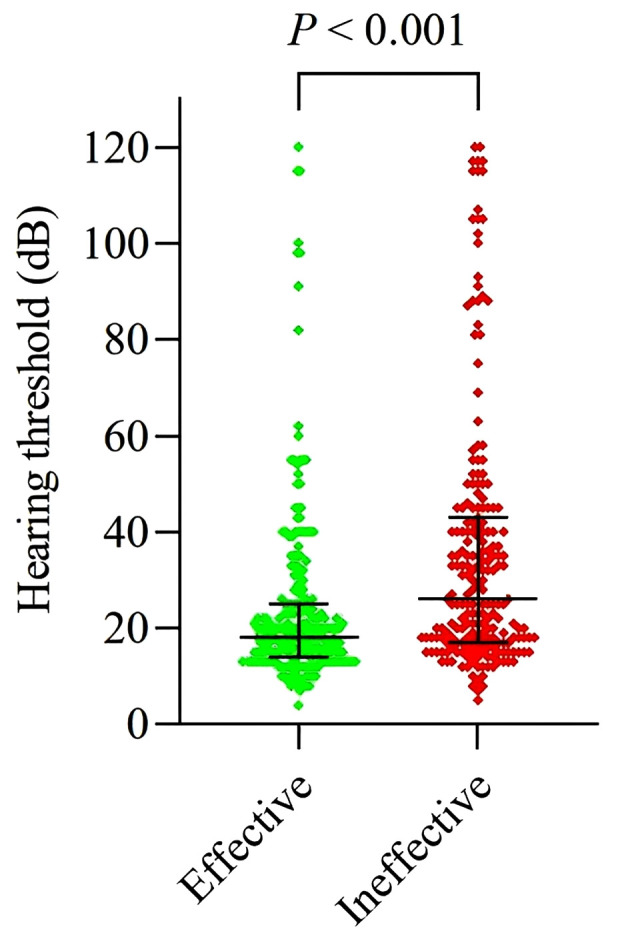 Figure 1
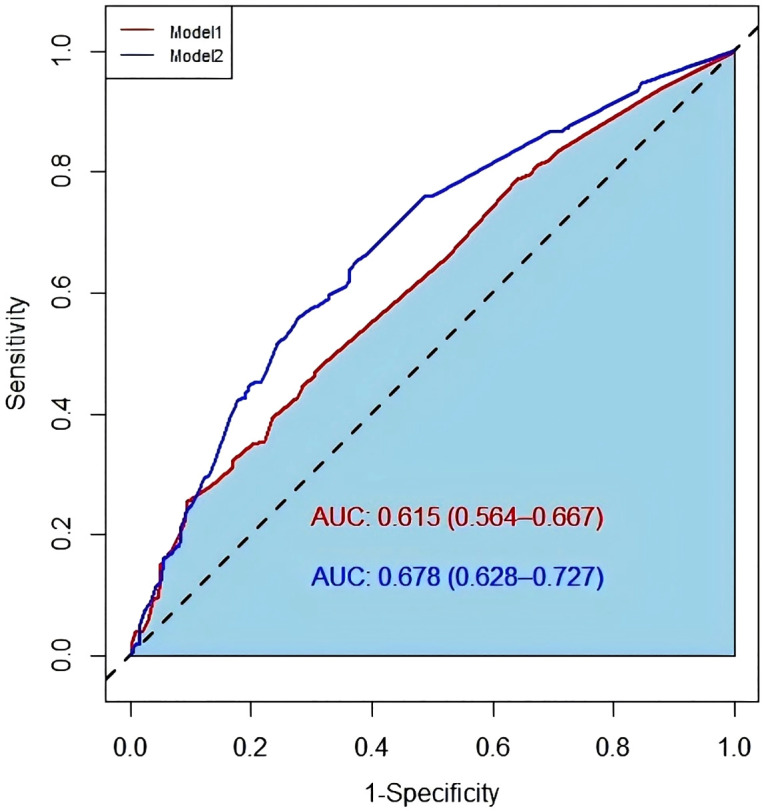 Figure 2
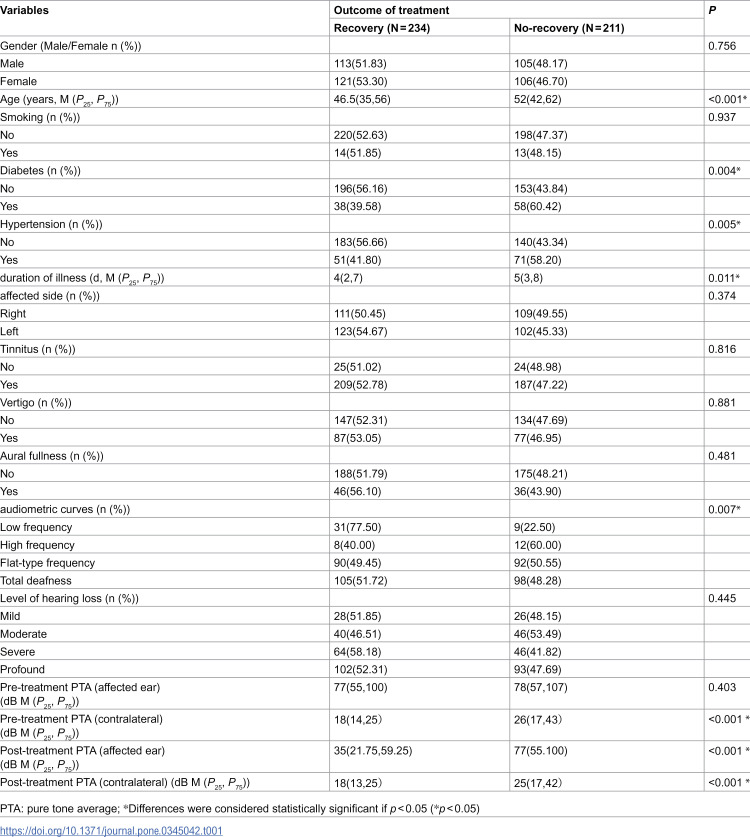 Figure 3
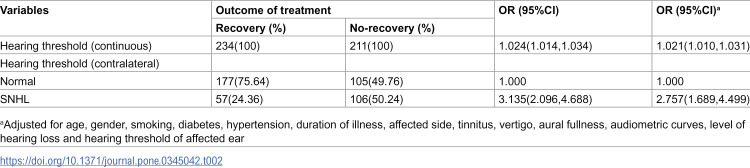 Figure 4
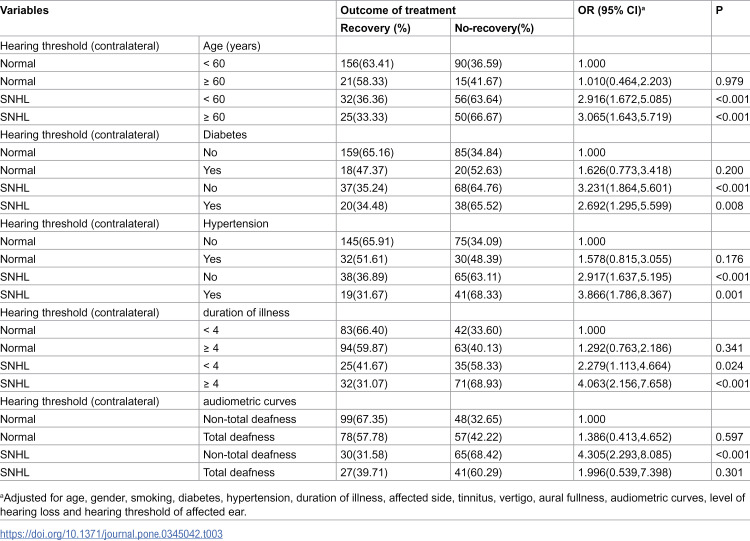 Figure 5
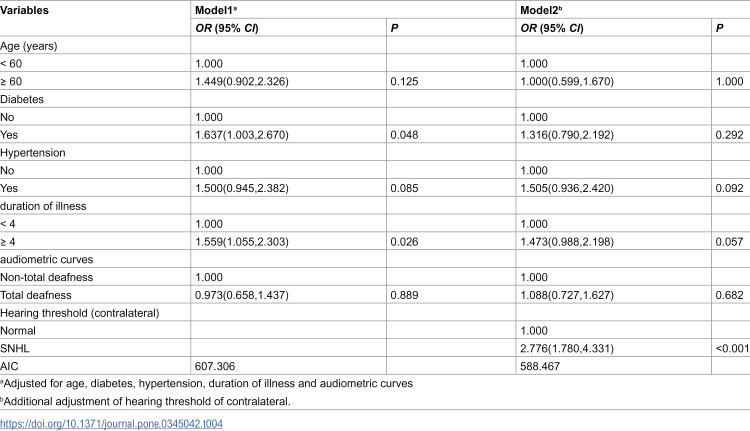 Figure 6
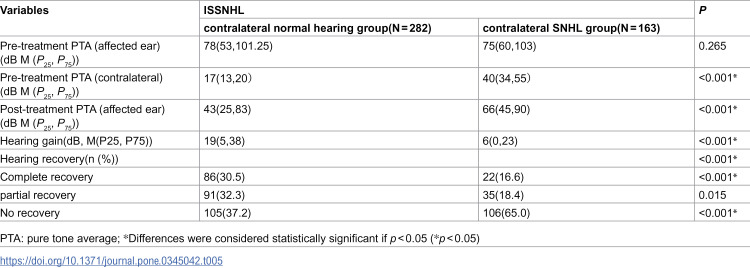 Figure 7
Peer Reviews
No public reviews on file for this paper yet. If you reviewed it on a platform where reviews are public (OpenReview, ICLR, NeurIPS, ICML), you can paste yours below so the community can read it here.
Videos
No videos yet. Explain this paper in a talk, walkthrough, or lecture? Add one.
Taxonomy
TopicsVestibular and auditory disorders · Hearing, Cochlea, Tinnitus, Genetics · Hearing Loss and Rehabilitation