What is the significance of a new breast mass in women aged 40 or above? A cross-sectional study
Sadaf Alipour, Kasra Jafari, Azin Saberi, Mandana Motamedi, Amirhossein Eskandari, Giacomo Di Filippo, Amirreza Khalaji, Amirreza Khalaji

TL;DR
This study explores how recently appearing breast masses in women over 40 may indicate cancer, suggesting changes to current diagnostic guidelines.
Contribution
The study introduces a new diagnostic protocol that considers the recency of a breast mass as a suspicious feature for cancer.
Findings
The institutional protocol increased sensitivity to 84.1% but reduced specificity to 40.3% compared to standard guidelines.
New solid breast masses in women aged 40 or above were more likely to be malignant than benign.
The study suggests incorporating 'recency of a solid mass' into BI-RADS scoring for better cancer detection.
Abstract
Breast lumps are the most common presentation of breast cancer, and when detected in imaging, they are assigned a BI-RADS score dependent on their characteristics. Recency of a mass is not among these features, while in our center, the new occurrence of a solid breast mass in women 40 or above is considered suspicious because common benign masses typically occur before this age. We designed this study to evaluate data from our Arash Breast Diseases Registry to explore the results of this personalized approach. Women aged ≥40 with a breast mass in exam, ultrasound, or mammography that had been biopsied or followed-up for at least 2 years were included. In addition to BIRADS 4 and 5 or suspicious clinical exam, new solid masses on breast examination, mammography, or ultrasound in women 40 or above were biopsied. We calculated the sensitivity, specificity, likelihood ratios, and…
Genes, proteins, chemicals, diseases, species, mutations and cell lines named across the full text — each resolved to its canonical identifier and authoritative record.
Click any figure to enlarge with its caption.
 Figure 1
 Figure 2
 Figure 3
 Figure 4
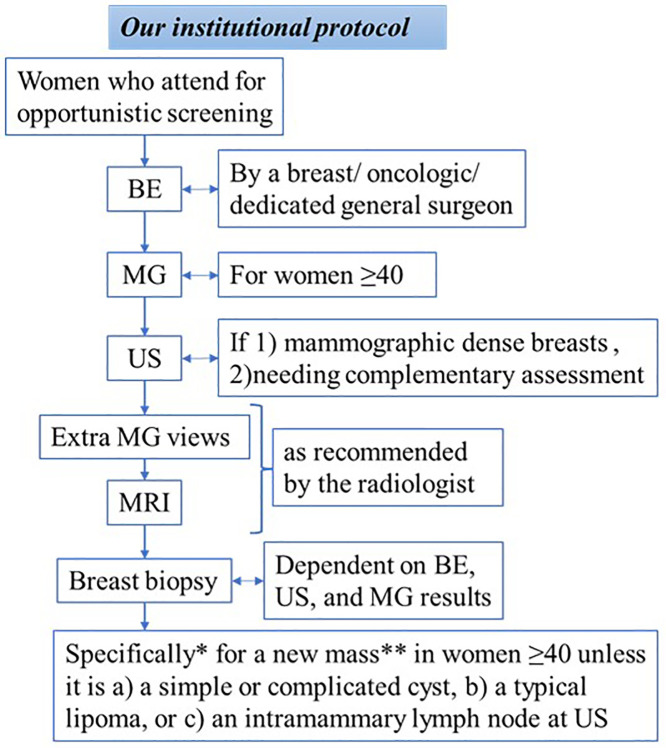 Figure 5
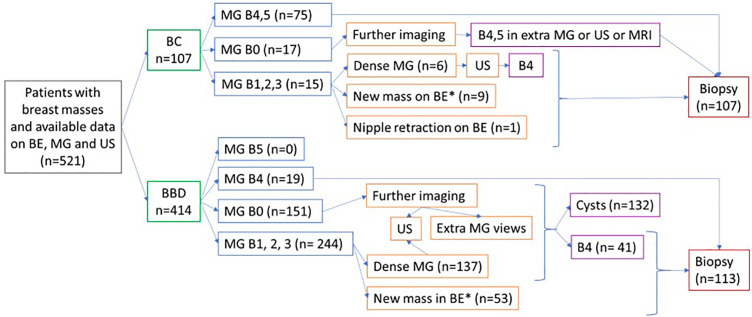 Figure 6
 Figure 7
 Figure 8
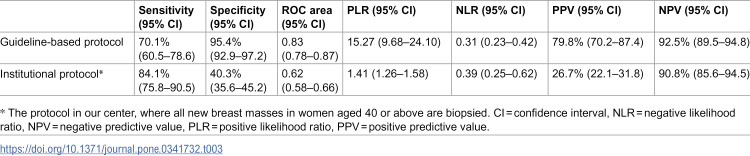 Figure 9
Peer Reviews
No public reviews on file for this paper yet. If you reviewed it on a platform where reviews are public (OpenReview, ICLR, NeurIPS, ICML), you can paste yours below so the community can read it here.
Videos
No videos yet. Explain this paper in a talk, walkthrough, or lecture? Add one.
Taxonomy
TopicsBreast Lesions and Carcinomas · Digital Radiography and Breast Imaging · Breast Cancer Treatment Studies