The role of soluble thrombomodulin (sTM) in risk stratification of hemorrhagic fever with renal syndrome and prognostic assessment
Min Wei, Zhuoran Xiao, Jiaojiao Cao, Xinyi Du, Mengyuan Li, Rongrong Zhang, Xiaofei Yang, Shasha Wu, Chao Fan, Jing Zhang, Jianqi Lian, Chuantao Ye

TL;DR
This study shows that soluble thrombomodulin (sTM) can predict disease severity and survival in patients with hemorrhagic fever with renal syndrome (HFRS), offering a new biomarker for early risk assessment.
Contribution
The study demonstrates that sTM is a novel and effective biomarker for risk stratification and prognosis in HFRS patients.
Findings
sTM levels increase stepwise with HFRS severity, peaking in critical cases.
sTM levels in non-survivors were twice as high as in survivors.
A cut-off sTM value of 49.98 TU/mL predicted mortality with 81.36% sensitivity and 100% specificity.
Abstract
The increase in vascular permeability and bleeding caused by systemic endothelial damage is the most basic pathological change of hemorrhagic fever with renal syndrome(HFRS) caused by Hantavirus, but there is a lack of early biomarkers to detect the severity and prognosis of HFRS. Soluble thrombomodulin (sTM) is a sensitive marker of endothelial damage. In this study we investigated the role of sTM in the evaluation of the severity and prognosis of HFRS patients. A retrospective analysis was conducted on 51 patients with HFRS treated in the Infectious Diseases Department of the Second Affiliated Hospital of Air Force Medical University from January 2023 to January 2024. We compared the changes of sTM among patients with HFRS in different phases and subtypes, and analyzed the correlation between sTM and related laboratory diagnostic indicators. Additionally, we evaluated the differences…
Genes, proteins, chemicals, diseases, species, mutations and cell lines named across the full text — each resolved to its canonical identifier and authoritative record.
Click any figure to enlarge with its caption.
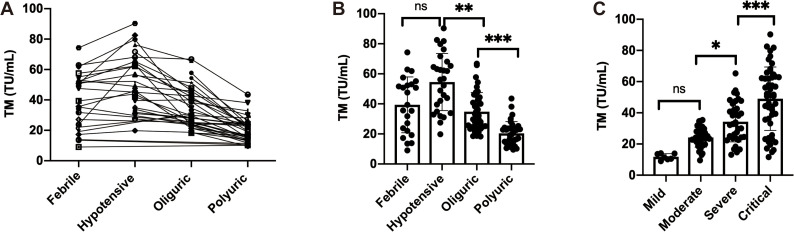 Figure 1
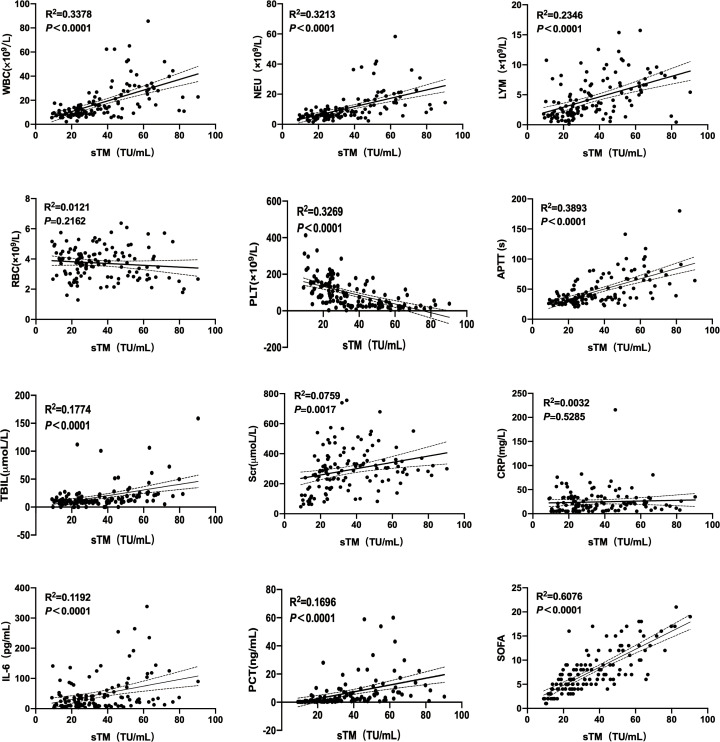 Figure 2
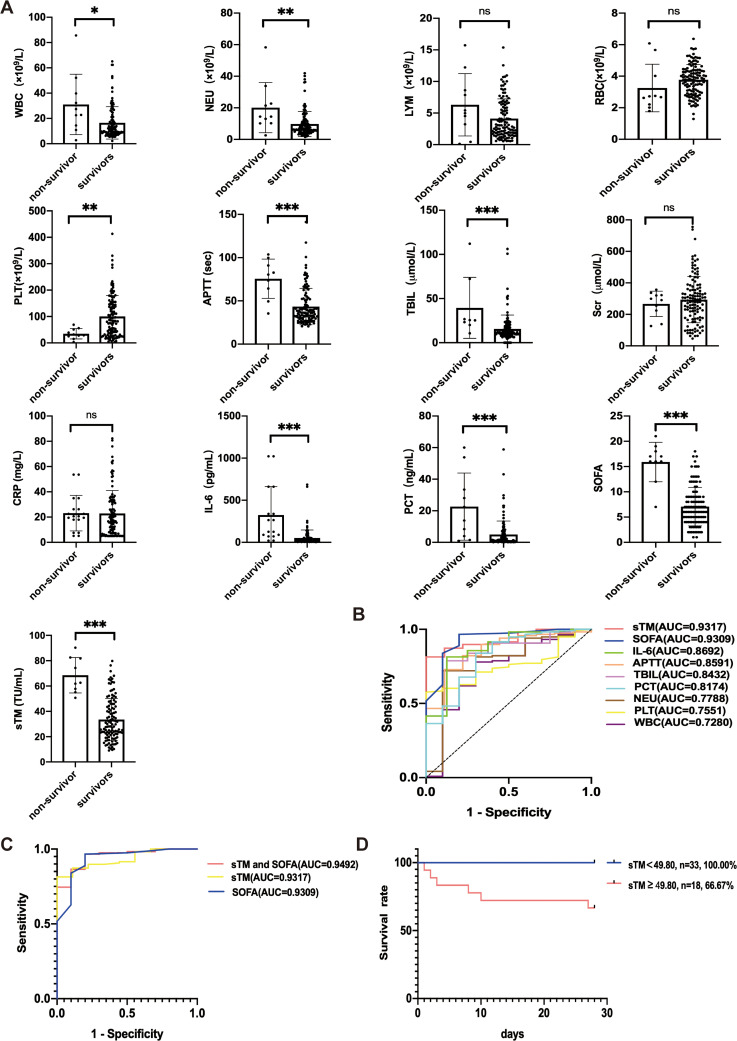 Figure 3
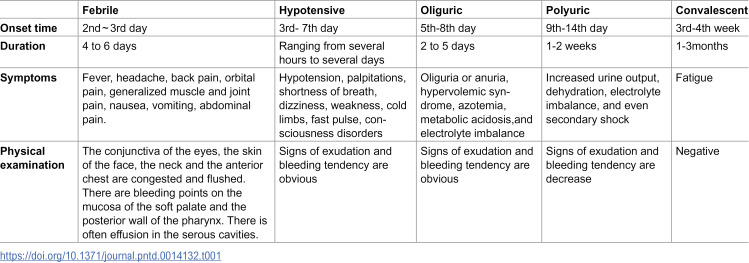 Figure 4
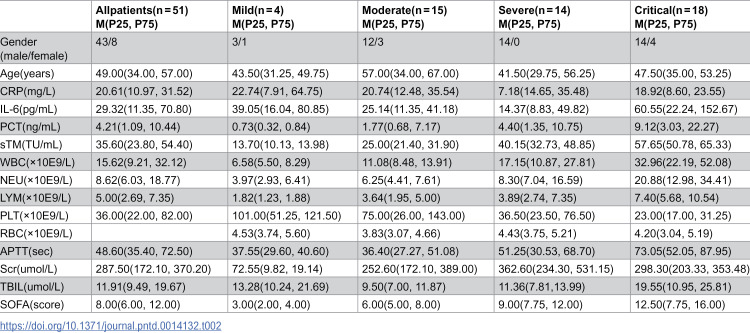 Figure 5
Peer Reviews
No public reviews on file for this paper yet. If you reviewed it on a platform where reviews are public (OpenReview, ICLR, NeurIPS, ICML), you can paste yours below so the community can read it here.
Videos
No videos yet. Explain this paper in a talk, walkthrough, or lecture? Add one.
Taxonomy
TopicsViral Infections and Vectors · Venous Thromboembolism Diagnosis and Management · Trauma, Hemostasis, Coagulopathy, Resuscitation