A computational method to estimate the relative biological effectiveness and tumor control probability for low-LET proton irradiations
Chun-Chieh Chan, Kuang-Lung Hsueh, Chung-Yu Lai, Ya-Yun Hsiao

TL;DR
This paper introduces a computational method to calculate tumor control probability for proton therapy, showing how oxygen levels and radiation energy affect treatment effectiveness.
Contribution
A new computational method combining LQ and RMF models to estimate RBE and TCP under varying oxygen conditions for proton and ion therapies.
Findings
Increasing LET from 1 to 12 keV/μm boosts TCP from 61% to 98% under aerobic conditions.
Hypoxia significantly reduces TCP for low-LET radiations, with TCP increasing from 1% to 48% under severe hypoxia.
The method aligns with clinical trial data, highlighting the impact of oxygen concentration on treatment outcomes.
Abstract
A constant relative biological effectiveness (RBE) value of 1.1 is used for proton therapy (PT) in many clinical treatment plans. However, several studies show that RBE varies with proton energy, linear energy transfer (LET), and oxygen concentration. This study presents a computational method based on the linear quadratic (LQ) and repair-misrepair-fixation (RMF) models to calculate tumor control probability (TCP) under varying oxygen conditions. We analyze the impact of hypoxia on the parameters of the LQ model, focusing on the ratio and RBE. The proposed method allows for TCP calculations across different oxygen concentrations and for various ion therapies, such as proton and carbon ion therapy. Our results show that increasing the LET from 1 to 12 keV/μm enhances TCP from 61% to 98% under aerobic conditions (21% O2), 45% to 98% under moderately hypoxic conditions (2% O2), and from 1%…
Genes, proteins, chemicals, diseases, species, mutations and cell lines named across the full text — each resolved to its canonical identifier and authoritative record.
Click any figure to enlarge with its caption.
 Figure 1
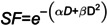 Figure 2
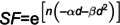 Figure 3
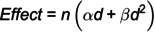 Figure 4
 Figure 5
 Figure 6
 Figure 7
 Figure 8
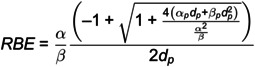 Figure 9
 Figure 10
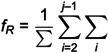 Figure 11
 Figure 12
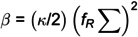 Figure 13
 Figure 14
 Figure 15
 Figure 16
 Figure 17
 Figure 18
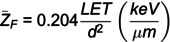 Figure 19
 Figure 20
 Figure 21
 Figure 22
 Figure 23
 Figure 24
 Figure 25
 Figure 26
 Figure 27
 Figure 28
 Figure 29
 Figure 30
 Figure 31
 Figure 32
 Figure 33
 Figure 34
 Figure 35
 Figure 36
 Figure 37
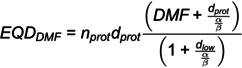 Figure 38
 Figure 39
 Figure 40
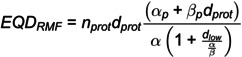 Figure 41
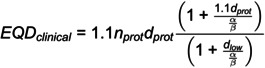 Figure 42
 Figure 43
 Figure 44
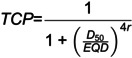 Figure 45
 Figure 46
 Figure 47
 Figure 48
 Figure 49
 Figure 50
Peer Reviews
No public reviews on file for this paper yet. If you reviewed it on a platform where reviews are public (OpenReview, ICLR, NeurIPS, ICML), you can paste yours below so the community can read it here.
Videos
No videos yet. Explain this paper in a talk, walkthrough, or lecture? Add one.
Taxonomy
TopicsRadiation Therapy and Dosimetry · Advanced Radiotherapy Techniques · ATP Synthase and ATPases Research