Intrinsic over extrinsic: Species identity shapes spatial and interannual Mg/Ca patterns in Arctic marine calcifiers
Małgorzata Krzemińska, Emma Humphreys-Williams, Tomasz Krzykawski, Piotr Kukliński

TL;DR
This study shows that species-specific biology, rather than environmental factors, mainly controls magnesium-to-calcium ratios in Arctic marine organisms.
Contribution
The study demonstrates that intrinsic biological factors dominate over environmental ones in shaping Mg/Ca ratios in Arctic calcifiers.
Findings
Species identity was the dominant factor controlling Mg/Ca ratios among the studied Arctic invertebrates.
S. balanoides had the lowest and most variable Mg/Ca ratios, while P. violacea and H. scutulata had higher and more consistent ratios.
Site-level variability in Mg/Ca ratios was species-specific, with Hornsund < Kongsfjorden < Isfjorden as a consistent pattern.
Abstract
Marine calcifiers incorporate magnesium into their calcium carbonate skeletons through processes influenced by both ambient environmental conditions and species-specific physiological regulation. As a result, their carbonate structures can serve as valuable archives of past and present oceanic conditions, provided that biological controls are explicitly considered. This study investigated how skeletal magnesium-to-calcium (Mg/Ca) ratios vary in space and time among three Arctic benthic invertebrates differing in phylogeny, evolutionary history, and biomineralization strategy: the barnacle Semibalanus balanoides, the spirorbid Paradexiospira violacea, and the bryozoan Harmeria scutulata. Mg/Ca ratios were quantified using inductively coupled plasma atomic emission spectroscopy (ICP-AES) across three Svalbard fjords and over a four-year temporal interval (2006–2009). Kruskal–Wallis…
Genes, proteins, chemicals, diseases, species, mutations and cell lines named across the full text — each resolved to its canonical identifier and authoritative record.
Click any figure to enlarge with its caption.
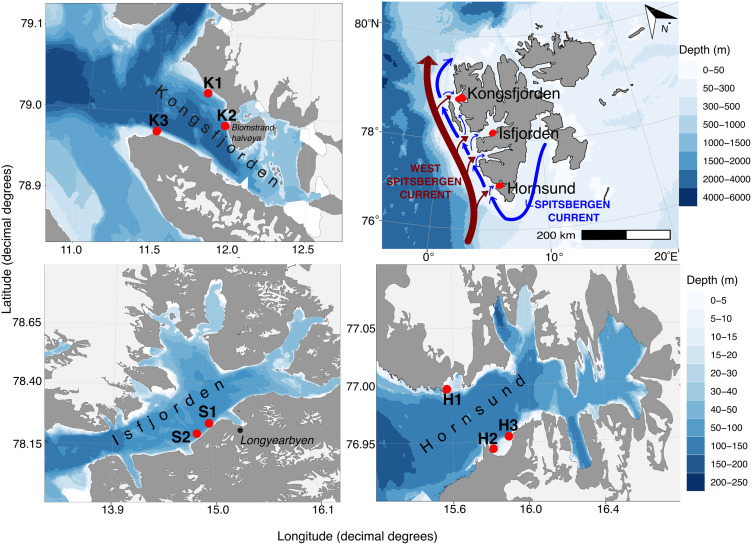 Figure 1
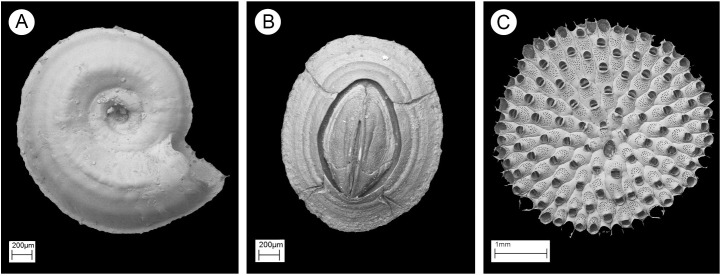 Figure 2
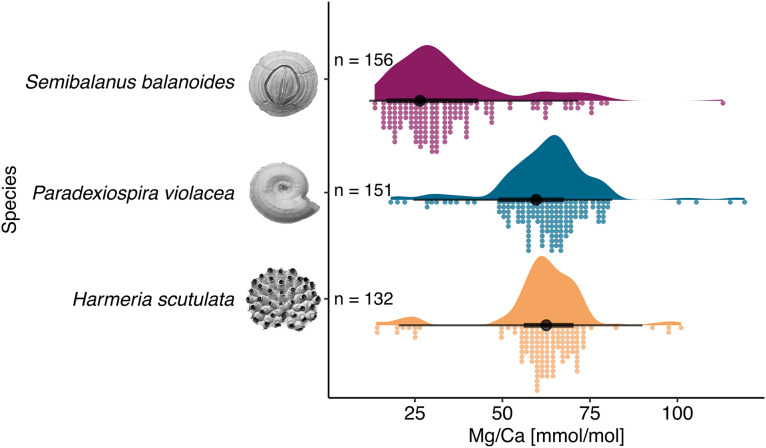 Figure 3
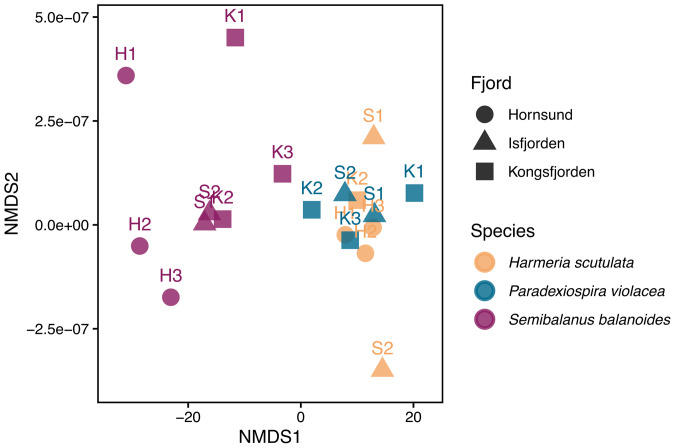 Figure 4
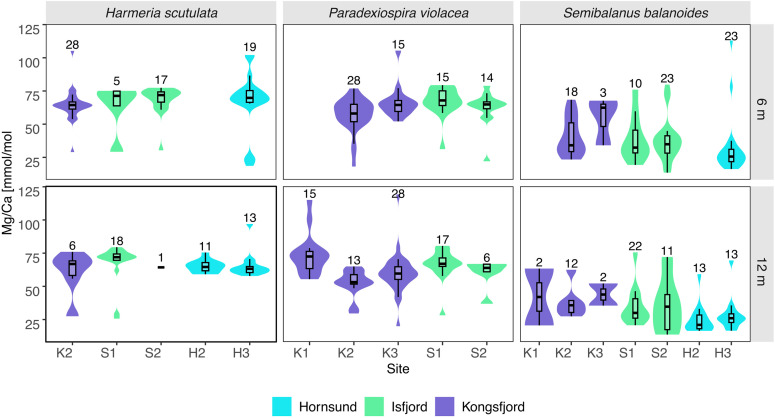 Figure 5
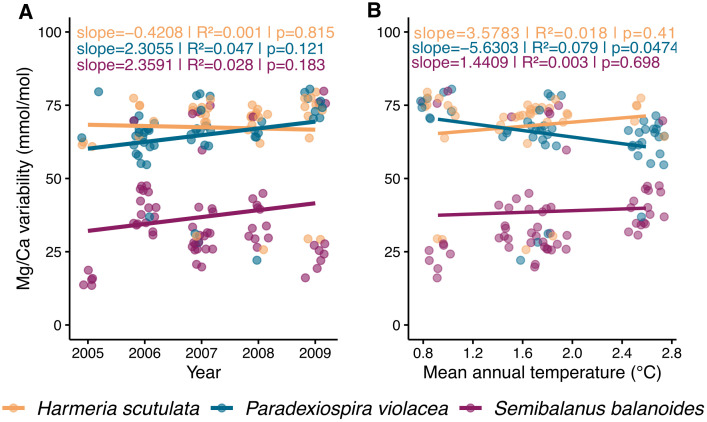 Figure 6
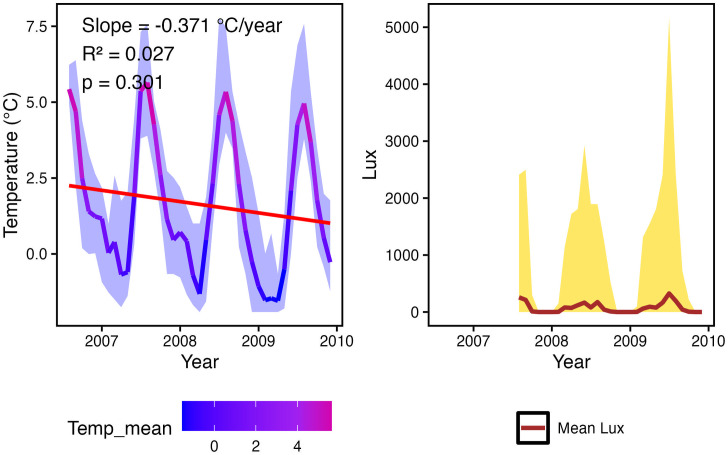 Figure 7
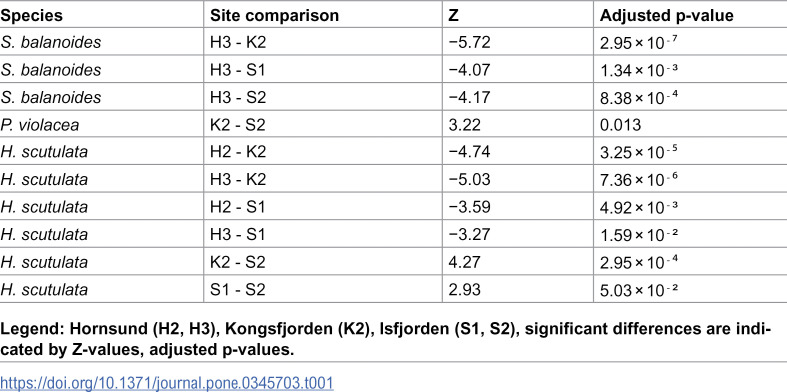 Figure 8
Peer Reviews
No public reviews on file for this paper yet. If you reviewed it on a platform where reviews are public (OpenReview, ICLR, NeurIPS, ICML), you can paste yours below so the community can read it here.
Videos
No videos yet. Explain this paper in a talk, walkthrough, or lecture? Add one.
Taxonomy
TopicsOcean Acidification Effects and Responses · Marine and coastal plant biology · Marine Bivalve and Aquaculture Studies