Dynamic chiral quenching of europium and terbium excited states
Xinyi Wen, Dominic J. Black, Mark A. Fox, Robert Pal, David Parker

TL;DR
This study explores how the chiral molecule Trolox quenches the excited states of europium and terbium complexes in a stereoselective manner.
Contribution
The paper introduces a new understanding of chiral quenching through exciplex formation and stereoselective decay rates.
Findings
Dynamic quenching was most efficient with R Trolox for the Δ Eu and Tb complexes.
Ground state DFT calculations showed energy differences between S and R Trolox complexes in different conformers.
Chiral quenching behavior is linked to exciplex decay rates, not free energy differences.
Abstract
The nature of dynamic quenching of the europium or terbum excited states for both Δ and Λ stereoisomeric cationic complexes by S and R Trolox has been studied by total emission and CPL spectroscopy and with the aid of DFT computations. In parallel, investigations of the stereoselectivity of complex association with the model protein, human serum albumin have been undertaken providing an example where binding to the chiral protein leads to preferred population of a twisted square-antiprismatic conformer for the Δ isomer only. Non-linear Stern–Volmer quenching kinetics were observed and the stereoselective behaviour in Trolox binding was interpreted in terms of an exciplex model, in which the binding constant for exciplex formation, Kex, and the rate constant for exciplex decay, k3, determine overall quenching efficiency. Dynamic quenching was most efficient with R Trolox for the Δ Eu and…
Genes, proteins, chemicals, diseases, species, mutations and cell lines named across the full text — each resolved to its canonical identifier and authoritative record.
Click any figure to enlarge with its caption.
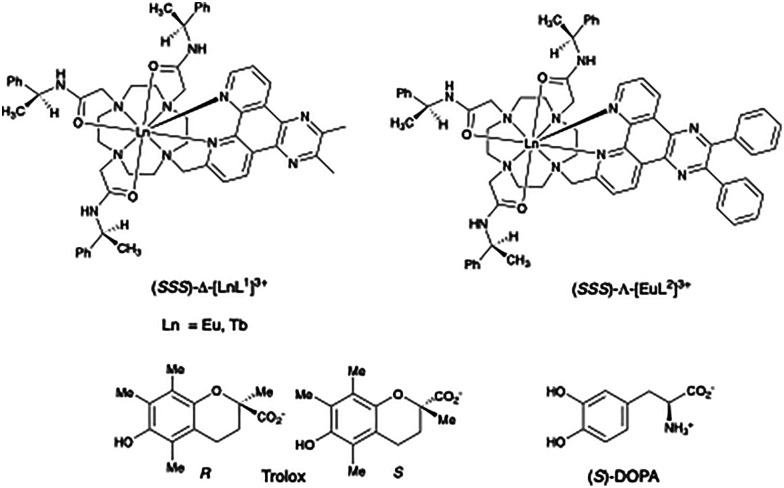 Figure 1
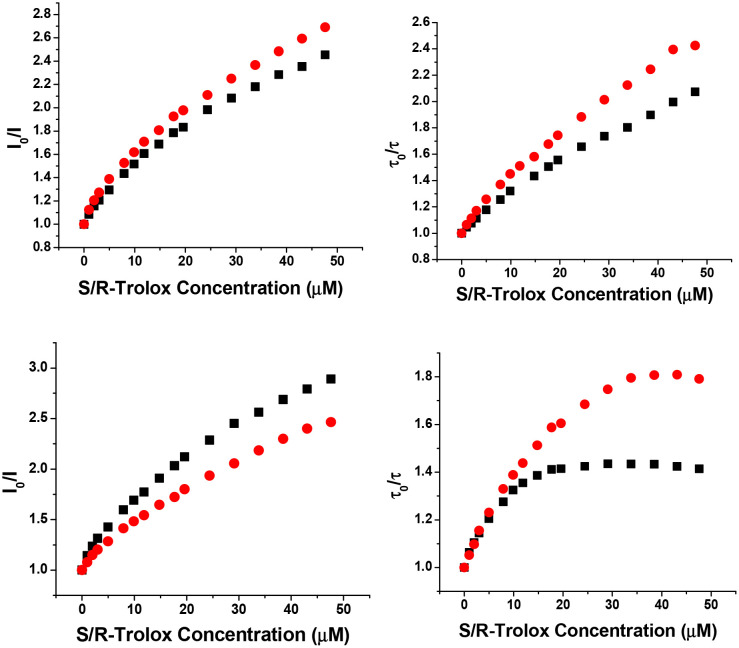 Figure 2
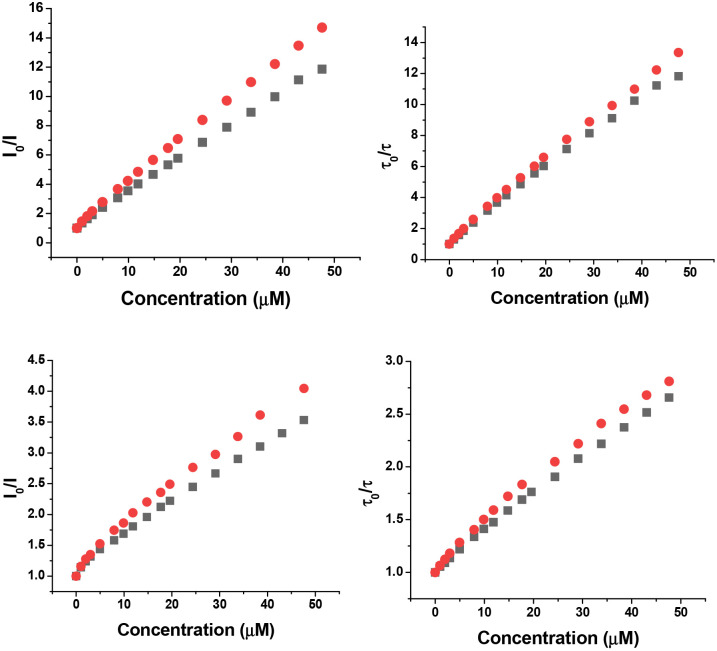 Figure 3
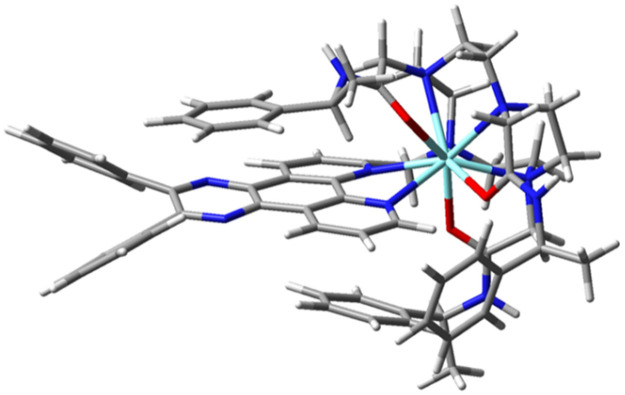 Figure 4
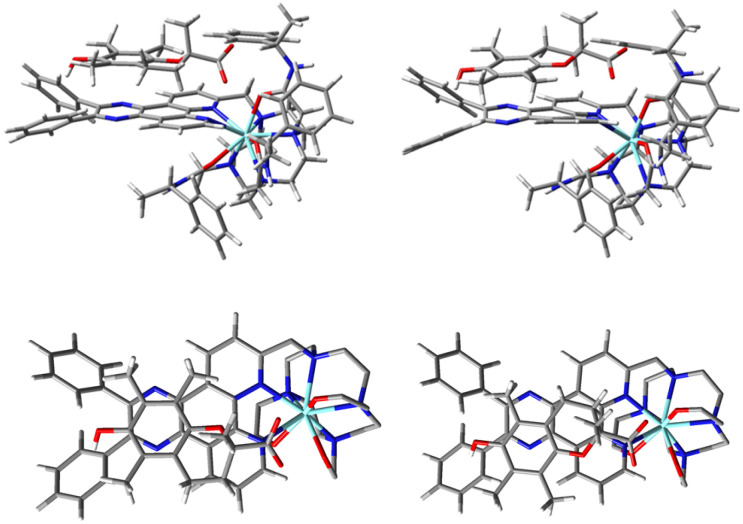 Figure 5
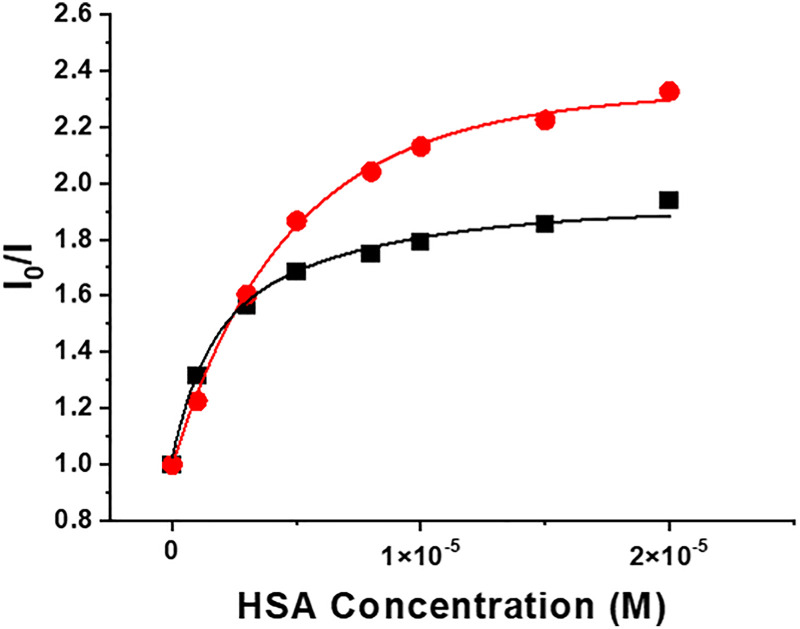 Figure 6
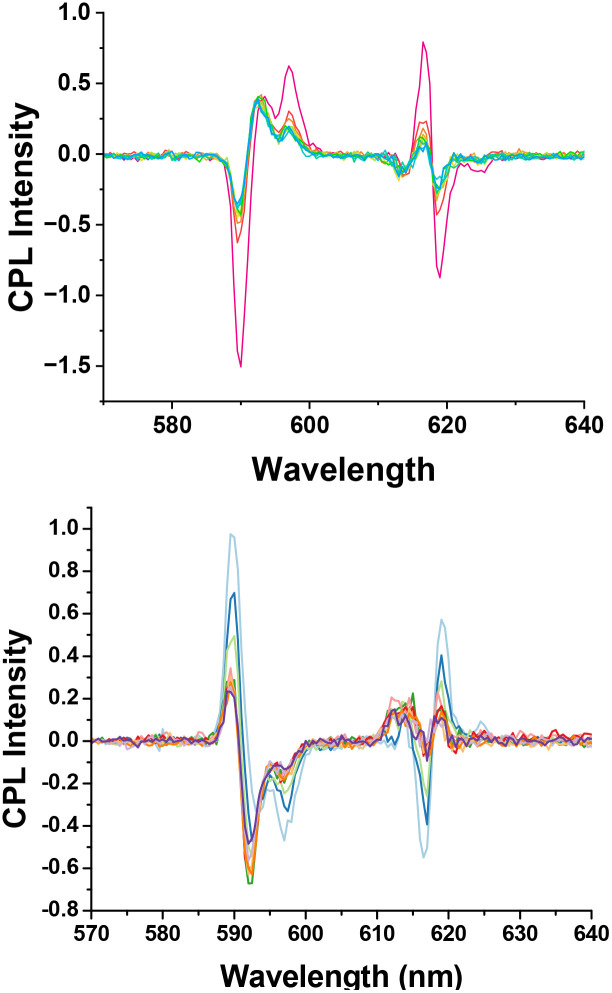 Figure 7
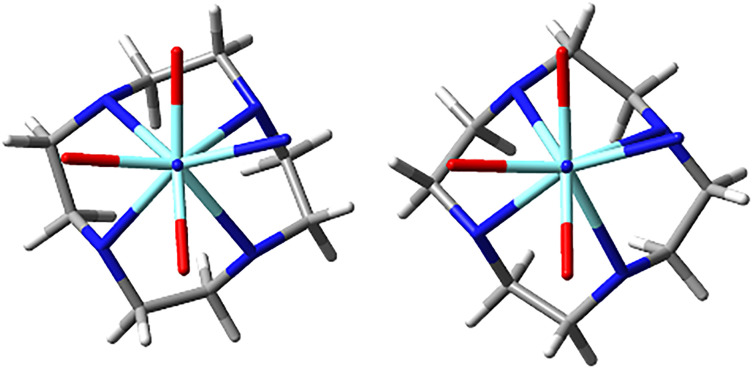 Figure 8
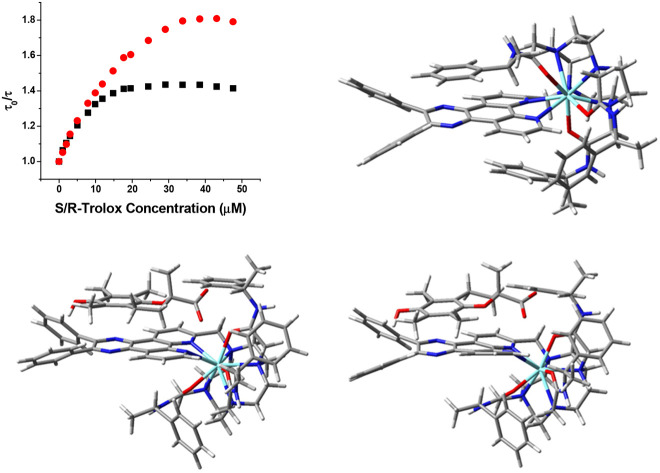 Figure 9
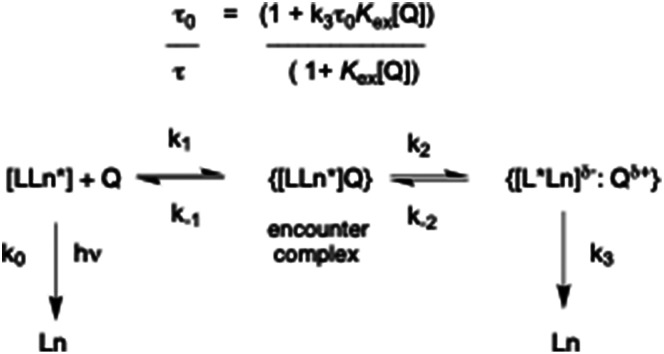 Figure 10
Peer Reviews
No public reviews on file for this paper yet. If you reviewed it on a platform where reviews are public (OpenReview, ICLR, NeurIPS, ICML), you can paste yours below so the community can read it here.
Videos
No videos yet. Explain this paper in a talk, walkthrough, or lecture? Add one.
Taxonomy
TopicsLanthanide and Transition Metal Complexes · Organometallic Complex Synthesis and Catalysis · Advanced Chemical Physics Studies