Exposure to per- and poly-fluoroalkyl substances and associations with embryo quality and adverse pregnancy outcomes: a prospective cohort study
Jiahui Wang, Zhe Li, Kuona Hu, Jingmei Hu, Ting Jiang, Jia Liao, Qian Zhang, Lijing Sun, Linlin Cui, Rong Chen, Tianxiang Ni, Wei Zhou

TL;DR
This study finds that exposure to certain industrial pollutants called PFASs is linked to higher miscarriage rates and lower live birth rates in women undergoing IVF, but does not affect embryo quality.
Contribution
The study identifies specific PFAS chemicals associated with adverse pregnancy outcomes and uses advanced statistical models to assess their combined effects.
Findings
PFAS exposure was not significantly associated with high-quality blastocyst rates.
Exposure to PFASs was significantly linked to higher miscarriage rates and lower live birth rates.
Perfluoro-n-butanoic acid (PFBA) was identified as a major contributor to these adverse outcomes.
Abstract
Per- and poly-fluoroalkyl substances (PFASs) are a group of synthetized industrial pollutants which have been detected worldwide in both environment and humans and gradually raised public health concerns. Previous studies suggested that PFASs had reproductive toxicity and may do harm to pregnancy and children. However, it is still uncertain that whether effect of PFAS exposure on offsprings begins from embryo quality or post-implantation pregnancy outcomes. This study explores the association between exposure to PFASs and embryo quality or pregnancy outcomes to promote maternal–infant health. This study included 246 women who underwent their first in vitro fertilization (IVF) or intracytoplasmic sperm injection (ICSI) cycles from July 2017 to August 2018 and measured concentrations of 23 PFAS congeners of follicular fluid samples. Generalized linear regression model with ln-transformed…
Genes, proteins, chemicals, diseases, species, mutations and cell lines named across the full text — each resolved to its canonical identifier and authoritative record.
Click any figure to enlarge with its caption.
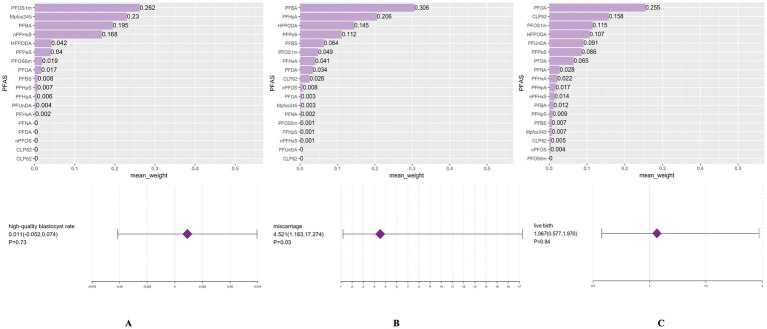 Figure 1
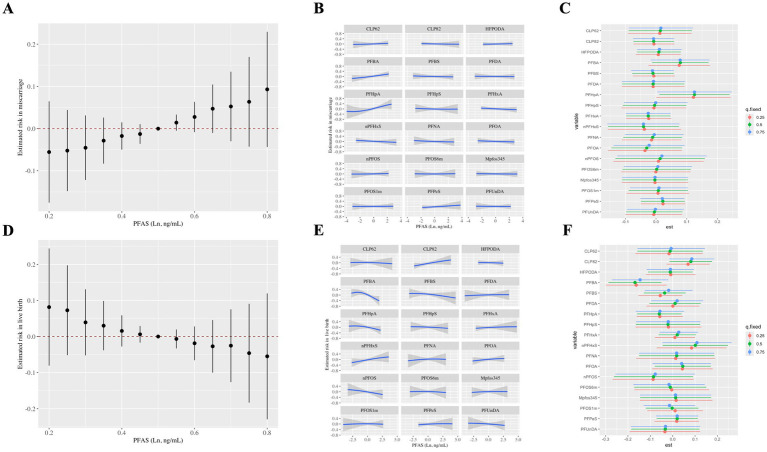 Figure 2
Peer Reviews
No public reviews on file for this paper yet. If you reviewed it on a platform where reviews are public (OpenReview, ICLR, NeurIPS, ICML), you can paste yours below so the community can read it here.
Videos
No videos yet. Explain this paper in a talk, walkthrough, or lecture? Add one.
Taxonomy
TopicsPer- and polyfluoroalkyl substances research · Effects and risks of endocrine disrupting chemicals · Fluoride Effects and Removal