Biomechanical determinants of ground contact time and jump height during drop jumps in male athletes
Hirotomo Kubota, Kohdai Kishi, Taiyo Kurita, Yohei Takai

TL;DR
This study identifies biomechanical factors that influence jump performance in athletes, showing how different movements affect jump height and contact time.
Contribution
The study uses PLS regression to reveal specific biomechanical determinants of jump performance in drop jumps.
Findings
Greater joint range of motion and concentric impulse increase jump height but prolong ground contact time.
Shorter ground contact time is linked to higher eccentric vertical forces and neutral hip posture.
PLS models explained 92-93% of the variance in jump performance outcomes.
Abstract
Drop jump (DJ) performance is underpinned by a complex interplay of biomechanical factors occurring during the eccentric and concentric phases. This study aimed to identify the biomechanical determinants of DJ performance using partial least squares (PLS) regression analysis. Forty-three male collegiate athletes (mean age, height, and mass = 20.1 ± 1.3 years, 1.74 ± 0.07 m, 79.0 ± 23.4 kg) performed DJs from a 0.3-m box while three-dimensional kinematics and ground reaction forces (GRFs) were recorded. Ground contact time, jump height, and reactive strength index (RSI) were analyzed as outcome measures. PLS regression models demonstrated strong explanatory power for each outcome (R2Y: 92–93%, p < 0.001). Ground contact time was negatively influenced by vertical GRFs during the eccentric phase, concentric center of mass (COM) displacement, hip abduction/adduction angle at initial…
Click any figure to enlarge with its caption.
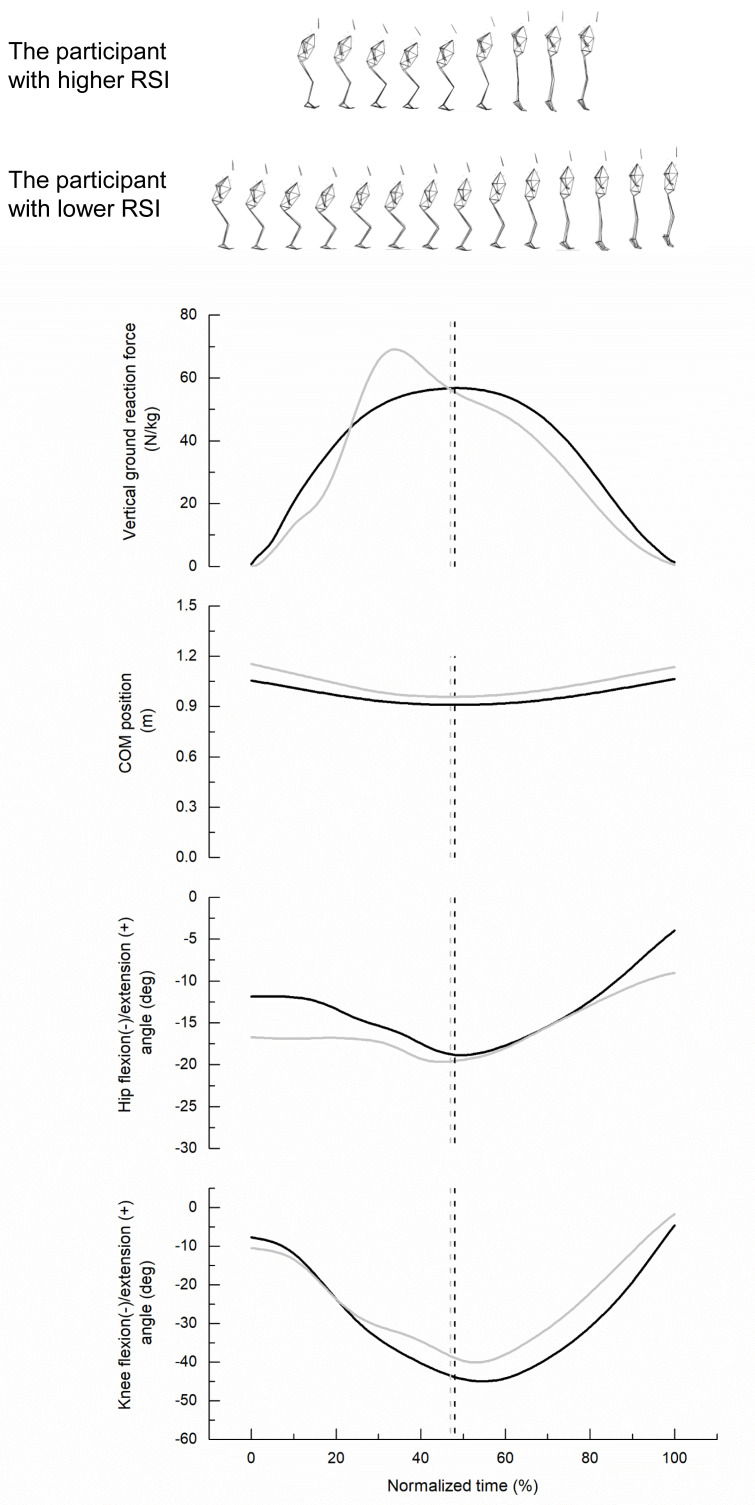 Figure 1
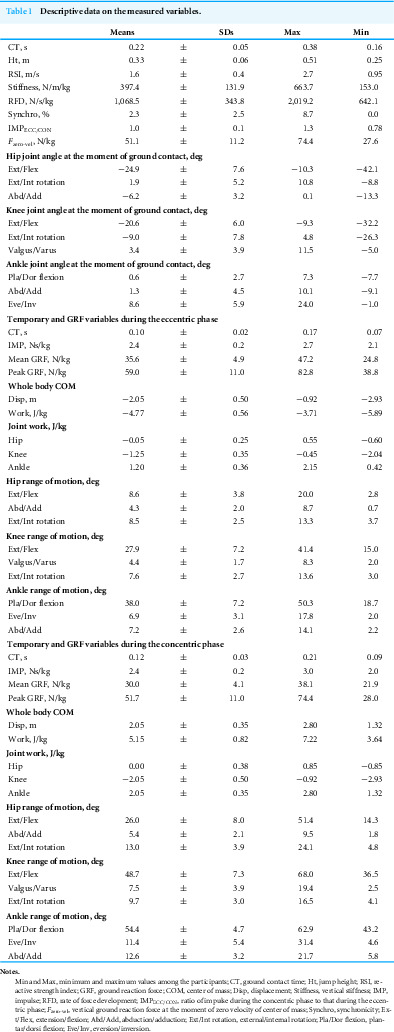 Figure 2
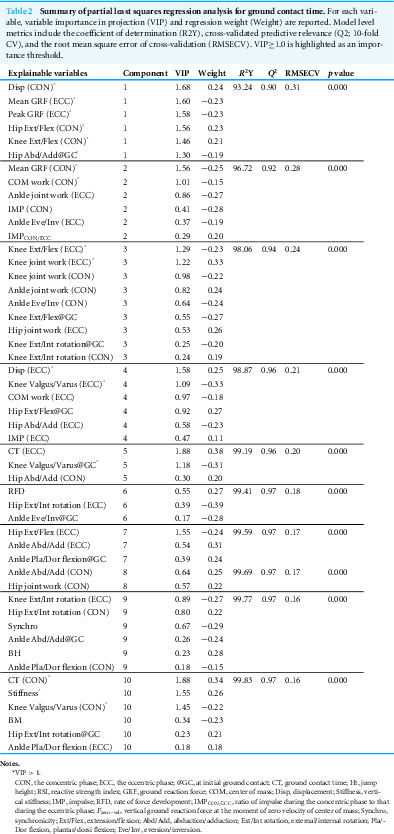 Figure 3
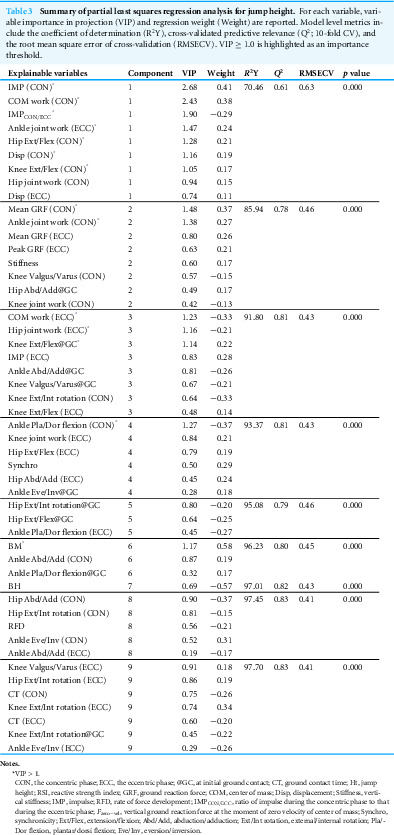 Figure 4
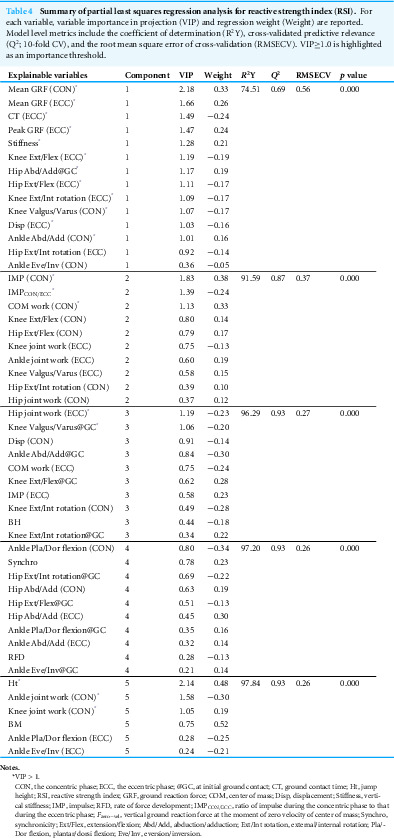 Figure 5
Peer Reviews
No public reviews on file for this paper yet. If you reviewed it on a platform where reviews are public (OpenReview, ICLR, NeurIPS, ICML), you can paste yours below so the community can read it here.
Videos
No videos yet. Explain this paper in a talk, walkthrough, or lecture? Add one.
Taxonomy
TopicsSports Performance and Training · Lower Extremity Biomechanics and Pathologies · Knee injuries and reconstruction techniques