Advances in molecular tools for elucidating nucleic acid biology in fungal pathogens
Lukas Schrettenbrunner, Neshima Mavani, Slavica Janevska, Matthew G Blango

TL;DR
This paper reviews recent molecular tools for studying nucleic acid biology in fungal pathogens, emphasizing their role in understanding and combating these microbes.
Contribution
The paper provides a comprehensive overview of how modern DNA, RNA, and chromatin-based technologies are advancing the study of fungal pathogens.
Findings
Advances in genetic engineering and chromatin biology are improving understanding of fungal virulence.
RNA-based technologies and -omics approaches are enhancing the study of fungal pathogens.
New molecular tools are expected to lead to novel antifungals and diagnostic strategies.
Abstract
Throughout the history of molecular biology, surprising advances have come from the study of all sorts of microbes. The first description of DNA polymerase came from the bacterial workhorse Escherichia coli, reverse transcriptase was revealed by studies of the Rous Sarcoma Virus, and even the initial discovery of DNA as the hereditary molecule was determined using strains of pneumococci in the classic Griffith and Avery–MacLeod–McCarty experiments. Here, we build from these foundational discoveries to discuss the rapid development of molecular tools to study microbes themselves, with a focus on nucleic acid biology. We use fungal pathogens as a case study, as their diversity, complexity, and emerging appreciation as a global threat to society makes them particularly compelling and informative. In this review, we will address how advancements in methods to probe nucleic acids are now…
Genes, proteins, chemicals, diseases, species, mutations and cell lines named across the full text — each resolved to its canonical identifier and authoritative record.
Click any figure to enlarge with its caption.
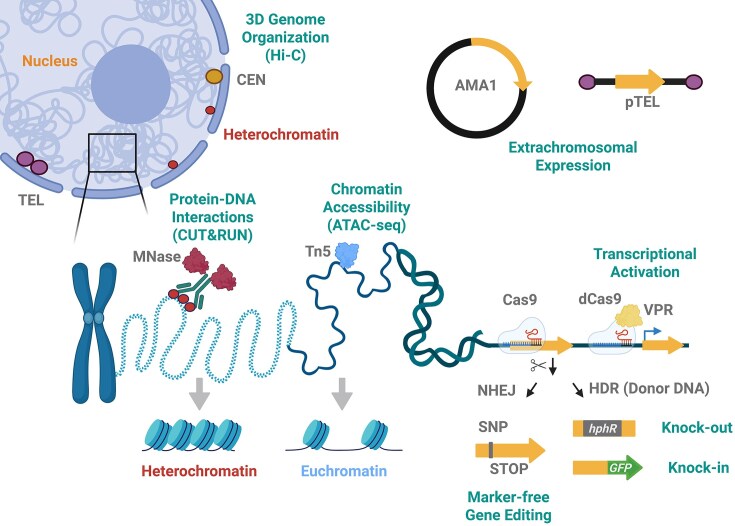 Figure 1
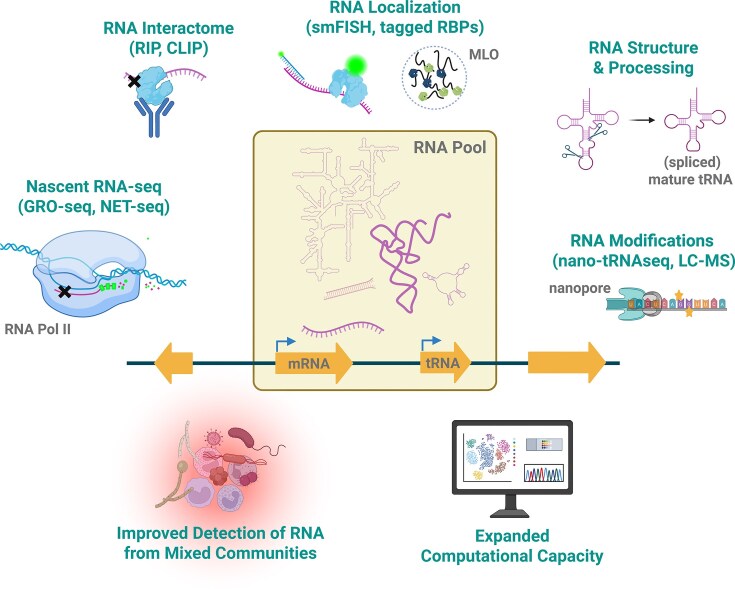 Figure 2
Peer Reviews
No public reviews on file for this paper yet. If you reviewed it on a platform where reviews are public (OpenReview, ICLR, NeurIPS, ICML), you can paste yours below so the community can read it here.
Videos
No videos yet. Explain this paper in a talk, walkthrough, or lecture? Add one.
Taxonomy
TopicsFungal Infections and Studies · Infectious Diseases and Mycology · Plant and Fungal Interactions Research