Discovery of a secreted Bacteroides fragilis mucinase that cleaves mucins with bis-T O-glycans through a carbohydrate binding module-dependent mechanism
Yoshiki Narimatsu, Cayetano Pleguezuelos-Manzano, Daniel Hornikx, Felix Goerdeler, Thapakorn Jaroentomeechai, Katia Flores, Sanae Narimatsu, Charelle Boot, Lars Hansen, Fabien Durbesson, Renaud Vincentelli, Laurie Comstock, Hans Clevers, Victor Taleb, Francisco Corzana

TL;DR
Researchers discovered a new mucinase from Bacteroides fragilis that breaks down mucins with specific sugar structures, revealing a mechanism involving carbohydrate-binding modules.
Contribution
The study identifies nine new mucinases, including a B. fragilis enzyme with a unique glycan preference and a CBM-dependent mechanism.
Findings
Nine CBM-bearing M60-like mucinases were discovered, including a conserved B. fragilis mucinase HC11.
HC11 and BT4244 show distinct O-glycan preferences, with CBM32 domains essential for cleaving extended mucin substrates.
B. fragilis secretes HC11 and degrades mucins only after sialic acid removal, suggesting a cooperative CBM-catalytic mechanism.
Abstract
Degradation of mucins at the host–microbial mucus interphase involves glycosidases that release monosaccharides from O-glycans and mucinases that cleave the mucin protein backbone. Mucinases recognize and cleave peptide bonds at specific sequence motifs with varying O-glycan structures required and/or permissible. Mucinases that digest mucins with intact O-glycans can potentially destroy the protective mucus, while mucinases that only digest mucins with partially degraded O-glycans may serve at a later stage of nutrient sourcing from mucins. Here, we discovered nine CBM-bearing M60-like mucinases across gut commensals and opportunists, including a conserved Bacteroides fragilis mucinase denoted HC11. We also investigated the previously described Bacteroides thetaiotaomicron mucinase BT4244, which together delineates two functional classes with distinct preferences: BT4244 for bis-Tn…
Genes, proteins, chemicals, diseases, species, mutations and cell lines named across the full text — each resolved to its canonical identifier and authoritative record.
Click any figure to enlarge with its caption.
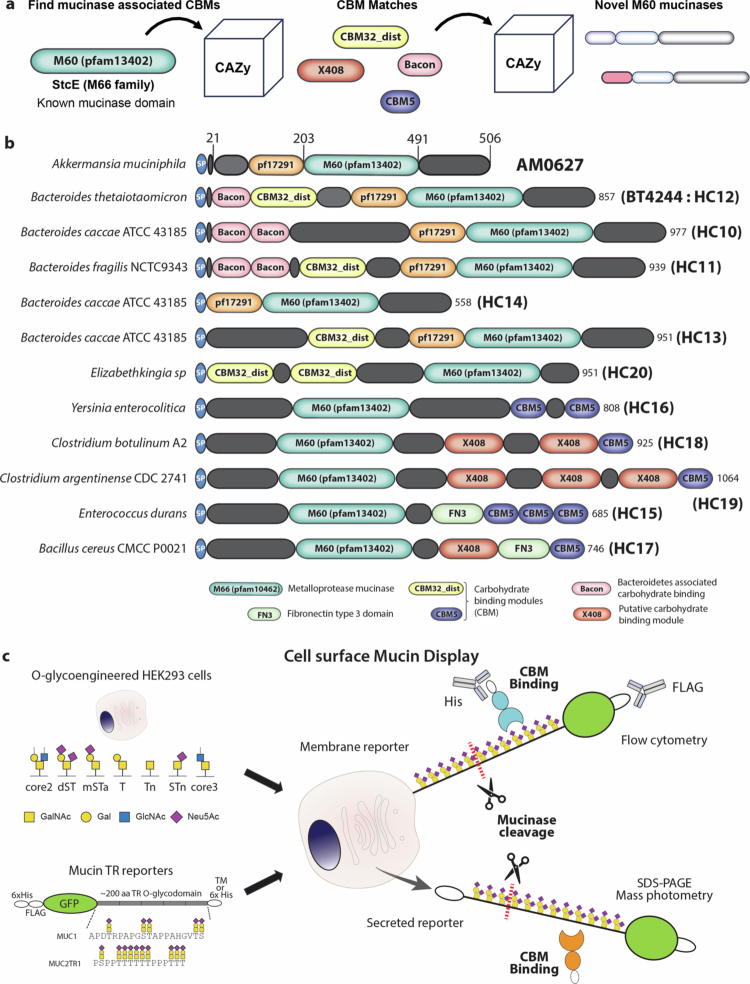 Figure 1
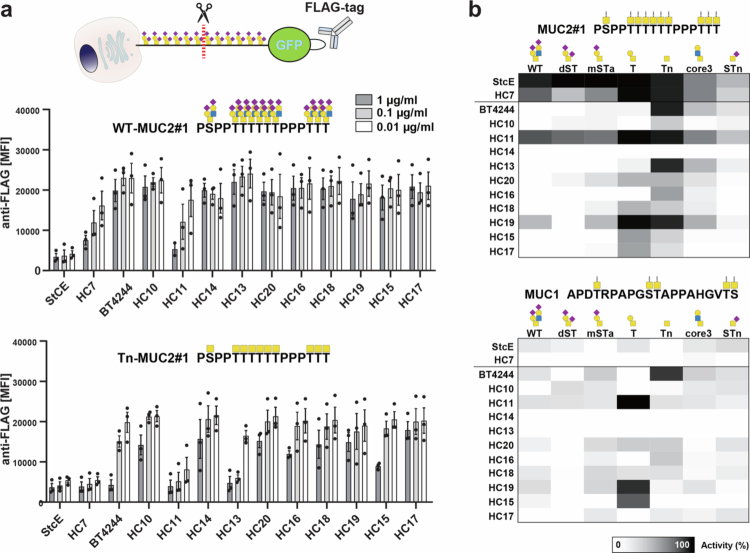 Figure 2
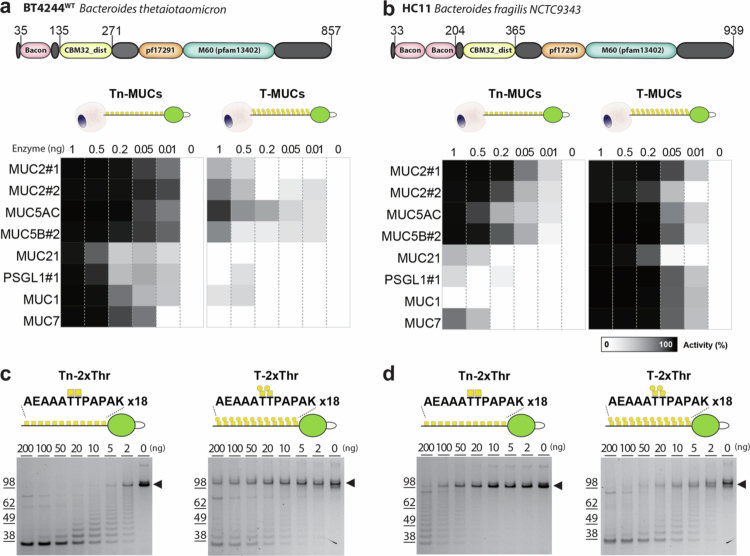 Figure 3
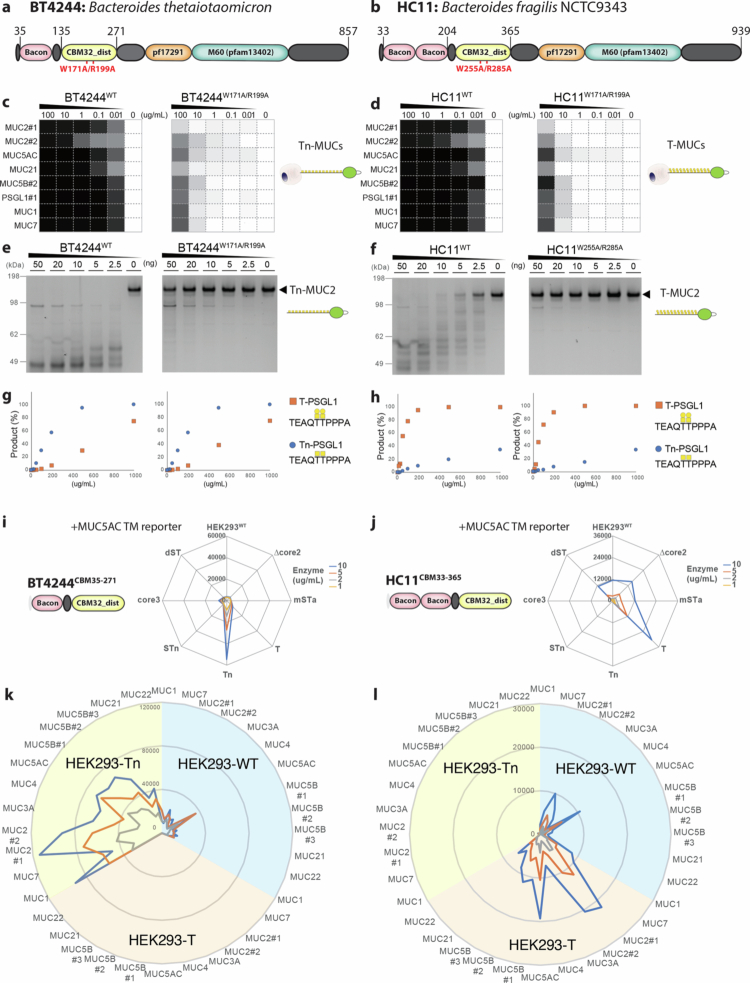 Figure 4
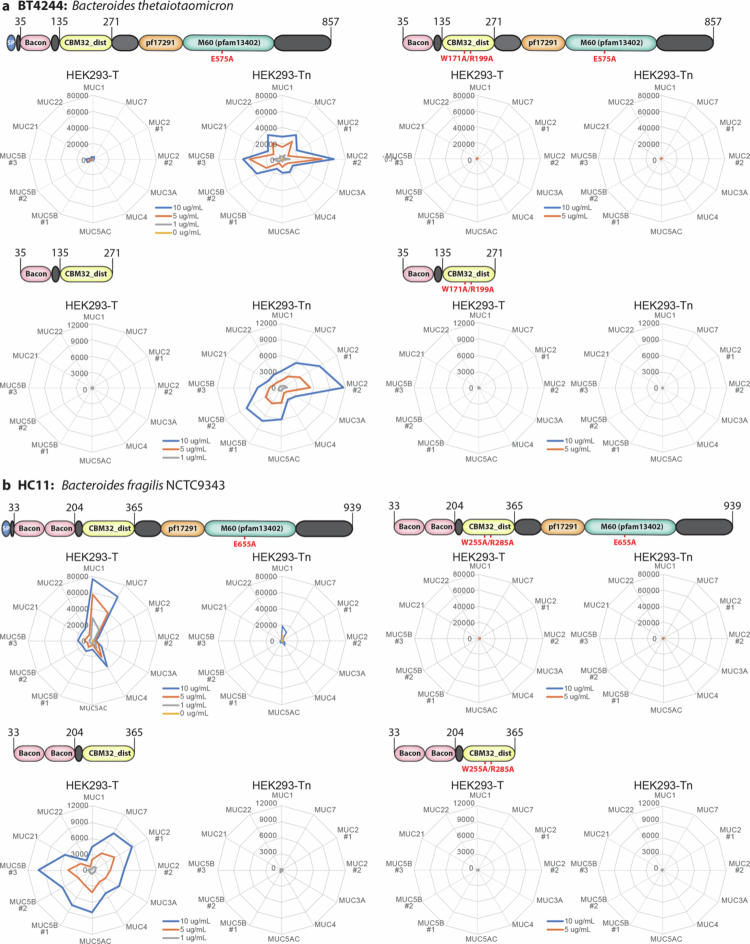 Figure 5
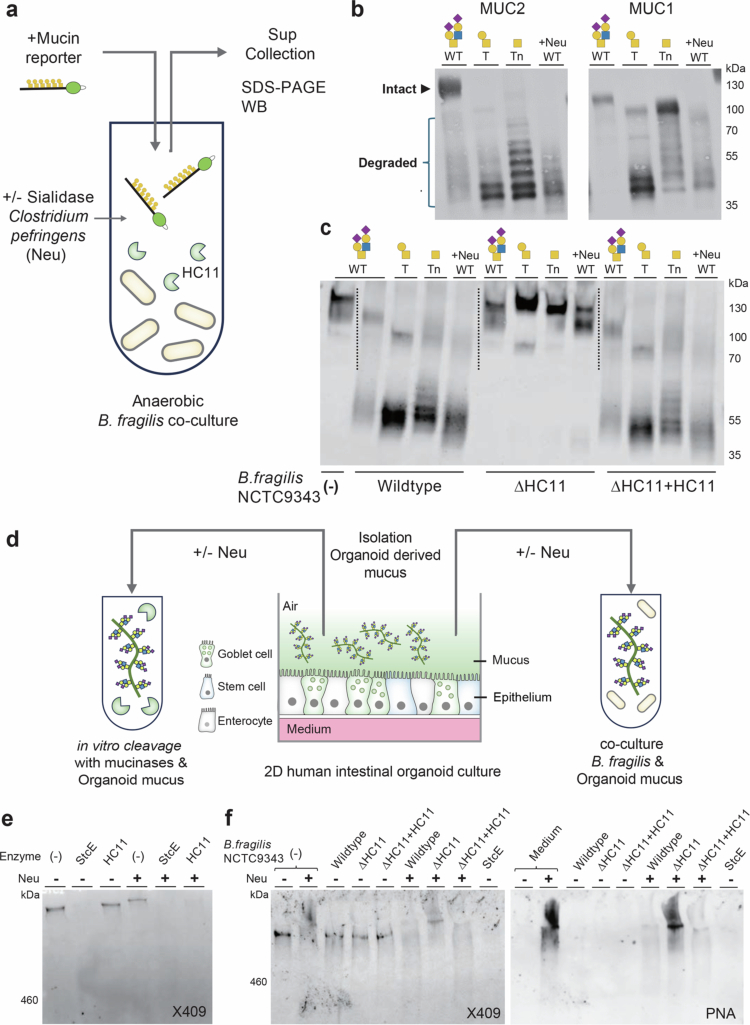 Figure 6
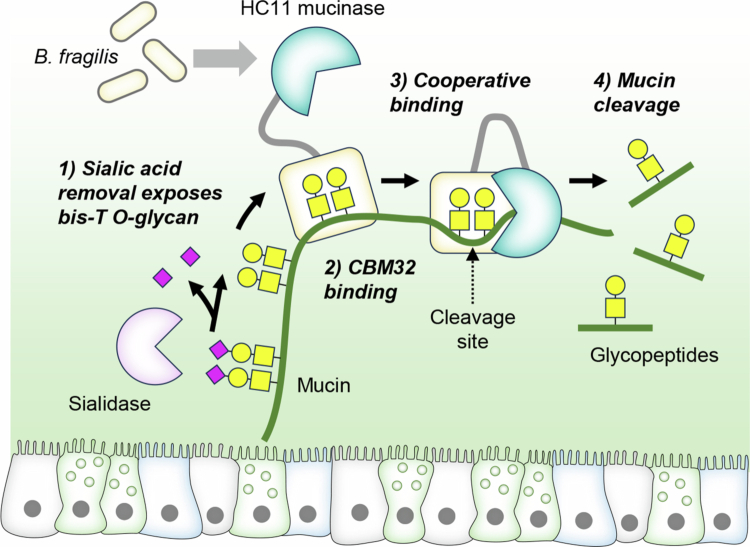 Figure 7
Peer Reviews
No public reviews on file for this paper yet. If you reviewed it on a platform where reviews are public (OpenReview, ICLR, NeurIPS, ICML), you can paste yours below so the community can read it here.
Videos
No videos yet. Explain this paper in a talk, walkthrough, or lecture? Add one.
Taxonomy
TopicsGlycosylation and Glycoproteins Research · Carbohydrate Chemistry and Synthesis · Escherichia coli research studies