Cause-specific mortality transition among women of reproductive age with special reference to maternal mortality: the Magu health and demographic surveillance system, Tanzania, 1995–2022
Milly Marston, Sophia Kagoye, Jacqueline Materu, Charles Mangya, Jim Todd, Mark Urassa, Ties Boerma

TL;DR
This study tracks mortality trends among women of reproductive age in Tanzania from 1995 to 2022, showing a significant decline in overall deaths, mainly due to reduced HIV/AIDS mortality, but maternal mortality remains a key cause.
Contribution
The study provides long-term population-level data on cause-specific mortality trends among women in sub-Saharan Africa, filling a critical data gap.
Findings
All-cause mortality among women 15–49 years declined threefold from 1995 to 2022, largely due to reduced HIV/AIDS mortality.
Maternal mortality decreased but remained a leading cause of death, with no significant improvement in its share of total deaths since 2010.
Health facility deaths increased over time, and most women sought care during terminal illness or maternity.
Abstract
Limited population data exist on mortality and causes of death among women of reproductive age, including maternal mortality. To present trends from 1995 to 2022 in mortality, cause of death, maternal mortality ratio and place of death from the rural Magu health and demographic surveillance site in north-west Tanzania. Data on residency, fertility, and verbal autopsy were analysed to compute trends in all-cause and cause-specific mortality for women 15–49 years, using InSilicoVA, a Bayesian probabilistic model. Maternal mortality was estimated for three periods: 1995–2002, 2005–2011 and 2015–2022. We described place of death and healthcare utilization leading up to death by calendar time and broad cause of death. All-cause mortality among women 15–49 declined from a peak of 9.0 deaths per 1000 person-years in the late 1990s to 3.5 in 2020. HIV/TB contributed 61% of this reduction.…
Genes, proteins, chemicals, diseases, species, mutations and cell lines named across the full text — each resolved to its canonical identifier and authoritative record.
Click any figure to enlarge with its caption.
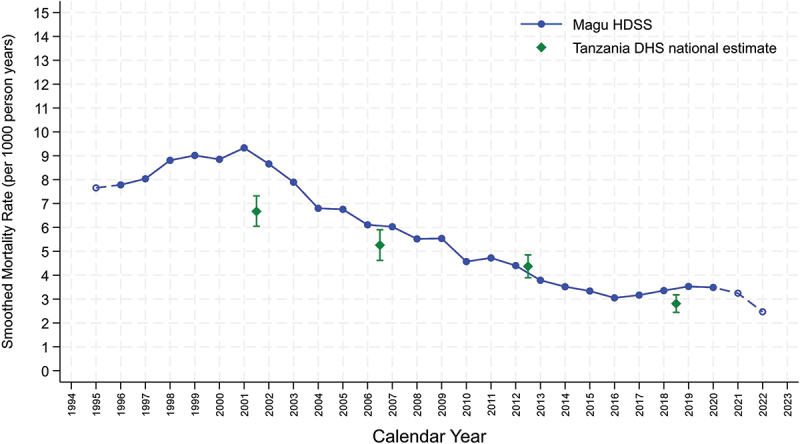 Figure 1
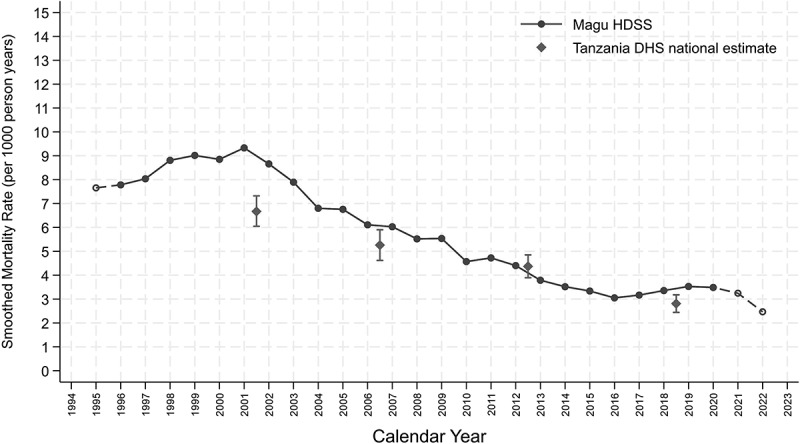 Figure 2
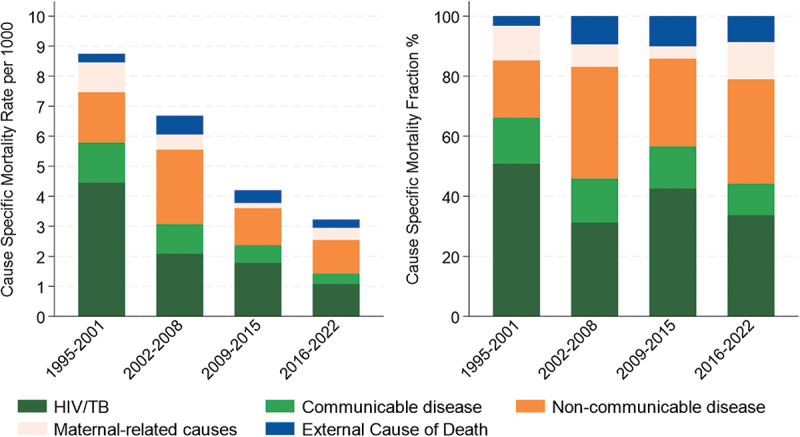 Figure 3
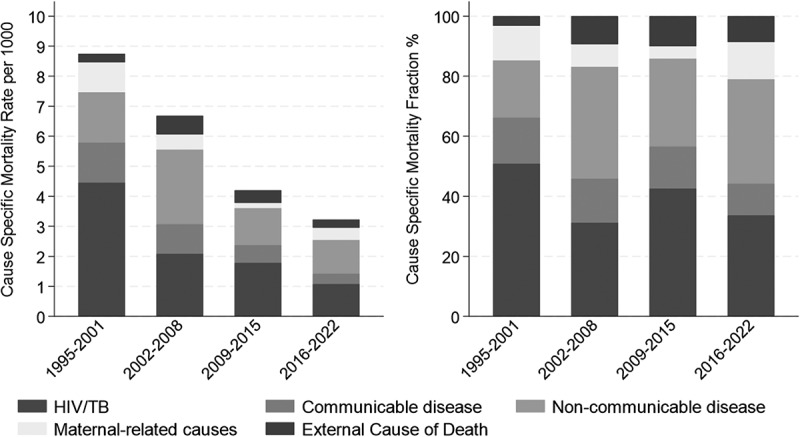 Figure 4
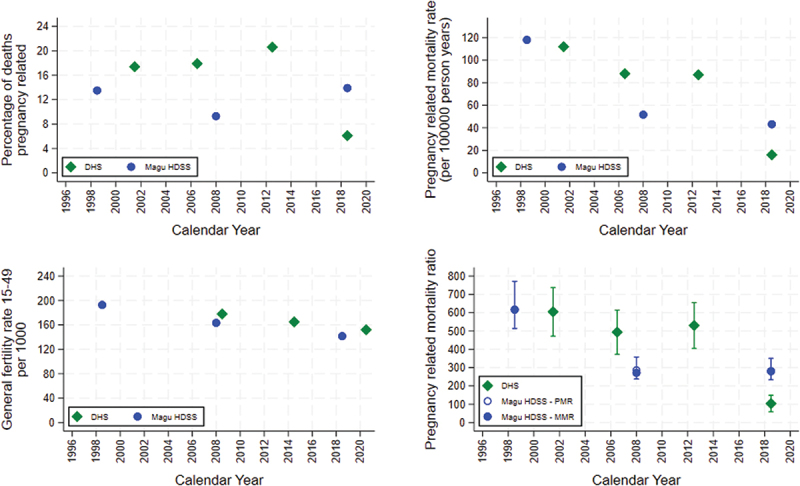 Figure 5
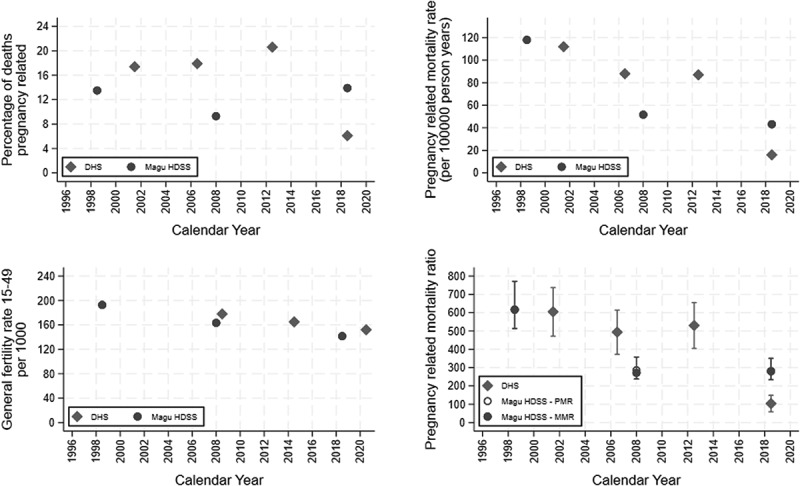 Figure 6
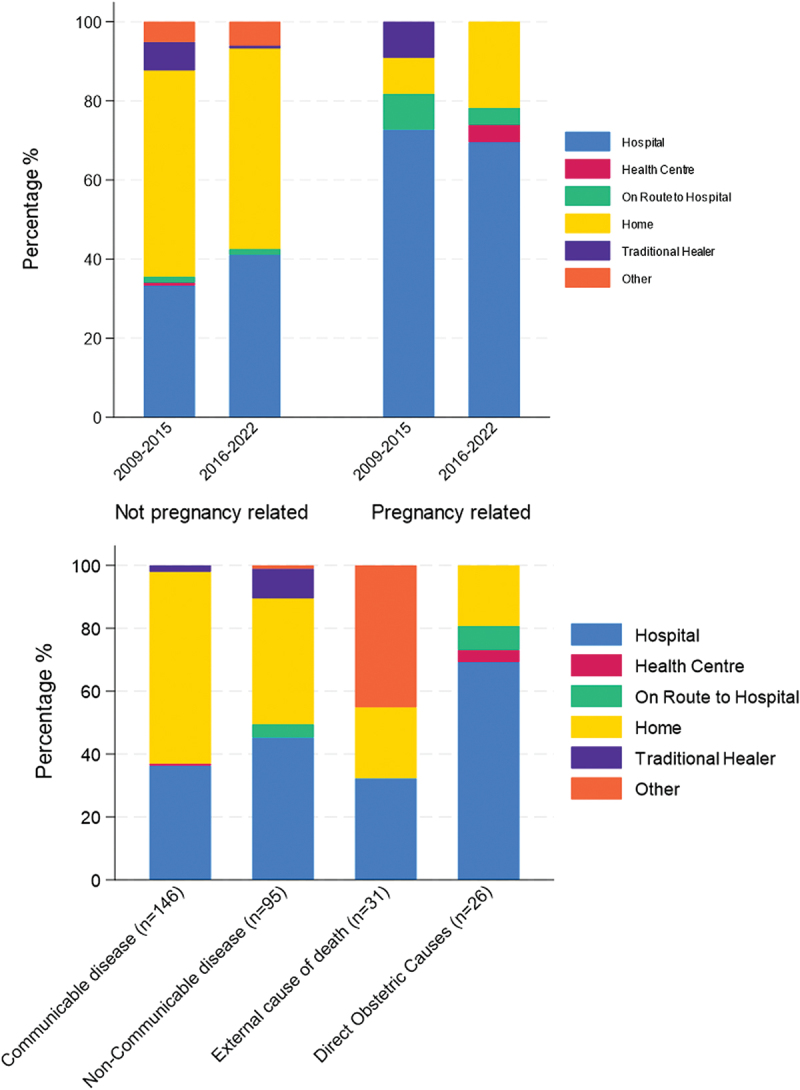 Figure 7
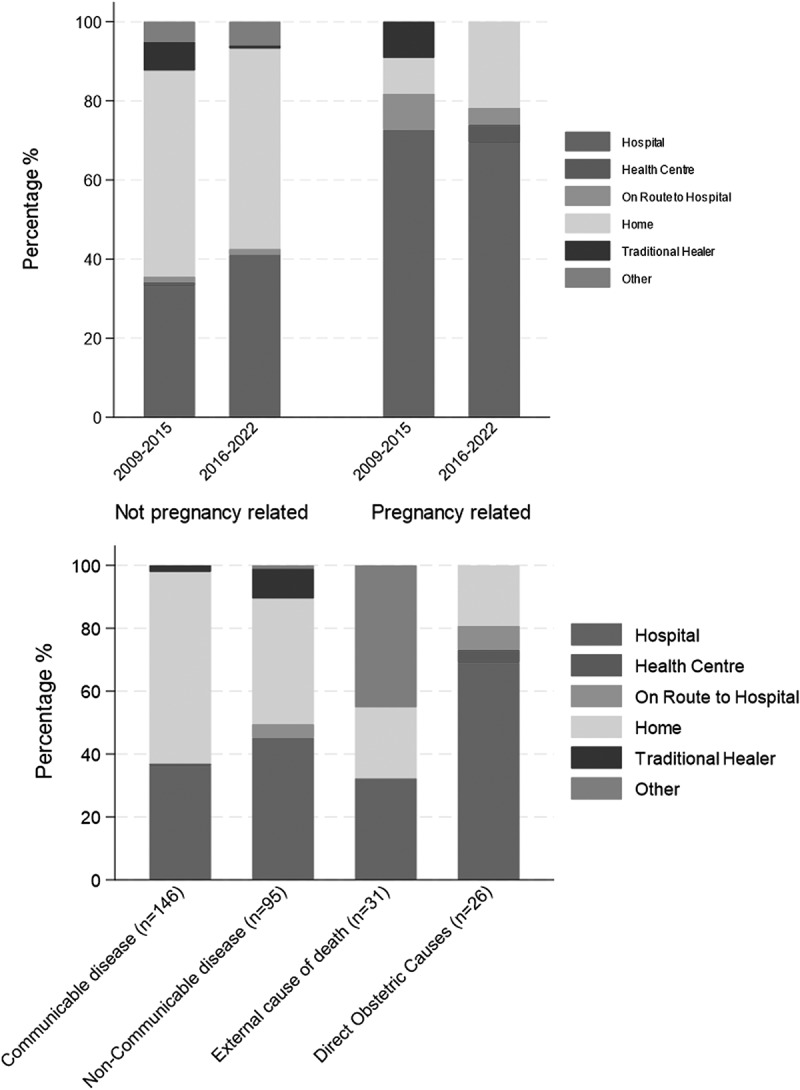 Figure 8
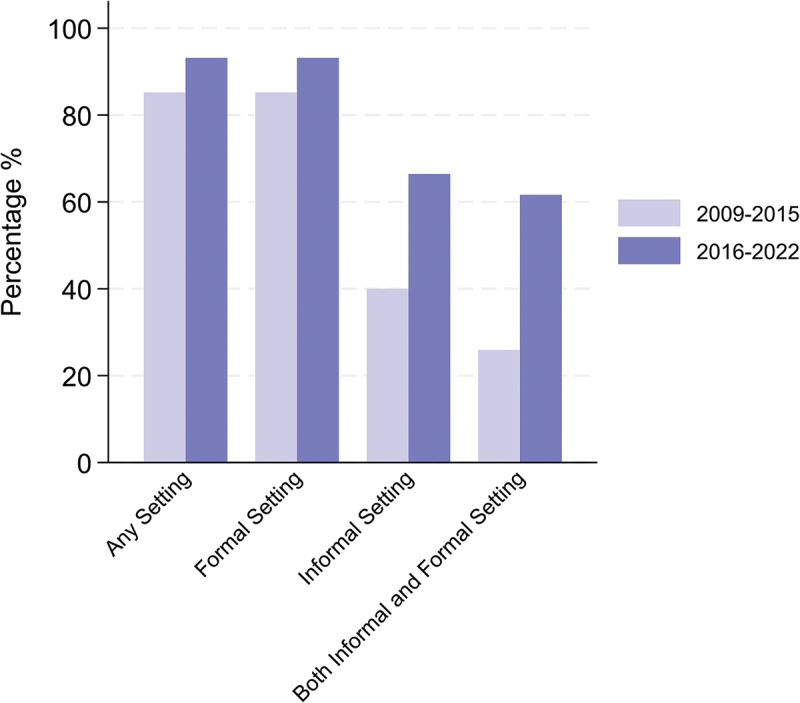 Figure 9
 Figure 10
Peer Reviews
No public reviews on file for this paper yet. If you reviewed it on a platform where reviews are public (OpenReview, ICLR, NeurIPS, ICML), you can paste yours below so the community can read it here.
Videos
No videos yet. Explain this paper in a talk, walkthrough, or lecture? Add one.
Taxonomy
TopicsGlobal Maternal and Child Health · COVID-19 Impact on Reproduction · Maternal and fetal healthcare