Contrasting foraging strategies of seasonally segregated populations of the band-rumped storm-petrel at St Helena, South Atlantic
Annalea Beard, Frank Hailer, Steffen Oppel, Renata Medeiros, Leeann Henry, Alison Small, Richard A. Phillips, Robert J. Thomas

TL;DR
This study examines how seasonally breeding storm-petrels at St Helena differ in foraging behavior, which may contribute to their potential speciation.
Contribution
The study provides new insights into how foraging strategies differ between seasonally segregated populations and their role in allochronic speciation.
Findings
Cool season breeders forage in warmer waters southeast of St Helena, while hot season breeders use cooler, nutrient-rich waters southwest of the island.
Despite similar trip durations and distances, the two seasonal populations show pronounced differences in foraging distribution and habitat selection.
These differences suggest that environmental conditions drive foraging segregation, potentially contributing to sympatric speciation.
Abstract
Allochrony can be a cause or consequence of speciation, either creating temporal reproductive isolation that reduces gene flow between diverging populations or reinforcing divergence that has already occurred through geographic isolation. The former appears to apply to band-rumped storm-petrels (Hydrobates castro) at some breeding sites, where there are genetically differentiated hot and cool season breeding populations. It is unclear, however, whether seasonally segregated but genetically similar populations retain the same habitat preferences or whether divergence in foraging behaviour is associated with the process of allochronic speciation. We quantified the foraging distribution of band-rumped storm-petrels at St Helena, the largest known breeding colony in the South Atlantic at which hot and cool season breeders do not appear to be genetically differentiated. Fifty-four GPS tags…
Genes, proteins, chemicals, diseases, species, mutations and cell lines named across the full text — each resolved to its canonical identifier and authoritative record.
Click any figure to enlarge with its caption.
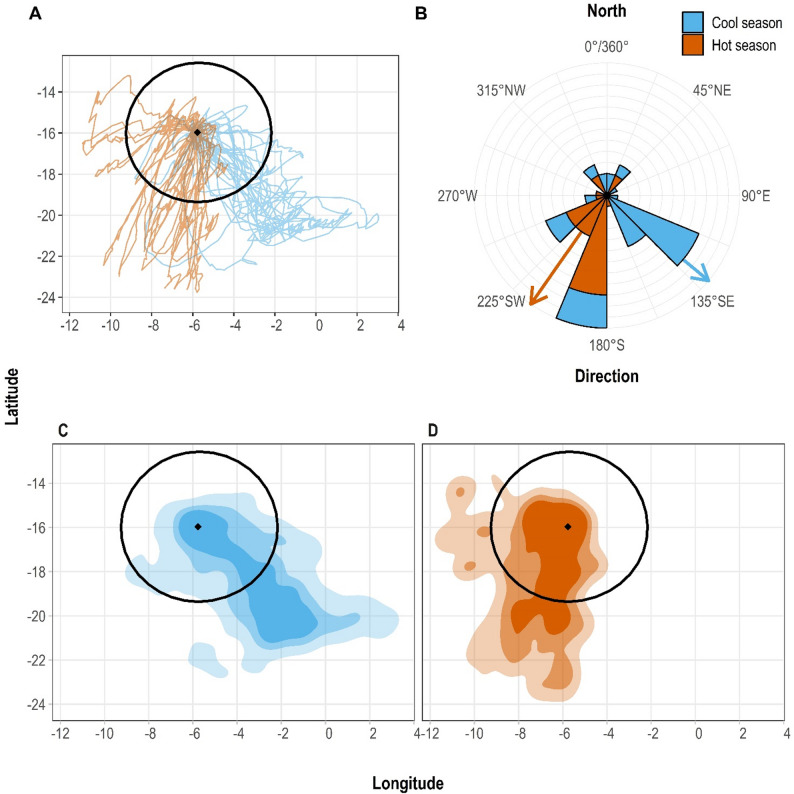 Figure 1
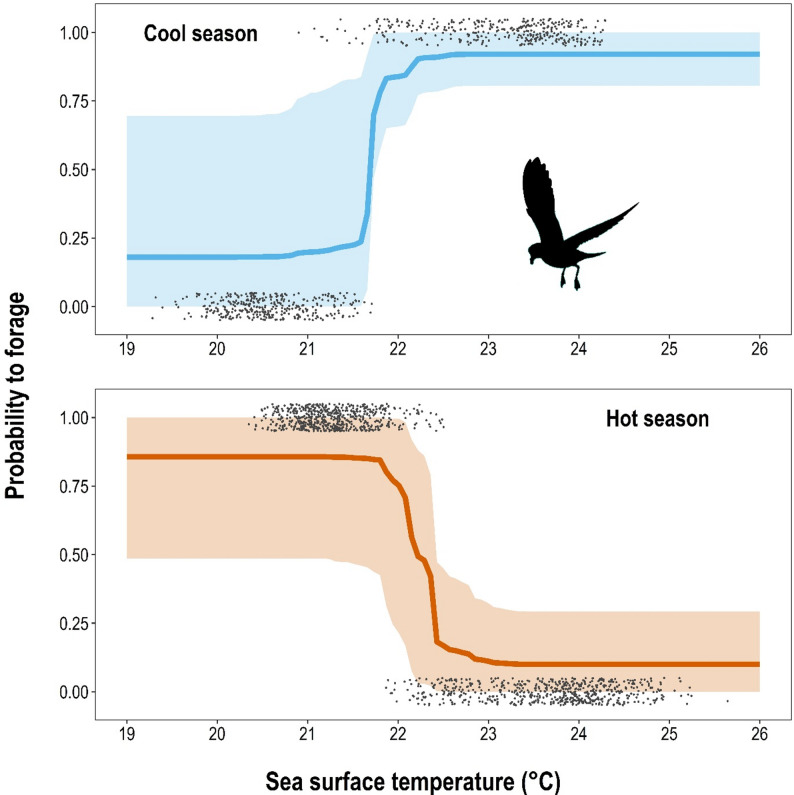 Figure 2
Peer Reviews
No public reviews on file for this paper yet. If you reviewed it on a platform where reviews are public (OpenReview, ICLR, NeurIPS, ICML), you can paste yours below so the community can read it here.
Videos
No videos yet. Explain this paper in a talk, walkthrough, or lecture? Add one.
Taxonomy
TopicsAvian ecology and behavior · Marine animal studies overview · Species Distribution and Climate Change