Qualitative content analysis of reactivity effects and feasibility of ecological momentary assessments of suicide-related thoughts and behaviors in the long-term and in suicidal crises
Lena Spangenberg, Cora Spahn, Jana Serebriakova, Thomas Forkmann, Heide Glaesmer

TL;DR
This study examined how participants experienced using ecological momentary assessments to track suicidal thoughts and behaviors over time and during crises.
Contribution
The study provides new qualitative insights into the reactivity and feasibility of EMA for monitoring suicide-related thoughts and behaviors.
Findings
Some participants reported that EMA prompts intensified or triggered suicidal thoughts.
EMA was perceived as feasible and beneficial for long-term monitoring after psychiatric discharge.
EMA feasibility was questioned during acute suicidal crises due to reduced response ability and willingness.
Abstract
This study explored participant experiences with ecological momentary assessment (EMA) in the context of suicidal thoughts and behaviors (STBs). 16 participants of a long-term EMA study (with varying STB occurrence during the study and low vs. high compliance) were interviewed on reactivity effects and feasibility of EMA. Qualitative content analysis was performed using an inductive-deductive approach and consensual coding. Reactivity to EMA was reported by some participants, with suicidal thoughts occasionally intensifying/being triggered by survey prompts. Importantly, no evidence indicated that EMA triggered suicidal actions. However, the burden increased over time for some, calling for more personalized monitoring durations. EMA’s feasibility during acute suicidal crises was questioned due to reduced ability and willingness to respond. Long-term EMA monitoring after psychiatric…
Genes, proteins, chemicals, diseases, species, mutations and cell lines named across the full text — each resolved to its canonical identifier and authoritative record.
Click any figure to enlarge with its caption.
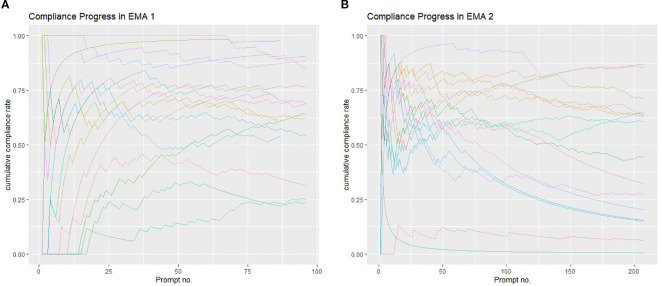 Figure 1
Peer Reviews
No public reviews on file for this paper yet. If you reviewed it on a platform where reviews are public (OpenReview, ICLR, NeurIPS, ICML), you can paste yours below so the community can read it here.
Videos
No videos yet. Explain this paper in a talk, walkthrough, or lecture? Add one.
Taxonomy
TopicsMental Health Research Topics · Suicide and Self-Harm Studies · Digital Mental Health Interventions