Theoretical insights into site-specific heavy-atom effects on MR-TADF emitters: modulation of spin–orbit coupling and color purity
Shi-Jie Ge, Jian-Rong Wu, Zuo-Quan Jiang

TL;DR
This paper explores how placing heavy atoms in different positions affects the performance of MR-TADF materials, balancing efficiency and color purity.
Contribution
The study provides theoretical insights into how heavy-atom positions influence spin–orbit coupling and color purity in MR-TADF emitters.
Findings
Heavy atoms directly embedded in the luminescent core increase SOC but cause red-shifted and broadened spectra.
Non-covalent heavy-atom incorporation balances SOC enhancement with narrow FWHM, preserving color purity.
Heavy atoms placed farther from the core have diminished effects on SOC and color purity.
Abstract
Introducing heavy atoms is a promising strategy to enhance triplet-to-singlet upconversion in multi-resonance thermally activated delayed fluorescence (MR-TADF) materials. By bolstering spin–orbit coupling (SOC), this approach suppresses triplet–triplet annihilation and consequently alleviates efficiency roll-off in devices. However, the embedded heavy atoms at different sites often exert a dual influence on both the SOC and the color purity. This study systematically investigates three types of heavy-atom-embedded MR-TADF emitters derived from a QAO core, with modifications at the bay position, on a spiro-fused periphery, and through a noncovalent face-on interaction. The high-level quantum chemical calculations reveal that the enhancement of SOC strongly depends on the heavy atom's position relative to the luminescent core. Direct embedding into the luminescent core significantly…
Genes, proteins, chemicals, diseases, species, mutations and cell lines named across the full text — each resolved to its canonical identifier and authoritative record.
Click any figure to enlarge with its caption.
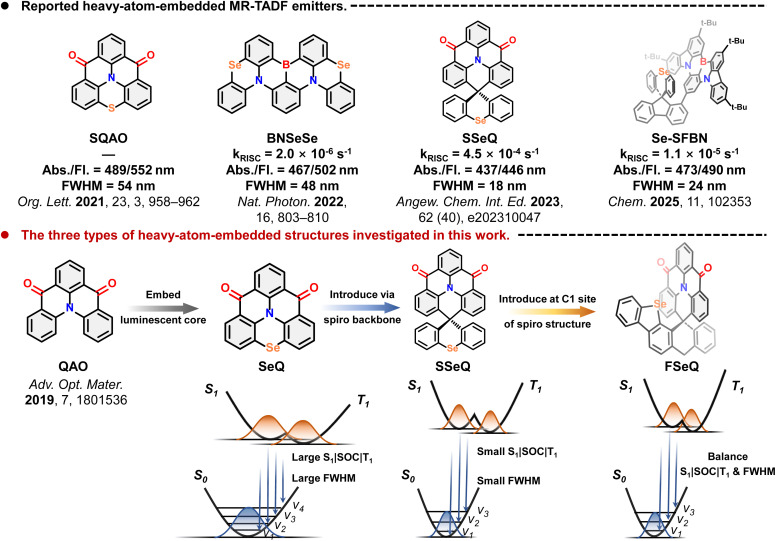 Figure 1
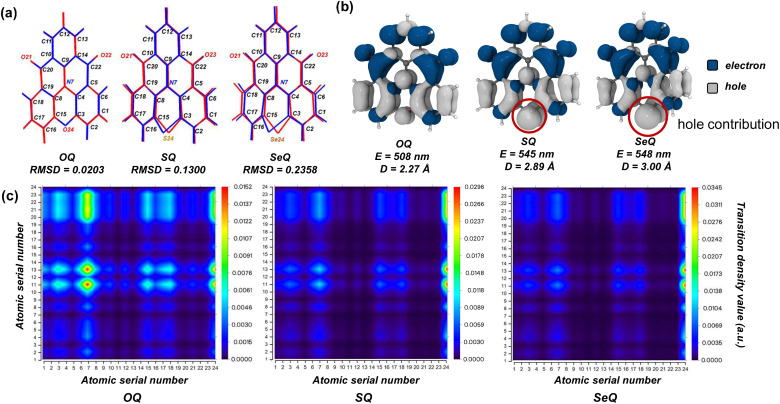 Figure 2
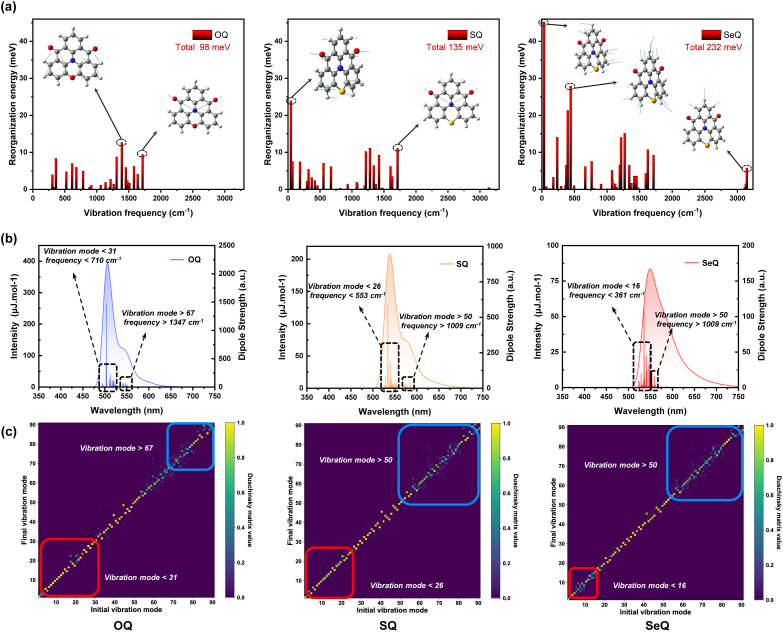 Figure 3
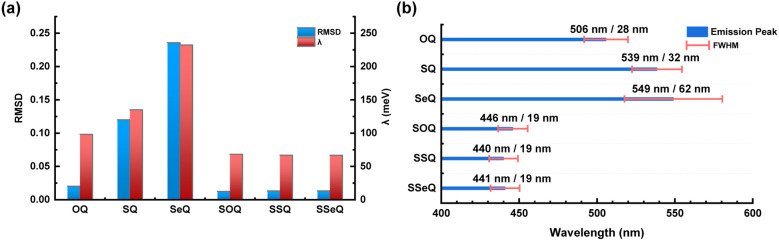 Figure 4
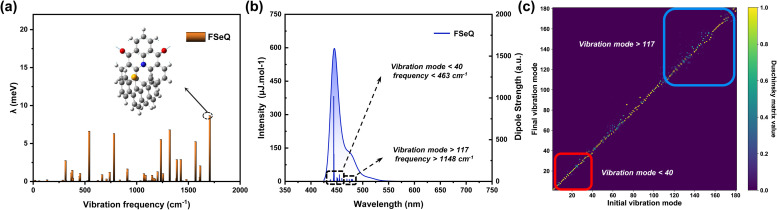 Figure 5
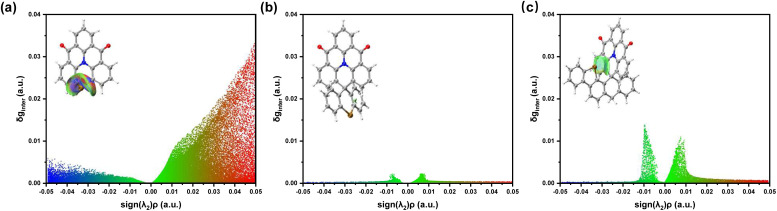 Figure 6
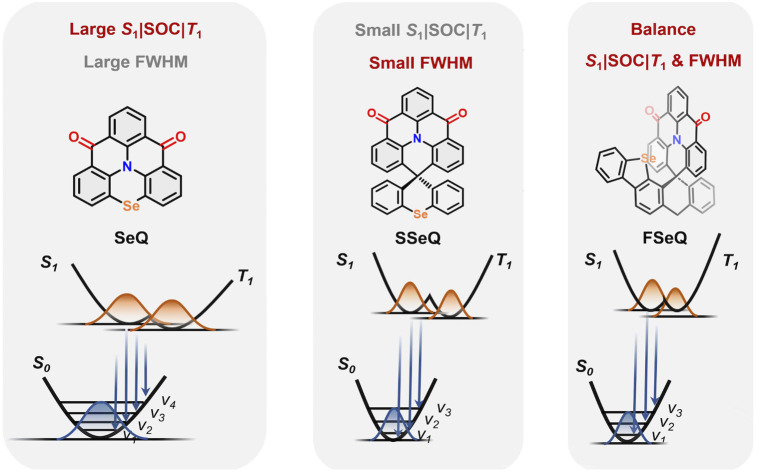 Figure 7
 Figure 8
 Figure 9
 Figure 10
Peer Reviews
No public reviews on file for this paper yet. If you reviewed it on a platform where reviews are public (OpenReview, ICLR, NeurIPS, ICML), you can paste yours below so the community can read it here.
Videos
No videos yet. Explain this paper in a talk, walkthrough, or lecture? Add one.
Taxonomy
TopicsOrganic Light-Emitting Diodes Research · Luminescence Properties of Advanced Materials · Luminescence and Fluorescent Materials