Potential influence of omentin-1 genetic variants on the clinicopathological features of patients with hepatocellular carcinoma
Sung-Lin Hu, Hsiang-Lin Lee, Ming-Yu Lien, Edie-Rosmin Wu, Shun-Fa Yang, Chih-Hsin Tang

TL;DR
This study explores how genetic variations in the omentin-1 gene may influence the progression and severity of liver cancer in men and women.
Contribution
The study identifies a specific OMNT1 gene variant (rs79209815) linked to more advanced liver cancer stages and larger tumors.
Findings
Individuals with the OMNT1 rs79209815 TC or CC genotypes are at higher risk for advanced-stage liver cancer.
Males showed stronger associations between OMNT1 variants and cancer progression than females.
OMNT1 expression was lower in individuals with the TT genotype compared to TC or CC genotypes.
Abstract
Hepatocellular carcinoma (HCC) ranks as the fifth supreme prevalent cancer within men globally and the ninth among female, serving as a significant contributor to cancer-associated deaths. The adipokine omentin-1 has been demonstrated to have a defensive effect by decreasing the secretion of proinflammatory cytokines. The connections among lifestyle factors that promote cancer, OMNT1 polymorphisms, and HCC are still not well understood. Our investigation focused on the influence of clinicopathological characteristics and four variants of the OMNT1 gene (rs2274907, rs35779394, rs4656959, and rs79209815) on healthy controls as well as Taiwanese individuals with HCC. According to our data, individuals with the OMNT1 rs79209815 variant (TC or CC genotypes) are at an elevated risk of progressing to stage III/IV disease and larger tumors than those with the TT genotype. Males exhibited these…
Genes, proteins, chemicals, diseases, species, mutations and cell lines named across the full text — each resolved to its canonical identifier and authoritative record.
Click any figure to enlarge with its caption.
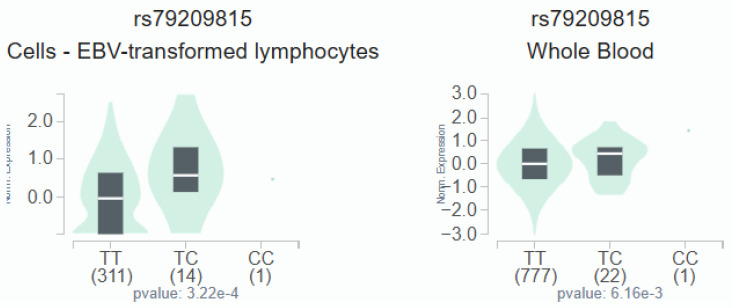 Figure 1
Peer Reviews
No public reviews on file for this paper yet. If you reviewed it on a platform where reviews are public (OpenReview, ICLR, NeurIPS, ICML), you can paste yours below so the community can read it here.
Videos
No videos yet. Explain this paper in a talk, walkthrough, or lecture? Add one.
Taxonomy
TopicsGDF15 and Related Biomarkers · Adipokines, Inflammation, and Metabolic Diseases · Studies on Chitinases and Chitosanases