Analysis of volatile compounds in Aglaia odorata flower extracts with different possessing methods by HS-SPME-GC-MS and E-nose
Pengfei Yang, Lingqi Kong, Qiongbo Wang, Qiang Liu, Xiujin Duan, Chen Hu, Zhengbo Feng, Qi Yang, Huabo Jv

TL;DR
This study compares how different extraction methods affect the volatile compounds and aroma of Aglaia odorata flower extracts using advanced analytical techniques.
Contribution
The study introduces a multidimensional analysis combining HS-SPME-GC-MS and E-nose to evaluate extraction method impacts on AOFE volatile profiles.
Findings
UAE and MAE extracts showed similar volatile compound profiles but differed in concentration and aroma intensity.
HRE produced fewer compounds and distinct green and spicy aroma characteristics compared to UAE and MAE.
Eight key volatile markers were identified as contributors to the sweet and floral aroma of AOFEs.
Abstract
To investigate the impact of different processing methods on the volatile components in Aglaia odorata flower extract (AOFEs). Headspace solid-phase microextraction coupled with gas chromatography-mass spectrometry and electronic nose (E-Nose) analysis were employed to characterize volatiles of extracts obtained by ultrasound-assisted extraction (UAE), microwave-assisted extraction (MAE), and heated reflux extraction (HRE). Multidimensional assessment using aroma radar charts, orthogonal partial least squares-discriminant analysis (OPLS-DA), K-means clustering, and relative odor activity value (ROAV) revealed significant processing-dependent variations. The results indicated that the fiber coated with DVB/CAR/PDMS had optimal extraction efficiency. A total of 46 compounds were identified, including eight alcohols, four aldehydes, one acid, 25 terpenes, seven ketones, and one…
Genes, proteins, chemicals, diseases, species, mutations and cell lines named across the full text — each resolved to its canonical identifier and authoritative record.
Click any figure to enlarge with its caption.
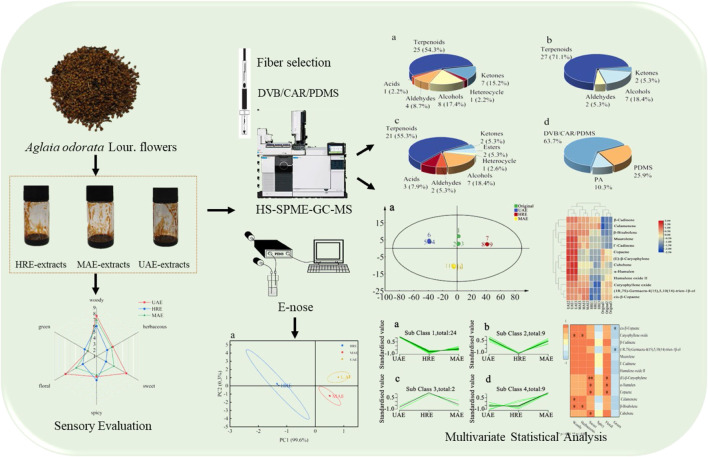 Figure 1
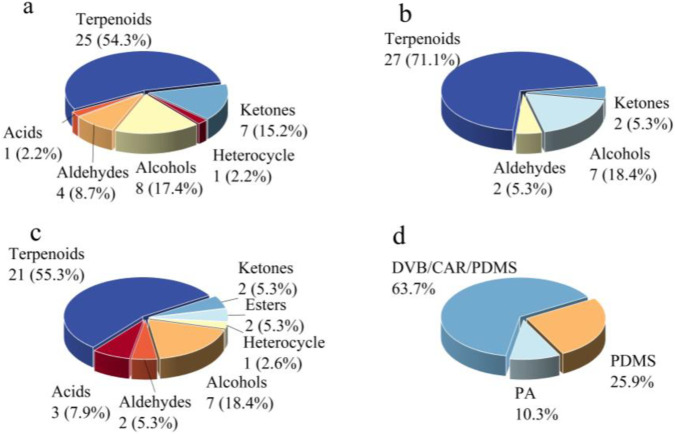 Figure 2
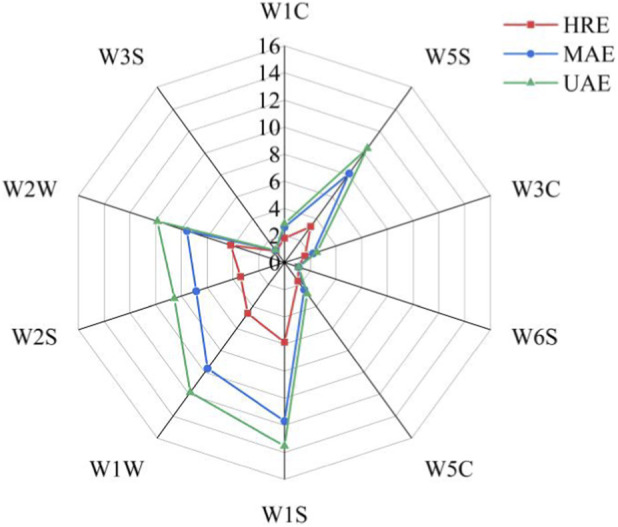 Figure 3
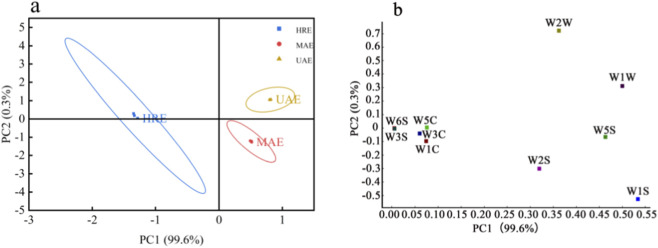 Figure 4
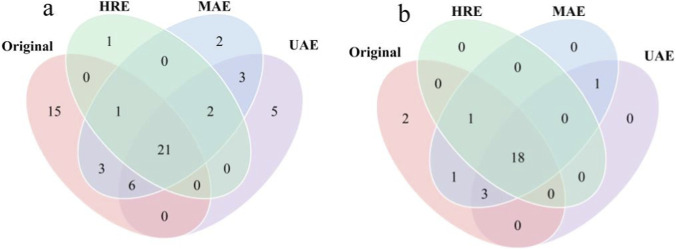 Figure 5
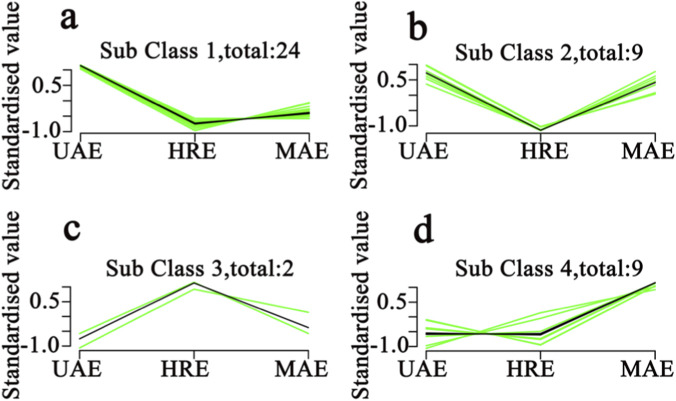 Figure 6
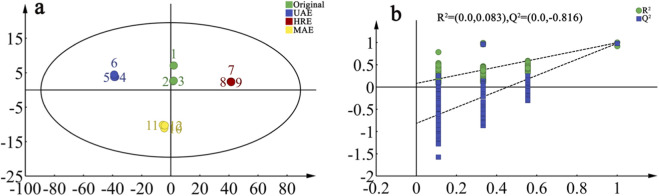 Figure 7
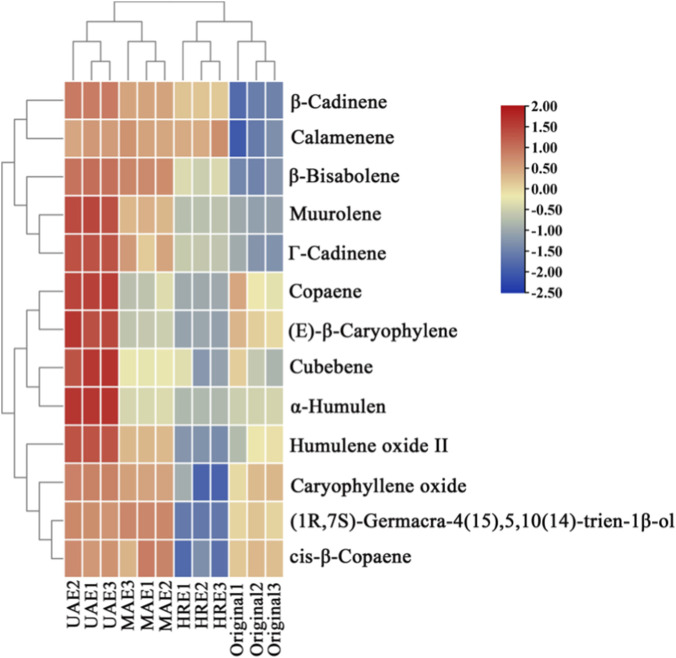 Figure 8
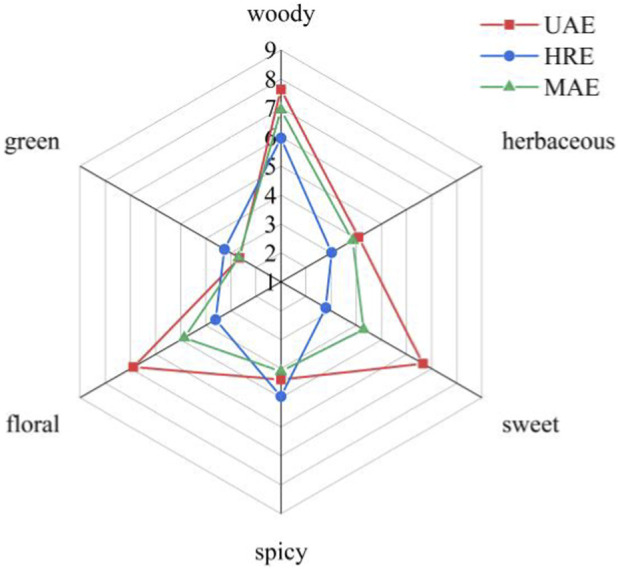 Figure 9
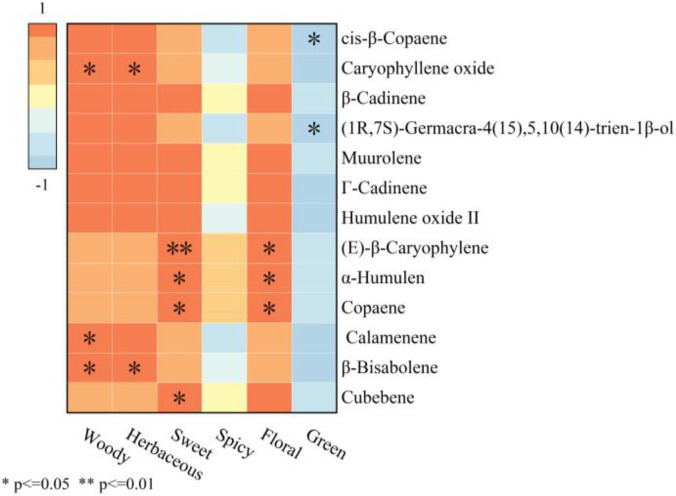 Figure 10
Peer Reviews
No public reviews on file for this paper yet. If you reviewed it on a platform where reviews are public (OpenReview, ICLR, NeurIPS, ICML), you can paste yours below so the community can read it here.
Videos
No videos yet. Explain this paper in a talk, walkthrough, or lecture? Add one.
Taxonomy
TopicsPhytochemical compounds biological activities · Bioactive Compounds in Plants · Phytochemicals and Antioxidant Activities