PANoptosis and mitochondrial regulatory mechanisms in cerebral ischemia-reperfusion injury
Li Li, Chunyan Guo, Zheng Zuo, Luoyang Cai, Xin Chen, Yongjiang Fang, Shengnan Zhang, Tianyu Chen, Peng Kuang, Pengyue Zhang, Li Li, Zuhong Wang

TL;DR
This paper explores how brain cells die during stroke recovery by combining multiple death pathways, suggesting new treatment strategies targeting mitochondria.
Contribution
The paper introduces the concept of PANoptosis in cerebral ischemia-reperfusion injury, highlighting mitochondrial dysfunction as a central mechanism.
Findings
Mitochondrial dysfunction acts as a central hub for activating multiple cell death pathways during cerebral ischemia-reperfusion.
Pharmacological targeting of single pathways is insufficient due to pathway redundancy and simultaneous activation.
Multi-pathway cell death features are observed in neurons, astrocytes, microglia, and endothelial cells.
Abstract
Cerebral ischemia-reperfusion injury remains a leading cause of mortality and disability despite advances in reperfusion therapy. Traditional research has focused on individual cell death pathways, yet pharmacological blockade of single pathways provides only partial neuroprotection, suggesting that dying cells engage multiple death routes simultaneously. This review examines whether PANoptosis, an inflammatory cell death modality characterized by concurrent activation of apoptotic, necroptotic, and pyroptotic pathways, occurs in cerebral ischemia-reperfusion injury. The analysis demonstrates that mitochondrial dysfunction serves as the central convergence point orchestrating multi-pathway death activation across distinct temporal phases. Ischemia creates metabolic crisis that primes mitochondria without triggering irreversible commitment. Reperfusion causes explosive mitochondrial…
Genes, proteins, chemicals, diseases, species, mutations and cell lines named across the full text — each resolved to its canonical identifier and authoritative record.
Click any figure to enlarge with its caption.
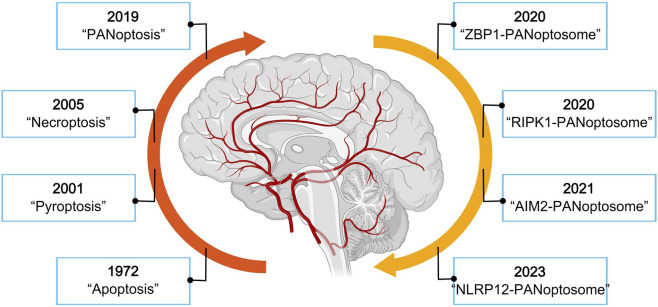 Figure 1
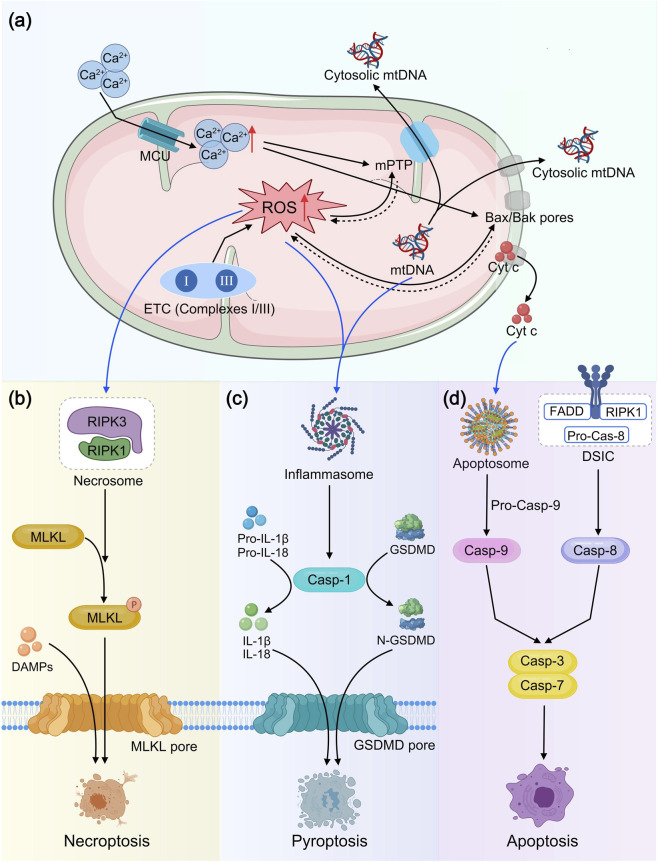 Figure 2
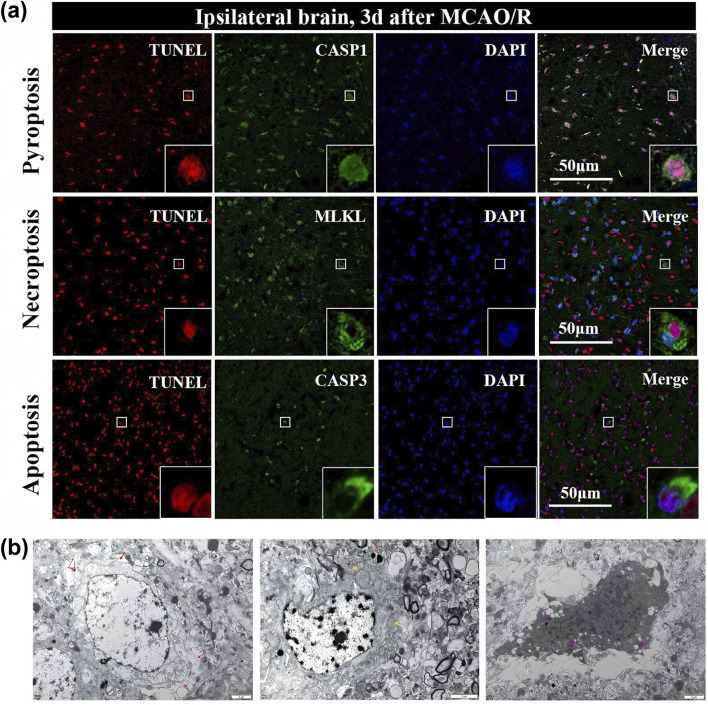 Figure 3
Peer Reviews
No public reviews on file for this paper yet. If you reviewed it on a platform where reviews are public (OpenReview, ICLR, NeurIPS, ICML), you can paste yours below so the community can read it here.
Videos
No videos yet. Explain this paper in a talk, walkthrough, or lecture? Add one.
Taxonomy
TopicsInflammasome and immune disorders · Mitochondrial Function and Pathology · Cell death mechanisms and regulation