Light-Activated Qubit Coupling in a Vanadyl Porphyrin Trimer
Alberto Privitera, Alessandro Chiesa, Fabio Santanni, Davide Ranieri, Prem P. Sahu, Matthew D. Krzyaniak, Andrea Caneschi, Ryan M. Young, Mathias O. Senge, Federico Totti, Michael R. Wasielewski, Stefano Carretta, Roberta Sessoli

TL;DR
This paper introduces a molecular system where light can control quantum interactions, enabling potential quantum computing applications.
Contribution
The novel contribution is a light-activated molecular system that enables ultrafast and controllable qubit coupling.
Findings
Photoexcitation induces a spin-quintet state within subpicosecond timescales.
Long-lived spin polarization is observed even at room temperature.
The system demonstrates optically controlled spin interactions in molecules.
Abstract
Molecules provide a modular and chemically tunable platform for quantum information science. In recent years, significant advances have been made in enabling optical spin initialization, coherent control, and both optical and electrical readout of molecular qubits. Yet, a central challenge remains: realizing scalable architectures through the controlled and ultrafast activation of interqubit interactions. Here, we present a molecular system composed of two vanadyl porphyrin qubits bridged by a free-base porphyrin chromophore, where the qubits are magnetically independent in the ground state but become coupled upon photoexcitation. Femtosecond transient absorption and time-resolved electron paramagnetic resonance experiments, supported by DFT calculations and spectral simulations, reveal that photoexcitation induces the formation of a spin-quintet state within subpicosecond time scales.…
Genes, proteins, chemicals, diseases, species, mutations and cell lines named across the full text — each resolved to its canonical identifier and authoritative record.
Click any figure to enlarge with its caption.
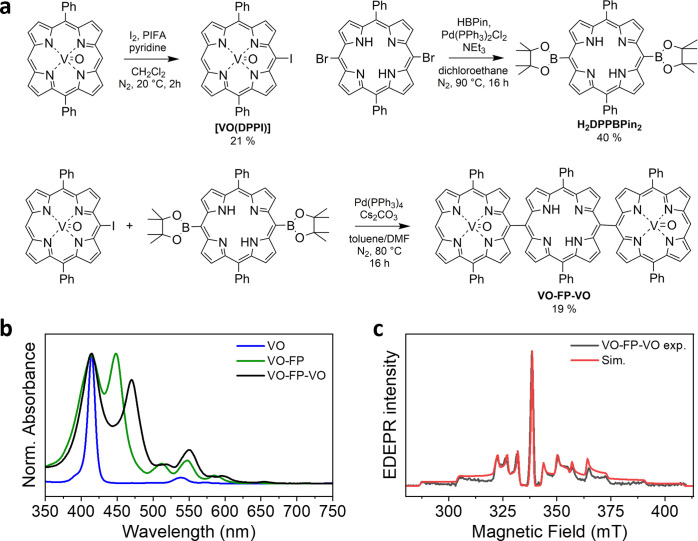 Figure 1
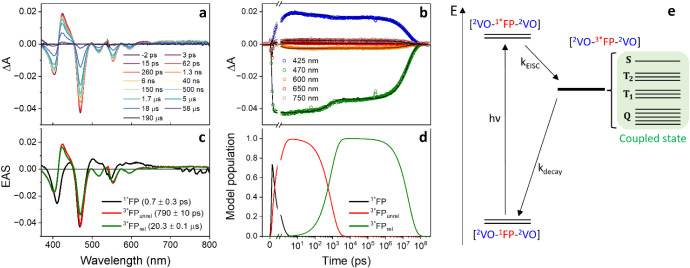 Figure 2
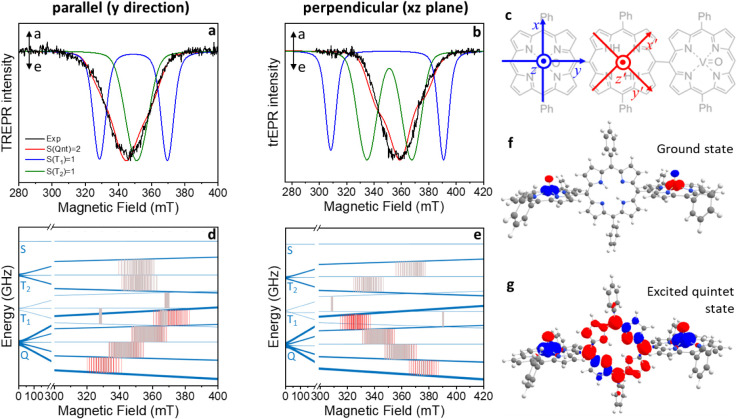 Figure 3
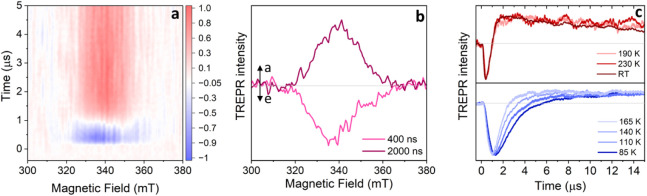 Figure 4
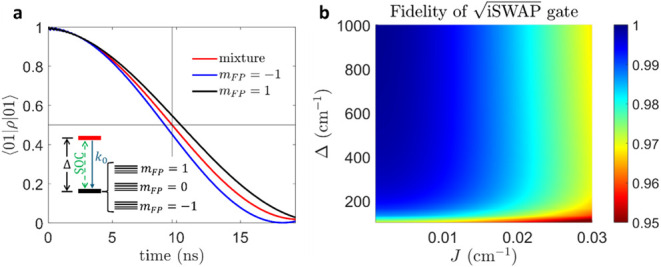 Figure 5
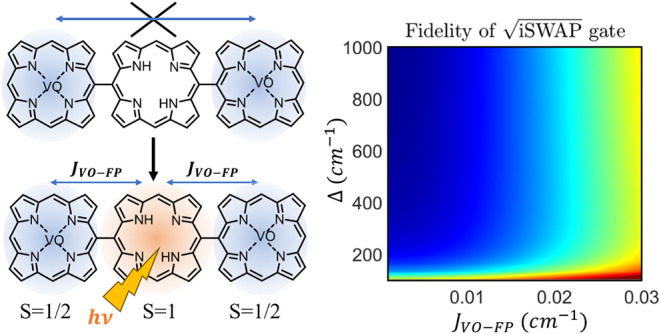 Figure 6
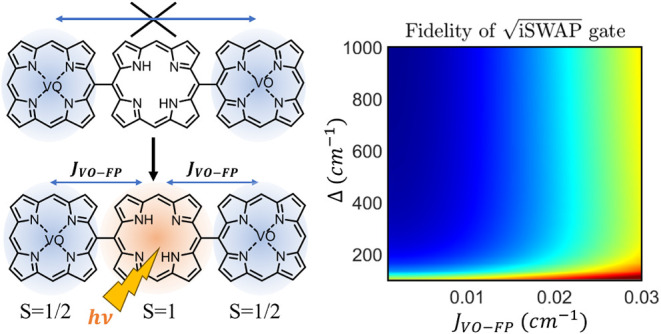 Figure 7
 Figure 8
 Figure 9
 Figure 10
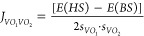 Figure 11
 Figure 12
 Figure 13
 Figure 14
 Figure 15
 Figure 16
 Figure 17
 Figure 18
 Figure 19
 Figure 20
 Figure 21
 Figure 22
 Figure 23
 Figure 24
 Figure 25
 Figure 26
 Figure 27
 Figure 28
 Figure 29
 Figure 30
 Figure 31
 Figure 32
 Figure 33
 Figure 34
 Figure 35
 Figure 36
 Figure 37
 Figure 38
 Figure 39
 Figure 40
 Figure 41
 Figure 42
Peer Reviews
No public reviews on file for this paper yet. If you reviewed it on a platform where reviews are public (OpenReview, ICLR, NeurIPS, ICML), you can paste yours below so the community can read it here.
Videos
No videos yet. Explain this paper in a talk, walkthrough, or lecture? Add one.
Taxonomy
TopicsMagnetism in coordination complexes · Synthesis and Properties of Aromatic Compounds · Molecular Junctions and Nanostructures