Automated Nanocrystalline Sponge Workflow Enabled by 3D Electron Diffraction
Sofiia Butonova, Yinlin Chen, Jung Cho, Marcus Wallin, Zhehao Huang, Xiaodong Zou

TL;DR
A new automated workflow using nanocrystalline sponges and 3D electron diffraction enables high-throughput structural analysis of organic molecules.
Contribution
An automated workflow combining nanocrystalline sponges and 3D electron diffraction for high-throughput structural analysis of organic molecules.
Findings
A nanocrystalline bismuth-based MOF (SU-100) was successfully used as a crystalline sponge for 10 organic molecules.
3D electron diffraction data enabled automated identification and refinement of guest molecules under low electron fluence and cryogenic conditions.
Guest molecules in SU-100 pores are arranged periodically through coordination, hydrogen, and π–π stacking interactions.
Abstract
The crystalline sponge (CS) method utilizes a crystalline porous material to arrange target molecules within its periodic pores. This enables the determination of the 3D atomic structures of organic molecules without the need for crystallization. However, its applicability is currently limited by the availability of suitable porous single crystals that can grow to a sufficient size for X-ray diffraction analysis. Although three-dimensional electron diffraction (3D ED) allows structure determination from nanosized crystals, ab initio structural analysis of organic molecules hosted in nanocrystalline sponges remains challenging and largely manual. Here, we present a 3D ED-based nanocrystalline sponge (NanoCS) workflow that integrates guest soaking, low-dose cryogenic data collection, and automated structure solution and refinement. A key advance is a newly developed automated approach for…
Genes, proteins, chemicals, diseases, species, mutations and cell lines named across the full text — each resolved to its canonical identifier and authoritative record.
Click any figure to enlarge with its caption.
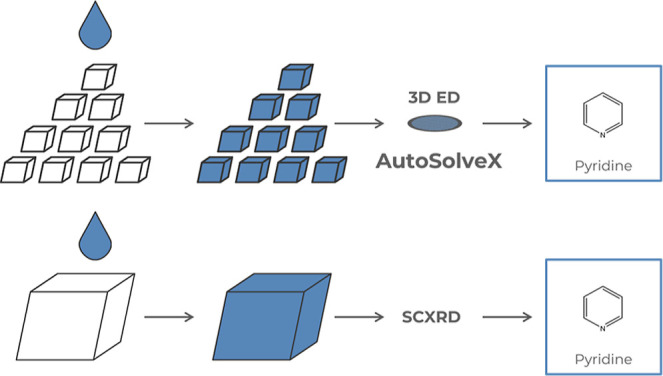 Figure 1
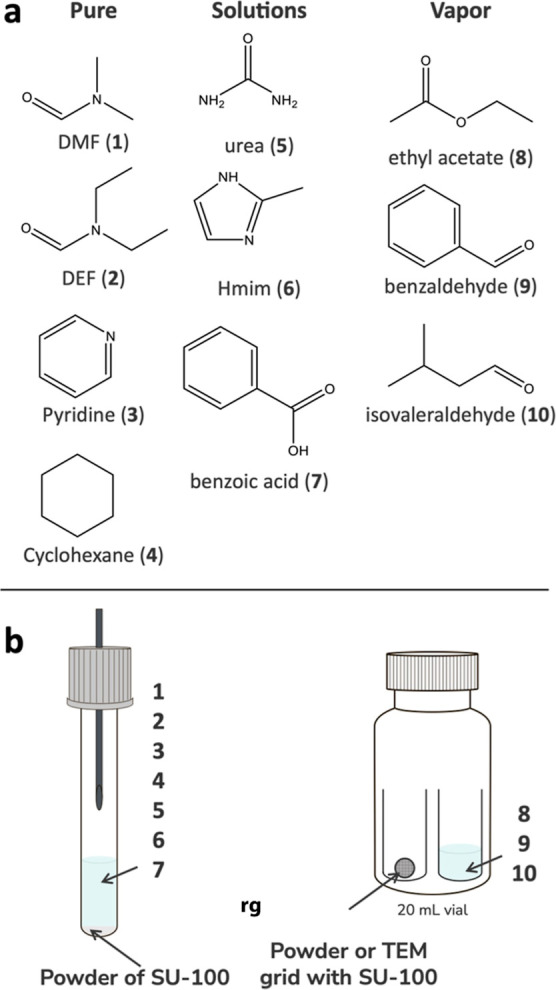 Figure 2
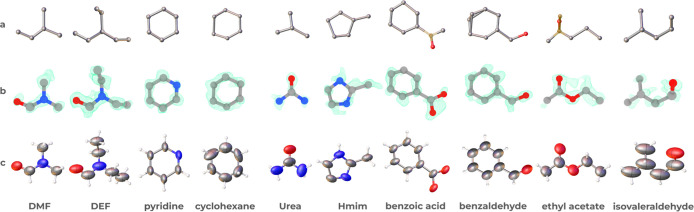 Figure 3
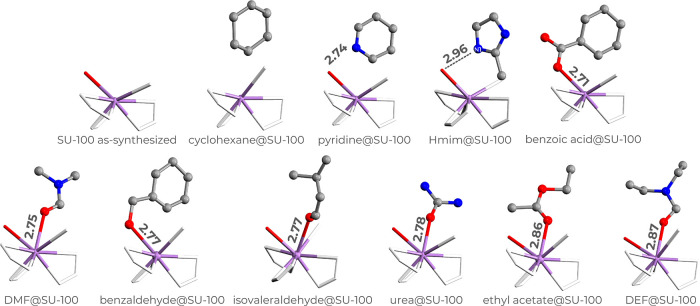 Figure 4
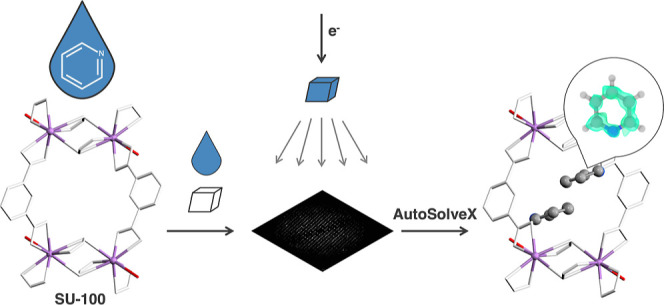 Figure 5
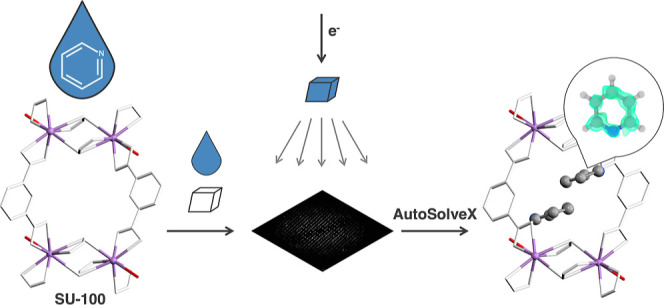 Figure 6
Peer Reviews
No public reviews on file for this paper yet. If you reviewed it on a platform where reviews are public (OpenReview, ICLR, NeurIPS, ICML), you can paste yours below so the community can read it here.
Videos
No videos yet. Explain this paper in a talk, walkthrough, or lecture? Add one.
Taxonomy
TopicsMetal-Organic Frameworks: Synthesis and Applications · Supramolecular Chemistry and Complexes · Surface Chemistry and Catalysis