Repositioning the Leader Peptide in Graspetide Biosynthesis
Toby G. Johnson, Dean M. Miller, Drew V. Carson, Brian Choi, A. James Link

TL;DR
Scientists repositioned a leader peptide in a biosynthetic pathway to create new peptide structures with expanded chemical diversity.
Contribution
A novel leader peptide engineering strategy enables the synthesis of chimeric RiPPs with interlocked structures not found in nature.
Findings
Repositioning the leader sequence retained enzymatic modification by ThfB in cellulo and in vitro.
Chimeric RiPP products were generated using two leader sequences and multiple tailoring enzymes.
The strategy enables access to new mechanically interlocked peptides with expanded structural diversity.
Abstract
Applying enzymes from unique biosynthetic pathways in a combinatorial fashion to garner new-to-nature products has been a long-standing goal of synthetic biology. Ribosomally synthesized and post-translationally modified peptides (RiPPs) are a family of natural products that comprise a broad array of chemical and structural diversity, including mechanically interlocked molecular architectures. Guided by supramolecular recognition of an N-terminal leader sequence, the core region of a precursor peptide is decorated by tailoring enzymes to generate a mature RiPP. Through repositioning the leader sequence of the fuscimiditide precursor peptide C-terminal to the core, we have shown that substrate-selective post-translational modification by the graspetide synthetase, ThfB, is retained in cellulo and in vitro. Reconstitution of the ThfB-mediated cyclization of precursors with the native…
Genes, proteins, chemicals, diseases, species, mutations and cell lines named across the full text — each resolved to its canonical identifier and authoritative record.
Click any figure to enlarge with its caption.
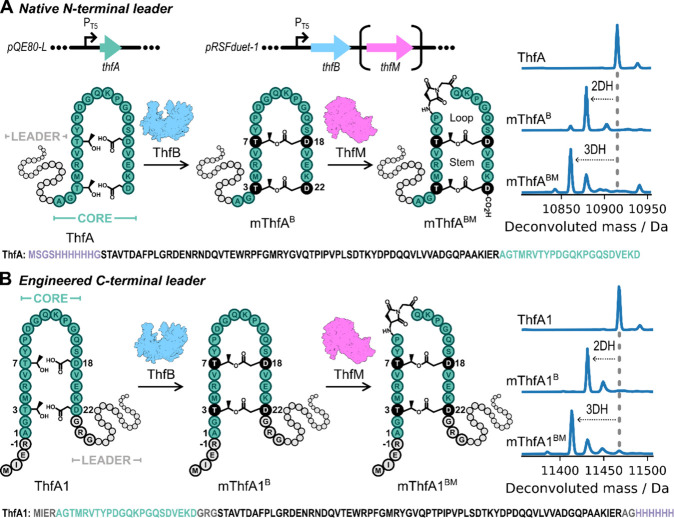 Figure 1
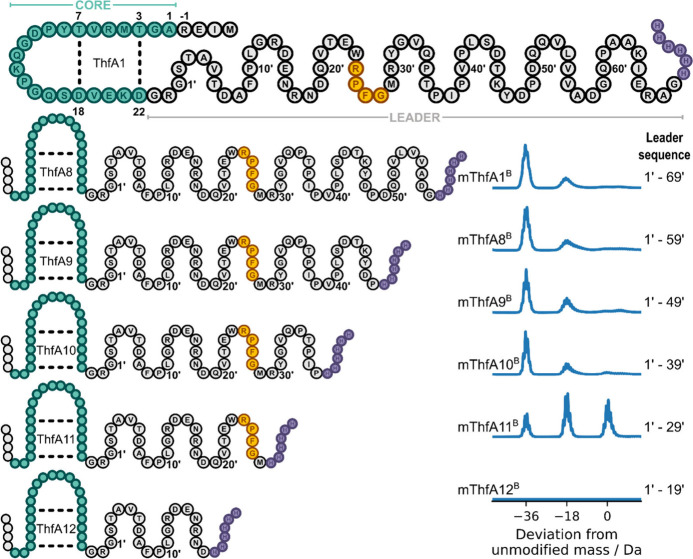 Figure 2
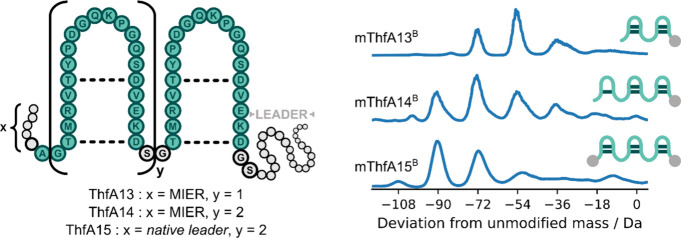 Figure 3
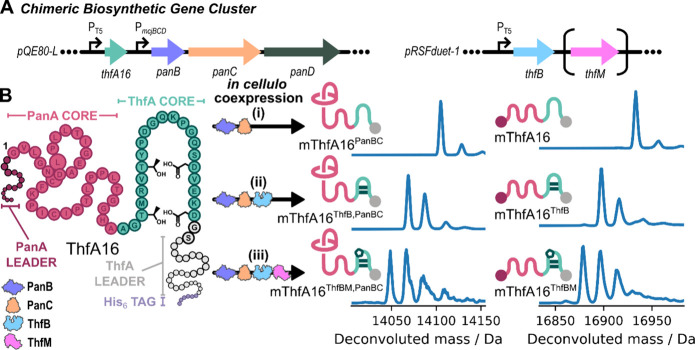 Figure 4
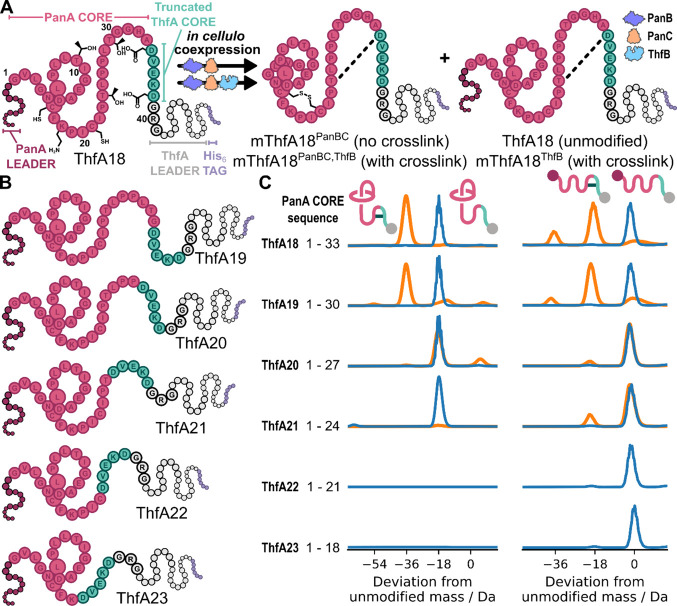 Figure 5
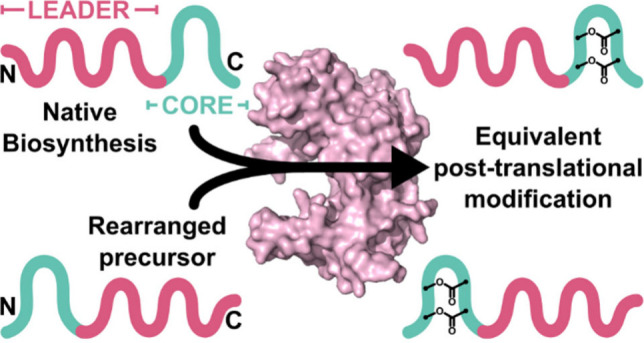 Figure 6
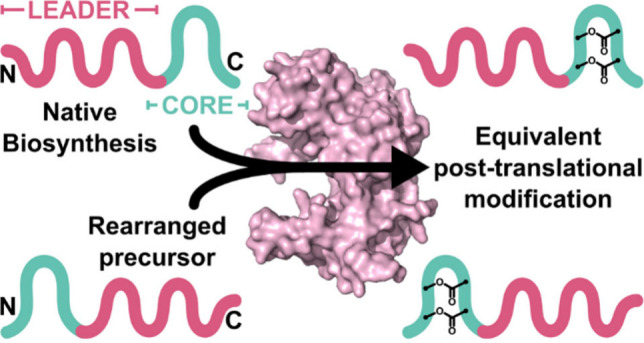 Figure 7
Peer Reviews
No public reviews on file for this paper yet. If you reviewed it on a platform where reviews are public (OpenReview, ICLR, NeurIPS, ICML), you can paste yours below so the community can read it here.
Videos
No videos yet. Explain this paper in a talk, walkthrough, or lecture? Add one.
Taxonomy
TopicsMicrobial Natural Products and Biosynthesis · Biochemical and Structural Characterization · RNA and protein synthesis mechanisms