Switching Shapes: Reversible Three Species Photoisomerization of Substituted 1,2-Dihydro-1,2-azaborinines
Sonja M. Biebl, Jonas N. Lienert, Adrian J. Müller, Markus Ströbele, Andreas Dreuw, Josef Wachtveitl, Holger F. Bettinger

TL;DR
This paper describes a reversible photochemical process involving substituted 1,2-dihydro-1,2-azaborinines that can switch between three different isomers under light.
Contribution
The study introduces a new method for synthesizing tetrasubstituted dihydroazaborinines and reveals a reversible three-species photoisomerization mechanism.
Findings
Aryl substitution at positions 3 and 5 causes a bathochromic shift in absorption.
Photoisomerization proceeds via two distinct excited states leading to Dewar and benzvalene isomers.
Thermal cycloreversion can regenerate the original structure or a substituted isomer.
Abstract
Derivatives of 1,2-dihydro-1,2-azaborinines generally undergo selective photochemical electrocyclic ring-closure reactions to the corresponding Dewar isomers (2-aza-3-borabicyclo[2.2.0]hex-5-ene). Depending on the substitution pattern, these photoreactions can also yield benzvalene (3-aza-4-boratricyclo[3.1.0.02.6]hexane) analogues. Here, we report the synthesis of 1,2,3,5-tetrasubstituted dihydroazaborinines by transition-metal-catalyzed late-stage functionalization and the investigation of their photophysical and photochemical properties using transient absorption spectroscopy. The introduction of aryl groups at the 3- and 5-positions induces a pronounced bathochromic shift of the absorption maximum. Under broad-spectrum irradiation (280–400 nm), quantitative conversion to the benzvalene isomer can be achieved. The initial photoisomerization proceeds via excitation to the…
Genes, proteins, chemicals, diseases, species, mutations and cell lines named across the full text — each resolved to its canonical identifier and authoritative record.
Click any figure to enlarge with its caption.
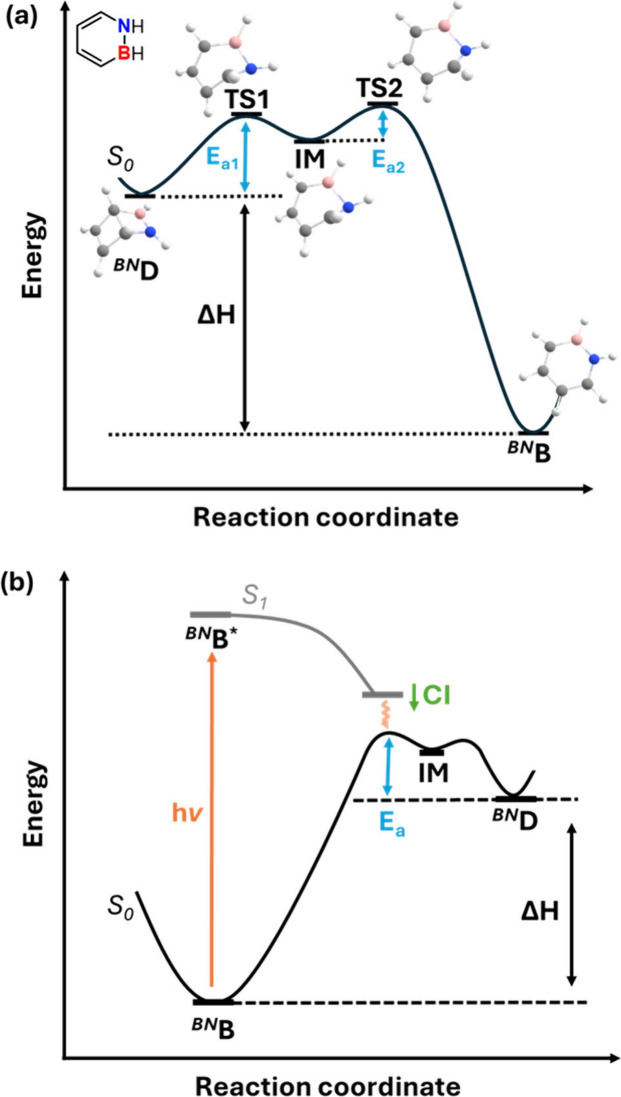 Figure 1
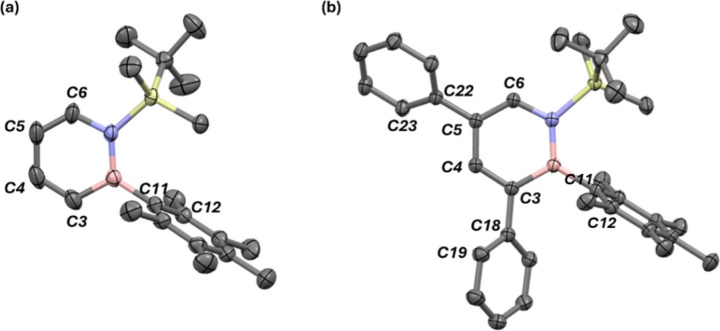 Figure 2
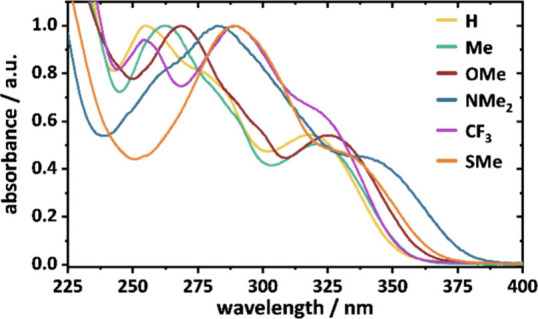 Figure 3
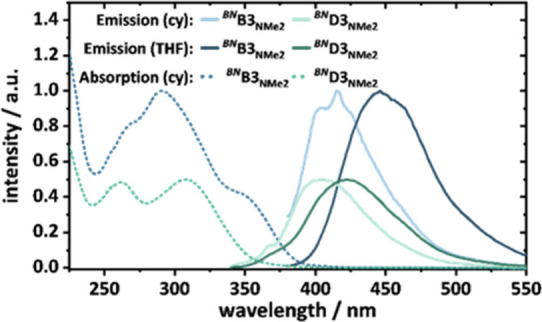 Figure 4
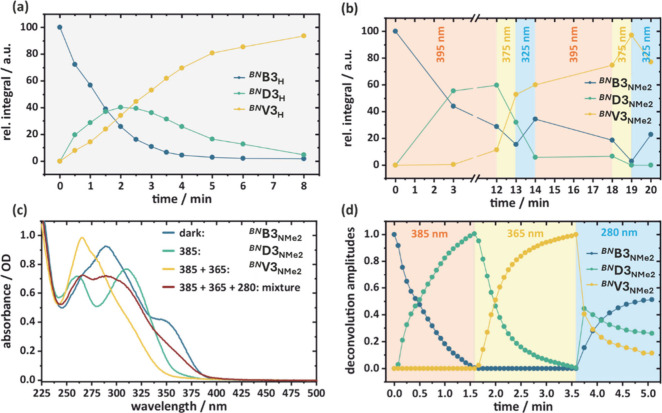 Figure 5
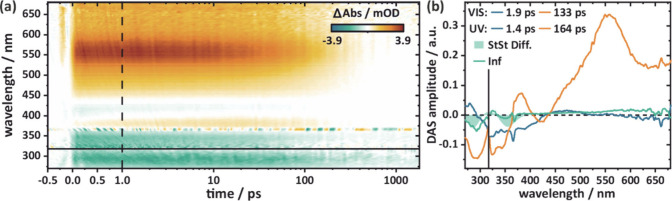 Figure 6
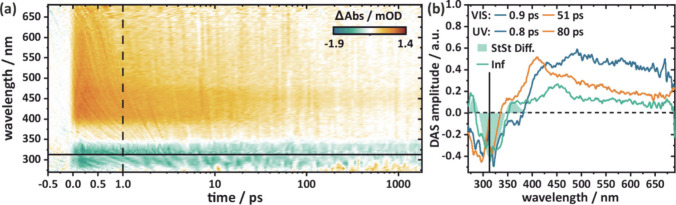 Figure 7
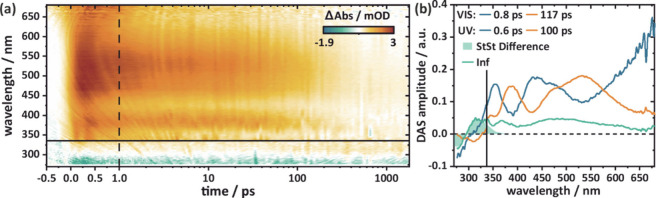 Figure 8
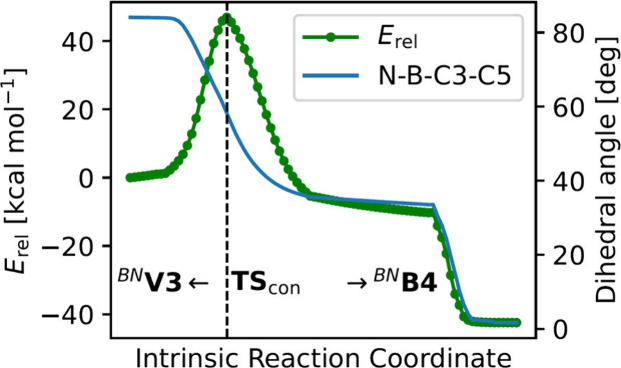 Figure 9
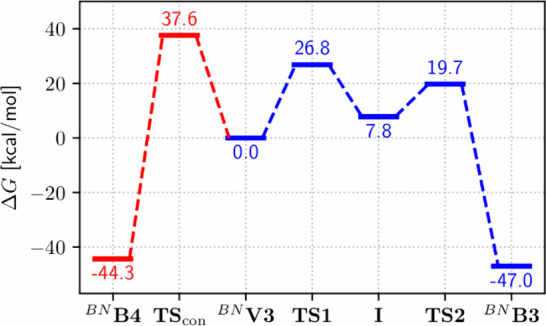 Figure 10
 Figure 11
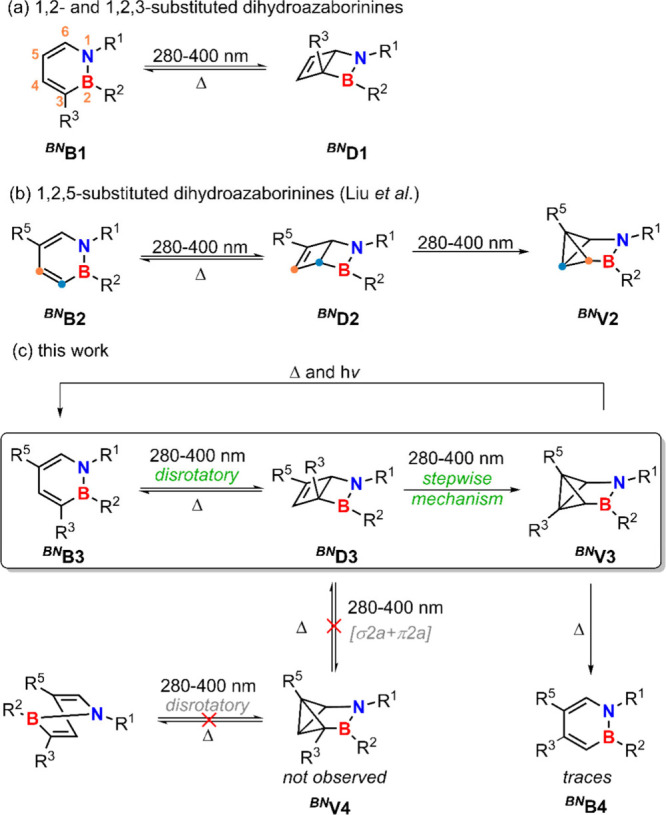 Figure 12
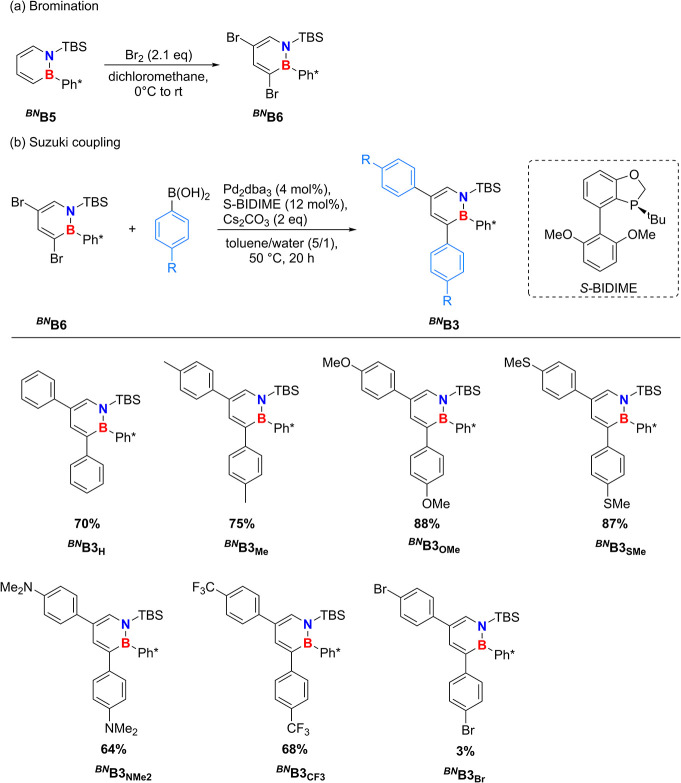 Figure 13
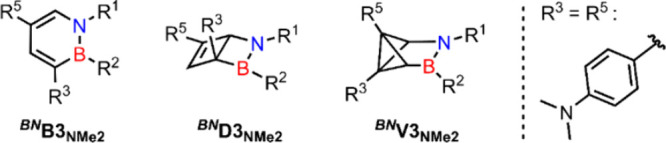 Figure 14
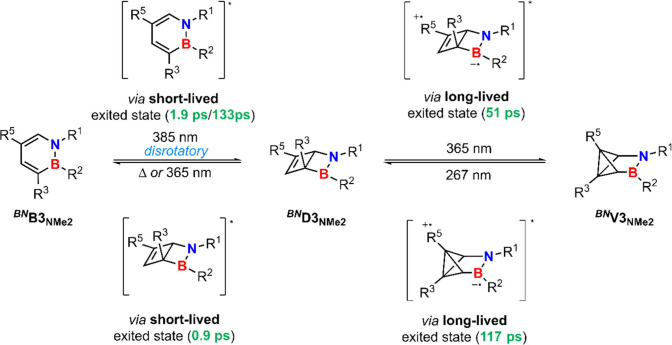 Figure 15
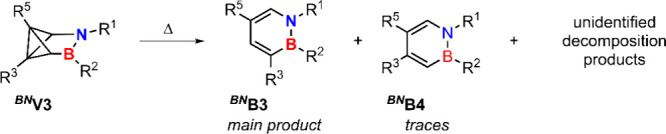 Figure 16
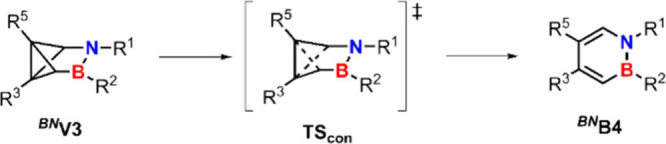 Figure 17
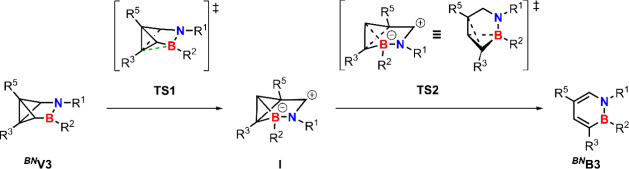 Figure 18
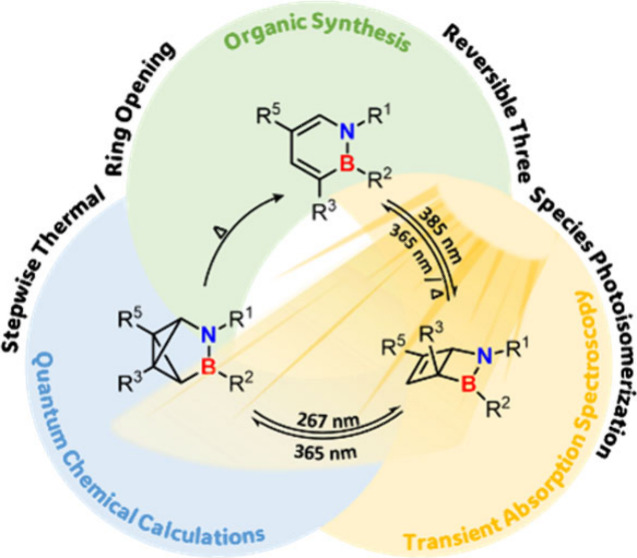 Figure 19
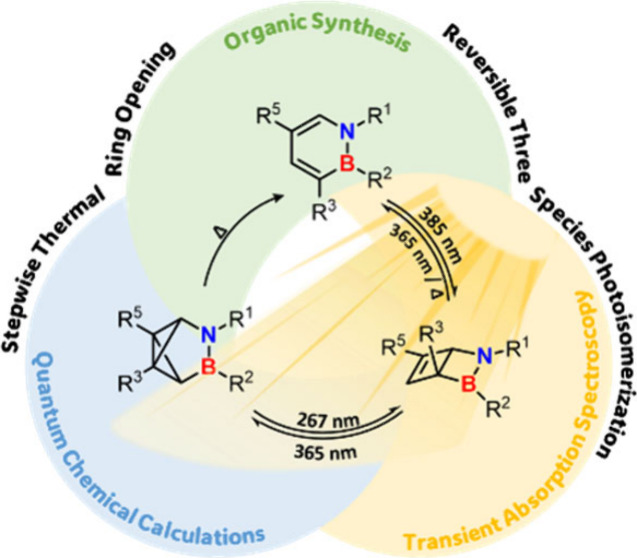 Figure 20
Peer Reviews
No public reviews on file for this paper yet. If you reviewed it on a platform where reviews are public (OpenReview, ICLR, NeurIPS, ICML), you can paste yours below so the community can read it here.
Videos
No videos yet. Explain this paper in a talk, walkthrough, or lecture? Add one.
Taxonomy
TopicsOrganoboron and organosilicon chemistry · Radical Photochemical Reactions · Photochromic and Fluorescence Chemistry