Overcoming Thermal Degradation during Continuous Conversion of Water into Hydrogen Peroxide in a Flexible Plasma Reactor
Mery S. Hernandez, Yannis Mikolaiczyk, Sergey Soldatov, Guido Link, Lucas Silberer, Roland Dittmeyer, Alexander Navarrete

TL;DR
A flexible plasma reactor efficiently produces hydrogen peroxide from water while avoiding thermal degradation.
Contribution
A continuous process using plasma and water to produce hydrogen peroxide with minimal thermal degradation is developed.
Findings
Hydrogen peroxide concentrations up to 0.17 wt% were achieved with high energy efficiency.
Thermal degradation was minimized through plasma zone quenching.
Hydrogen peroxide formation is influenced by microwave pulse parameters and inversely related to water flow rate.
Abstract
By control of the nanosecond pulsation, energy input, and flow, it is possible to achieve commercial-level hydrogen peroxide (H2O2) concentrations using only water and plasma in a continuous process while minimizing thermal degradation. Time-resolved ultrafast Optical Emission Spectroscopy was employed to observe the formation of reactive species, shedding light on the underlying mechanisms. This study also found that thermal degradation has a critical role, which was effectively managed through quenching of the plasma zone. A parametric scan of pulse duration and pulse repetition frequency of the microwave power showed a significant influence on H2O2 formation, whereby the mean power also plays an important role. Additionally, the H2O2 concentration was found to be inversely proportional to the water flow rate. A maximum concentration of 0.17 wt % was achieved with 1.2 g/kWh based on…
Genes, proteins, chemicals, diseases, species, mutations and cell lines named across the full text — each resolved to its canonical identifier and authoritative record.
Click any figure to enlarge with its caption.
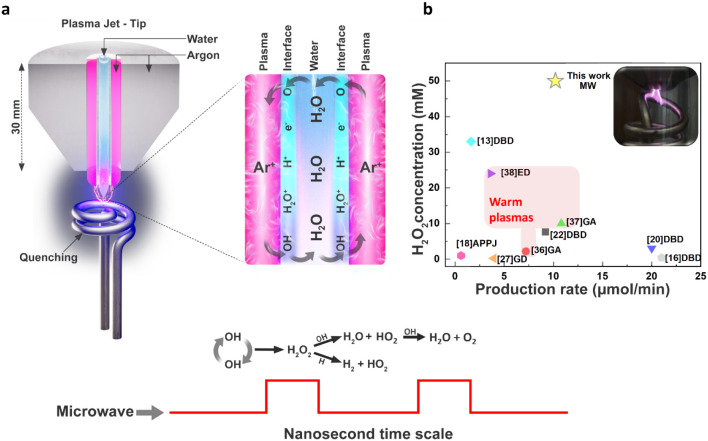 Figure 1
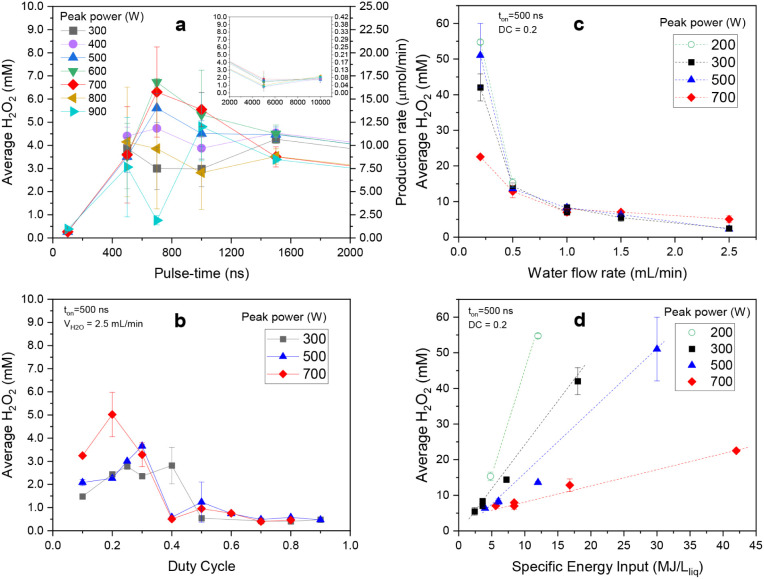 Figure 2
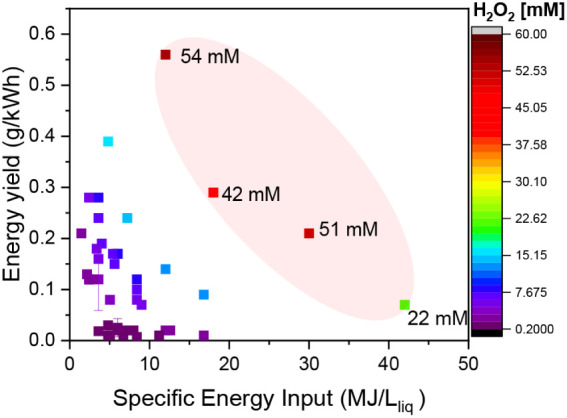 Figure 3
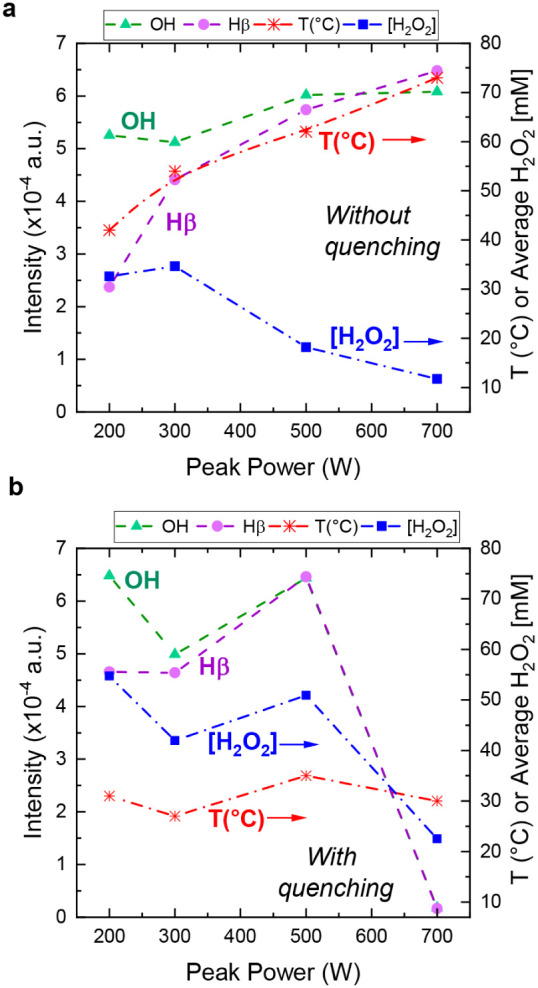 Figure 4
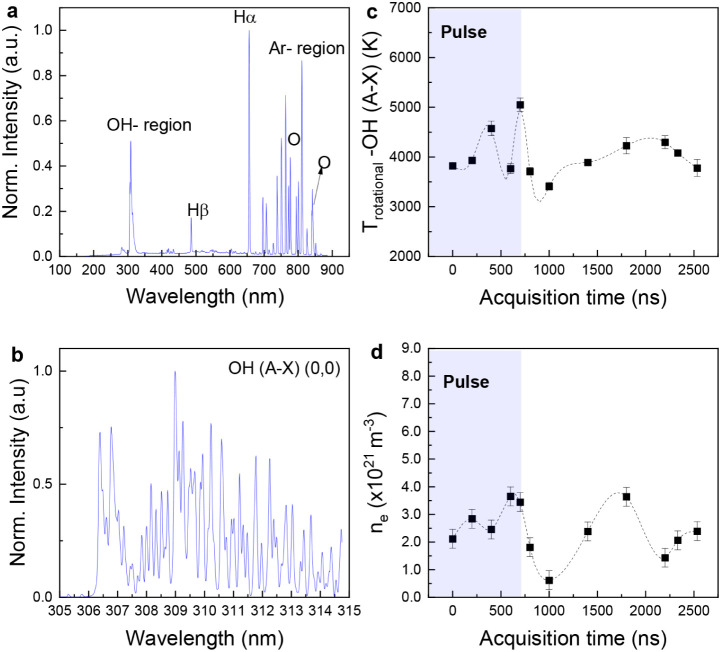 Figure 5
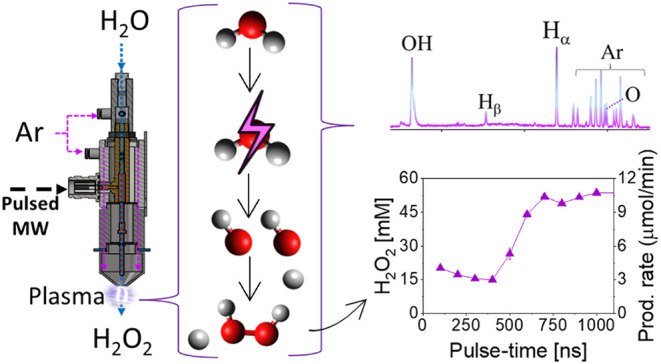 Figure 6
 Figure 7
 Figure 8
 Figure 9
 Figure 10
 Figure 11
 Figure 12
 Figure 13
 Figure 14
 Figure 15
 Figure 16
 Figure 17
 Figure 18
 Figure 19
 Figure 20
 Figure 21
 Figure 22
 Figure 23
 Figure 24
 Figure 25
 Figure 26
 Figure 27
 Figure 28
 Figure 29
 Figure 30
 Figure 31
 Figure 32
Peer Reviews
No public reviews on file for this paper yet. If you reviewed it on a platform where reviews are public (OpenReview, ICLR, NeurIPS, ICML), you can paste yours below so the community can read it here.
Videos
No videos yet. Explain this paper in a talk, walkthrough, or lecture? Add one.
Taxonomy
TopicsPlasma Applications and Diagnostics · High-Temperature Coating Behaviors · Subcritical and Supercritical Water Processes