Machine Learning–Based Sleep Electroencephalographic Brain Age Index and Dementia Risk: An Individual Participant Data Meta-Analysis
Haoqi Sun, Sasha Milton, Yi Fang, Hash Brown Taha, Shreya Shiju, Robert J. Thomas, Wolfgang Ganglberger, Matthew P. Pase, Timothy Hughes, Shaun Purcell, Susan Redline, Katie L. Stone, Kristine Yaffe, M. Brandon Westover, Yue Leng

TL;DR
A machine learning model using sleep EEG data can predict dementia risk, with higher brain age index linked to a 39% increased risk.
Contribution
Introduces a machine learning–based sleep EEG brain age index as a novel digital marker for dementia risk.
Findings
Each 10-year increase in BAI was associated with a 39% higher dementia risk after adjusting for age, sex, and other factors.
The association remained significant after adjusting for comorbidities and apnea-hypopnea index scores.
Findings were consistent across sex and age groups, suggesting broad applicability.
Abstract
Is a higher brain age index (BAI) derived from sleep electroencephalography (EEG) using machine learning associated with a higher risk of future dementia in community-dwelling older adults? In this individual participant data meta-analysis of 7105 adults from 5 longitudinal cohorts, every 10-year increase in BAI was associated with a 39% higher risk of incident dementia, independent of age, sex, apolipoprotein E ε4 status, and global cognition and comorbidities at the sleep study. These findings suggest that sleep EEG-based BAI may serve as a promising early digital marker for dementia risk stratification. This individual participant data meta-analysis explores the association between a machine learning–based sleep electroencephalography (EEG) brain age index and dementia risk among community-dwelling adults from 5 longitudinal cohorts. Microstructures of sleep…
Genes, proteins, chemicals, diseases, species, mutations and cell lines named across the full text — each resolved to its canonical identifier and authoritative record.
Click any figure to enlarge with its caption.
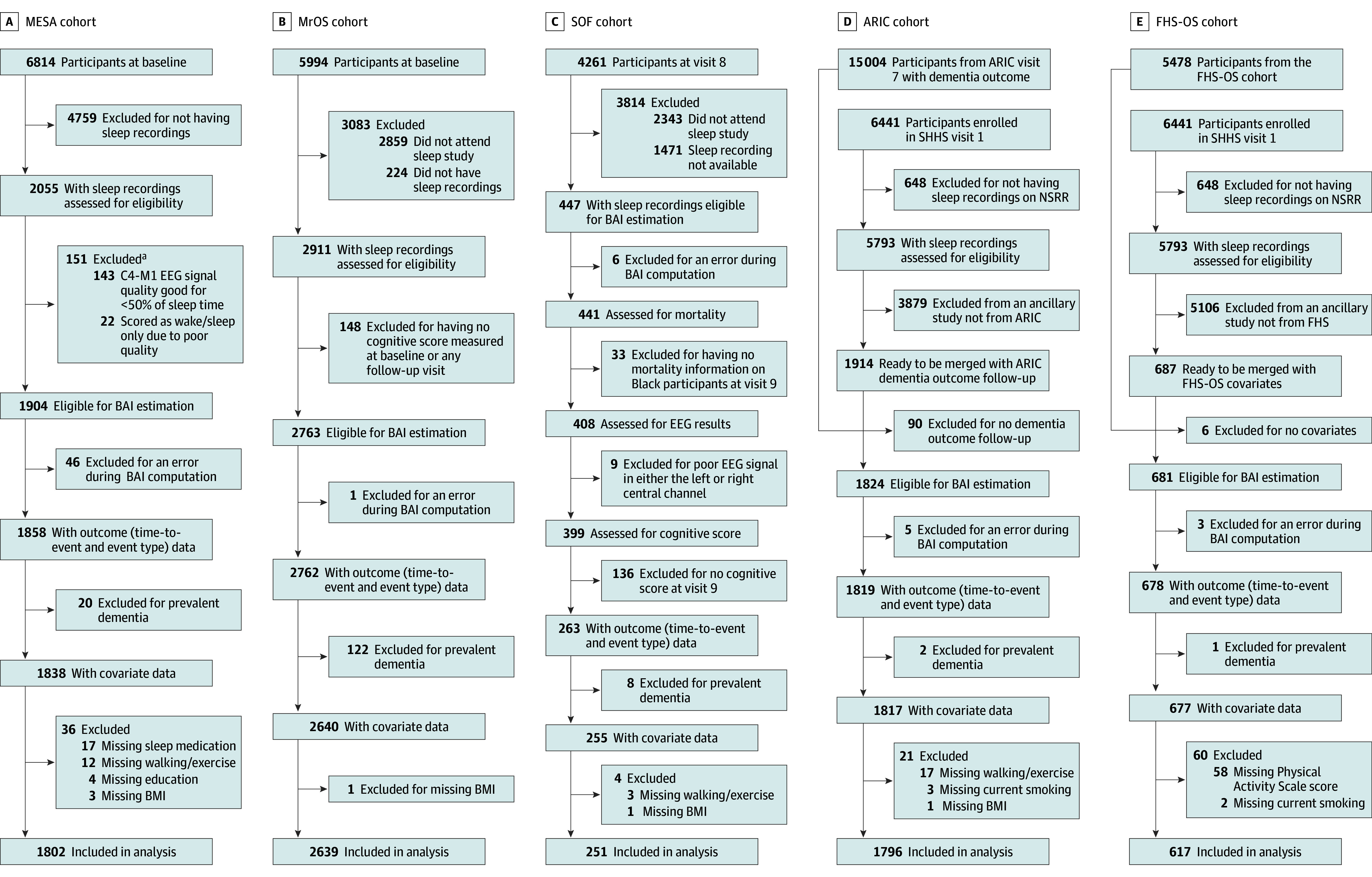 Figure 1
 Figure 2
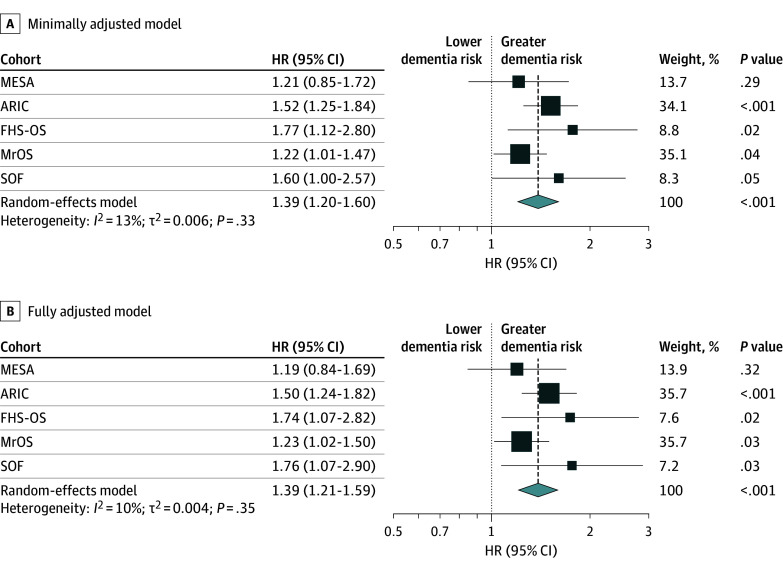 Figure 3
 Figure 4
Peer Reviews
No public reviews on file for this paper yet. If you reviewed it on a platform where reviews are public (OpenReview, ICLR, NeurIPS, ICML), you can paste yours below so the community can read it here.
Videos
No videos yet. Explain this paper in a talk, walkthrough, or lecture? Add one.
Taxonomy
TopicsSleep and related disorders · Obstructive Sleep Apnea Research · Sleep and Wakefulness Research